


 Online Reporter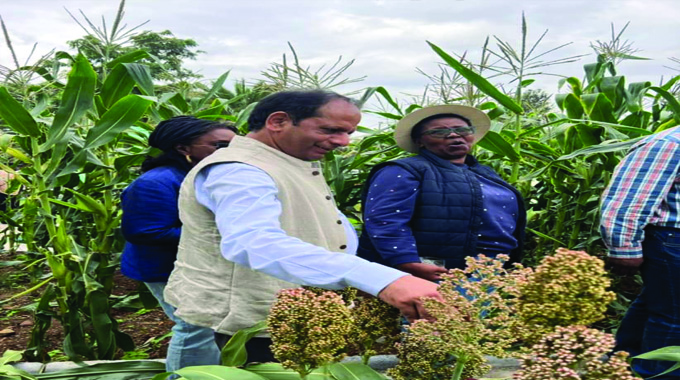
Judith Phiri, Sunday News Reporter
THE International Crops Research Institute for the Semi-Arid Tropics (Icrisat), has reaffirmed its commitment to advancing the development and promotion of agricultural technologies tailored to dry-land regions across Africa and Asia.
In Zimbabwe, through collaboration with the Government, the internationally recognised organisation has strengthened research and development initiatives focused on small grains. This partnership aims to boost food security and resilience in the face of climate change.
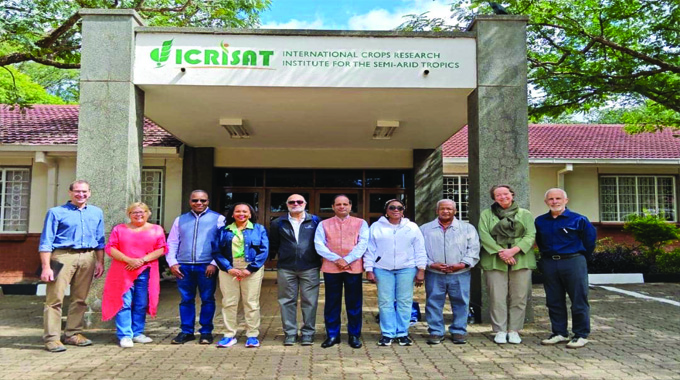
Recently, the Icrisat Governing Board and management team toured their Zimbabwean facility, located at Matopos Research Institute in Matabeleland South Province.
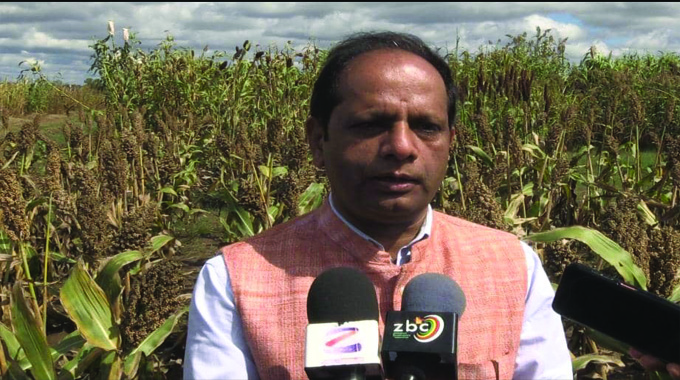
In an interview following the tour, Icrisat Director General, Dr Himanshu Pathak, highlighted that since 1983, the organisation has been working with the Government to develop climate-resilient crop varieties and had established the research centre to help mitigate drought impacts.
“As you know, smallholder farmers are key to Zimbabwe’s agriculture sector. To improve the productivity and profitability of Zimbabwean agriculture, there is a need to enhance crop yields. Traditionally, this country consumes sorghum, millet and oilseeds, among others and these are critical for food and nutrition security,” he said.
“Icrisat has been active in this area since 1983, developing high-yielding varieties of sorghum, millet and pulses, as well as climate-resilient cultivars. This centre was set up specifically to address drought mitigation in Zimbabwean agriculture.”
He noted that several high-yielding varieties have been developed since the centre’s inception.
Dr Pathak explained that most of the varieties developed at Icrisat Zimbabwe are also climate-resilient and capable of withstanding drought and high temperatures, with ongoing efforts to further improve them.
He added: “Climate resilience, food and nutrition security are among our key objectives. We are developing what we call biofortified varieties, which are rich in vitamins, minerals and other nutrients. We are also promoting water and soil nutrient management, which are crucial for increasing yields.”
Dr Pathak said the institute aims to create technologies that help farmers produce more with less water and minimal use of chemical fertilisers.
He emphasised the importance of building farmers’ capacity in Zimbabwe, as agriculture is increasingly knowledge-intensive.
“Farmers need to be aware of new technologies, improved varieties and cultivation techniques, as well as how to add value to their crops. We regularly implement capacity-building programmes here in Zimbabwe, in other African countries and at our headquarters in India,” he said.
Icrisat Deputy Director General for Research and Innovation, Dr Stanford Blade, said the organisation works closely with seed houses to ensure the dissemination of high-yielding and drought-tolerant seed varieties.
“We collaborate with companies such as Seed Co and others here in Zimbabwe, to ensure that once this cutting-edge science and innovation is complete, the material reaches the hands of farmers — allowing them to benefit from these climate-resilient, food-secure varieties,” he said.
Looking ahead, he noted the institute is focusing on integrating new technologies using cutting-edge science such as artificial intelligence (AI) and geospatial sciences, to better understand and improve farming systems.
Dr Blade added that they are now using advanced methods to analyse crop maturity and root development in ways that were not possible five years ago.
“Some materials here at Icrisat Zimbabwe and other centres are being characterised to identify optimal root structures that can be integrated into crops to enhance drought tolerance even further.”
Farmers have expressed appreciation for the support from both the Government and Icrisat, stating that learning about climate-smart agricultural practices is helping them sustain their livelihoods, despite increasingly challenging weather conditions.
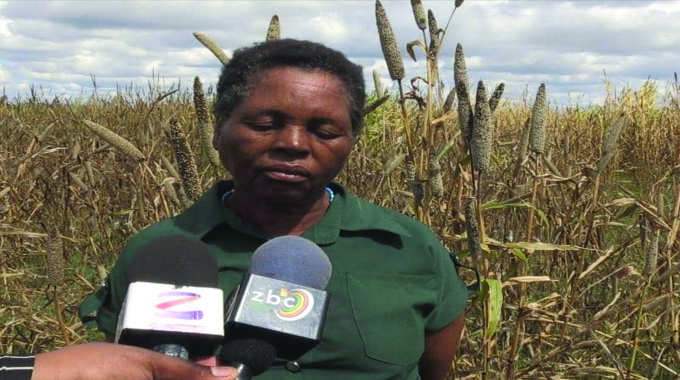
Ms Sibongile Mpofu from Filabusi said small grains are not only drought-tolerant but also highly nutritious.
“We are grateful for the collaboration between the Government and Icrisat in promoting drought-tolerant small grain seed varieties. These are nutritious, and we’ve been consuming them for generations, unlike many modern foods, which are less nutritious,” she said.
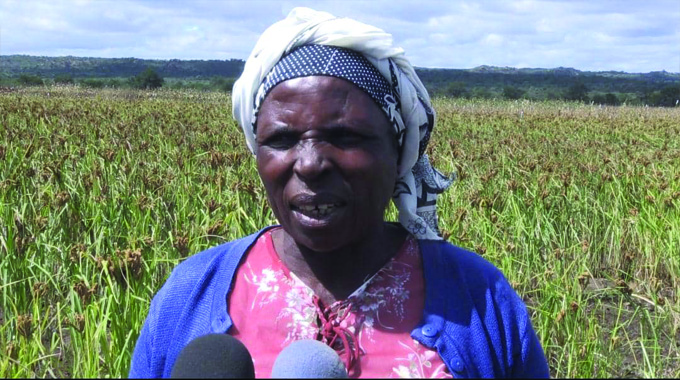
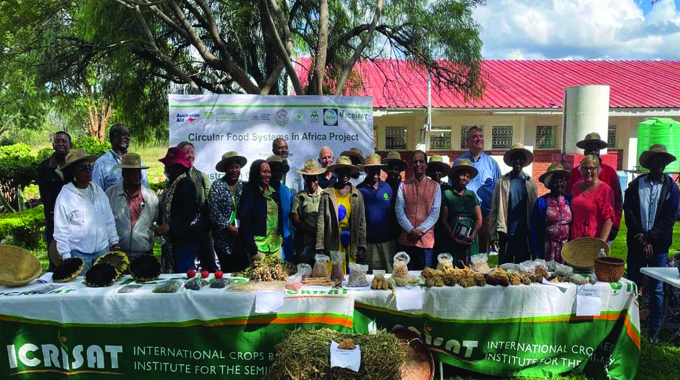
Another farmer, Ms Felistus Nkomo from Qinangokubambana Village in Insiza District, said they were making full use of all crop products, using residues for livestock feed.
“As farmers, we now ensure no by-product goes to waste. Crop residues are creatively repurposed —to produce hay from groundnuts and cowpeas, compost for soil fertility and urea-treated stover from sorghum and maize for livestock feed.
“We also use poultry waste to enhance the quality of livestock feed, exemplifying a truly closed-loop system. These agro-ecological practices have become the backbone of our livelihoods,” she said.



 Bongani Ndlovu