admin
admin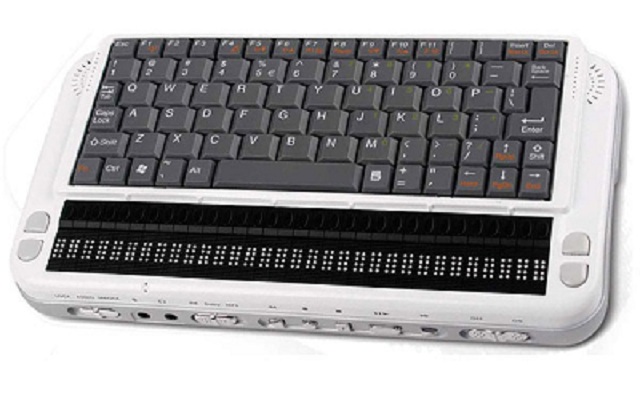

Robert Ndlovu
THIS brief discussion will highlight the extent to which ICT enable and accelerate economic and social inclusion of people living with disabilities.
This article is in no way exhaustive but serves as a “compass” to see where we are and where we are heading.
It must always be remembered that when ICTs are available, accessible, affordable and usable their impact on socio-economic development of communities across board is very profound.
Knowledge and information is today’s most valuable currency.
Thus is not restricted to naturally disadvantaged groups like the girl child, the disabled, people living with HIV, mentally challenged, incarcerated ones, commercial sex workers but everyone.
Disability is both a cause and a consequence of poverty.
Bearing in mind that most disabled people or those living with some form of disability live in poor countries, it is imperative that uptake of ICTs in the true sense of the word is affirmatively adopted so as to social and economically include this group.
Talk is cheap especially in Africa. We have those in positions of authority with capacity and ability to make decisions that can assist the disabled so much engaged in self serving cheap sloganeering.
As an example if you look at the ICT Draft Plan produced by the ICT Ministry It contains a single very brief paragraph with no flesh nor position as to where the Ministry plans or stands with reference to assistive technologies for people living with disabilities.
Here I am not only discussing those with physical challenges but also those with hearing and vision challenges.
And furthermore I will give examples of how social media has great potential as an assistive technology for those who are hearing.
Unfortunately environmental barriers continue to prevent persons with disabilities from accessing, participating, and being fully-included in social, economic and political in their communities.
Don’t look far. Ever been to most supermarkets parking bays, be in Bulawayo or Harare, there are NO parking bays for people with disabilities.
With this in mind it comes as no surprise that there is clear and precise clause in the national ICT policy towards people living with disabilities – save for a very generic statement of that mentions need to include them.
Well no one can blame them. People with disabilities (most) did not have a chance to input into that national plan.
So it might a question of an administrative over sight. I am sure somewhere someone has access to ICT resources for people living with disabilities and doing what you are suspecting.
Benefits of access to the ICTs by the disabled is visible when they are able to use ICTs to access health services, mobile banking, content production and many more at any level and hence make them universally competitive in any market.
SMS and instant messaging services are already being used by various health concerns to collect and or disseminate information to clients.
In a world where the Ministry of Health and Child Care is working to reduce infant mortality and the HIV burden, embracing of ICT is no longer a luxury but a necessity.
Before any meaningful provision of assistive technologies can be availed, all stakeholders especially organisations who work with disabled persons, schools and disabled persons themselves must come forth and demand what is due to them based on the equitable distribution and access to resources as enshrined in the Zimbabwean constitution.
The days of begging for what “belongs to Caesar are over”. Naturally this will not go down well with policy makers for their oversight, unless of course they come up with a well thought and knit cover up plan serving as an explanatory cut out.
If there is a shortage of ideas in this area I can donate a few thoughts. Recently, the Minister of ICT Supa Mandiwanzira announced that his ministry, working in tandem with Potraz, is setting aside some monies to fund software and application development in Zimbabwe.
This, he said, would be effected by directing some portion of the contributions Telcos make to Potraz under USF (Universal Services Fund) based on their annual sales or profits.
It makes logical sense to say that a fraction of that portion of the fund be directed to the development of assistive technologies living in Zimbabwe. The issue is no longer the availability of funds but how they should be allocated.
The onus now lies with the affected communities to push for this.
Access Technologies
The use of ICT by people living with disabilities opens a very wide door of opportunities on how people living with different challenges can join the bandwagon.
There is no one size fit all solution. People challenges need different solutions just remember that. Web services constitute the largest technology with the greatest impact on people living with challenges.
This is followed by mobile phones, which despite being a new technology has seen a pretty huge adoption by literally all sections of our community and even dawned a new era for the deaf and mute.
I have a friend who lives in Luveve suburb and now since I am not that advanced in my sign language skills.
I have found it very easy and extremely practical to communicate with her using Whatsapp. Bear in mind that she can read and type but can’t talk back.
As such the introduction of such technologies inadvertently empowered those who means of communication were limited to interpreters and the like.
More research needs to be done to come up with mobile applications that specifically take care of this group.
I will not discuss mobile money as its benefits are self evident.
The access to these mobile based services and applications allow independent living to people living disabilities.
TV and radio follow in that order and are a critical source of information and entertainment.
My point is that the so called software and application development fund must by design cater for this group.
More people especially in poor Africa now can access web services via the smart phone. This has played a very critical role in bridging the digital divide.
Web or internet based applications allow disabled persons to access web services in text, audio and or video format.
And in return the end user is able to send input via the keyboard, voice and even hand signal.
That alone defines a unique way of addressing different end user challenges by proving content in different formats.
A fraction of that money must be channelled in R&D of the technologies.
Allow these kids to tell their own stories in sign language and share it as video on FB or Youtube. This is no rocket science.
In this article I will not delve deeper into different available devices and gadgets that can help your special someone enjoy what others are in his or her own format.
To be continued. Comments and questions welcome.
Ndlovu @ Ymail .Com 077 600 2605


 Online Reporter