Chronicle Editor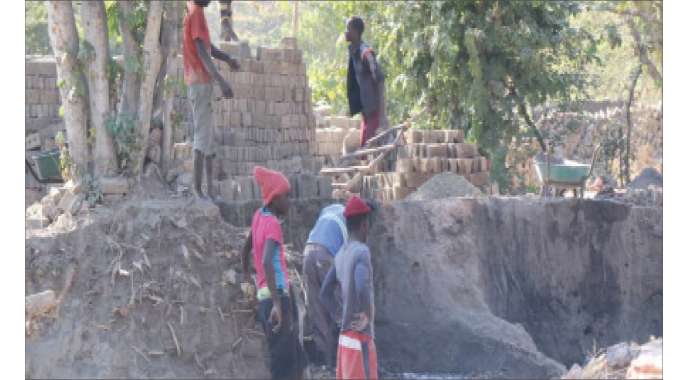
Leonard Ncube, [email protected]
ILLEGAL brick moulders have invaded an area along Kalope stream in Hwange where they are causing severe environmental degradation, including deforestation, soil erosion, and pollution of water bodies.
Hwange Local Board has since ordered the brick moulders to stop their illegal operations. For the past 20 years, the local authority in conjunction with police have been involved in running battles with defiant brick makers and clay soil poachers who are capitalising on demand.
In a statement, acting Hwange town secretary, Mr Paul Mabhureni said the local authority is working on rehabilitating the damaged areas.
“Hwange Local Board has noted with concern the ever-increasing illegal brick moulding activities within its jurisdiction, and has since resolved to stop this practice. Council is therefore appealing to those involved in this illegal activity to stop immediately and to destroy their sharks in these areas,” said Mr Mabhureni.
Hwange Local Board had given the brick moulders up to Monday to stop their activities.
“Please note that council is obliged to take stern measures against failure to comply with this directive. Extraction of clay soil for brick moulding in an urban area is not permissible under the Regional, Town, and Country Planning Act,” said Mr Mabhureni.
He said starting this month they will be working on rehabilitating the affected areas This follows a similar effort in 2020 to rehabilitate part of the area damaged after the Environment Management Agency directed the local authority to address the issue.
“The practice is seriously getting out of hand to the extent that some of the illegal brick moulders have put up shacks and are now residing in the area of concern. Efforts to implement the legislation at our disposal have over the years been met with resistance,” said Mr Mabhureni.
“Our security details have always been threatened with violence by poachers as they will be out numbering them.”
In 2021, Hwange Local Authority roped in security agents and other stakeholders under an operation code-named “Thunder Ball” which was aimed at protecting wildlife, curb the transportation or selling of wild animals, deforestation and land degradation in the country.
“As council we remain committed to curbing clay soil poaching activities and rehabilitating the affected area. However, it has to be noted that the rehabilitation exercise requires large amounts of resources,” said Mr Mabhureni.
“As council, we won’t be able to carry out the exercise without the assistance of other stakeholders since we are financially constrained.
“We are however, optimistic that the rehabilitation of Empumalanga Sewer Plant might curtail the clay soil poaching activities since the poachers are relying on raw sewer water, which finds its way to the nearby Kalope stream for brick moulding.”
The rehabilitation of Empumalanga Sewer Plant is part of the scope of works to be undertaken by the Ministry of National Housing and Social Amenities in the Empumalanga Housing Project where over 2 000 housing stands will be undertaken.
Hwange residents have also expressed concern over the massive land degradation. Greater Whange Residents Trust Coordinator Mr Fidelis Chima urged residents to adhere to council by-laws and environmental regulations.
“As Greater Whange Residents Trust we support brick moulding activities by local communities, but, however, that should be done at designated areas and within the confines of the law,” he said.



 Online Reporter