Online Reporter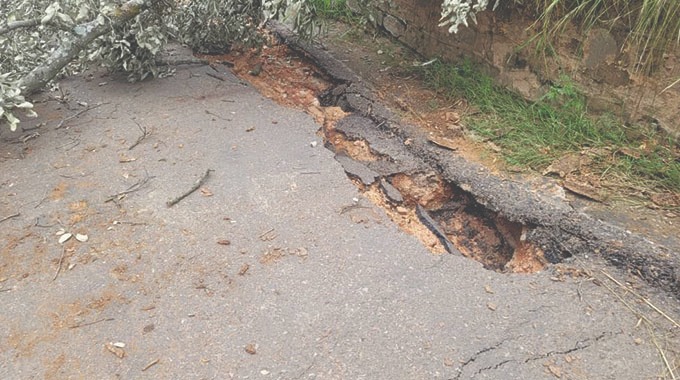
Patrick Chitumba, [email protected]
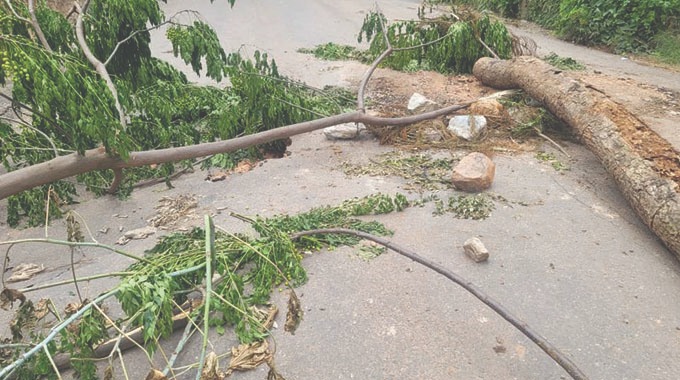
AUTHORITIES in Zvishavane have been forced to close a section of Novale Road after a massive crack appeared, posing a serious risk to motorists and pedestrians.
The damage has been attributed to rampant illegal mining activities, which have weakened the road’s structure and left nearby infrastructure vulnerable to collapse.
Novale Road is a key link connecting several suburbs and business hubs in Zvishavane. Its closure has caused significant disruptions, forcing motorists and pedestrians to take longer routes to access schools, health facilities and the town centre.
In an interview, Zvishavane Mayor, Councillor Takarangana Keta, confirmed the development, saying illegal mining had affected a section of the road making it unsafe for use.
“Novale Road has been closed because of cracks that have developed on it due to illegal mining activities. It is no longer safe for traffic to pass through the affected section of the road,” he said.
Clr Keta said the road links town centre, Hillview and Chinda Heights suburbs. He said the volume of traffic avoiding the affected section is now inconveniencing school children.
“Meanwhile, traffic has been forced to use Bulawayo road which is a long route. Many Shabani Mine Primary School pupils from Highlands and Eastlea, among other suburbs are using the Bulawayo main road resulting in congestion and as a result pupils are reporting late to school,” he said.
“The main cause of this is illegal mining taking place in Zvishavane. Many of our residents are relying on illegal mining leading to the destruction of infrastructure.”
Illegal mining has become a major challenge in Zvishavane, with illegal miners invading residential areas and damaging critical infrastructure.
Clr Keta said despite efforts to regulate mining activities, new illegal mines continue to emerge.
“We have many mines that are being pegged all over the town and these miners claim they have papers from the Ministry of Mines and Mining Development. For example, we have a mine near Zvishavane High School, which started operating recently,” he said.
Clr Keta said the mine is operating within the proximity of the school and there is dust affecting the pupils and teachers.
“The community is afraid that the blasting from the mine will cause the school buildings to crack and collapse,” he said.
Zvishavane District Development Co-ordinator, Mr Darlington Chokera, condemned the illegal mining activities, calling for urgent action to protect public infrastructure.
“We are launching an aggressive operation to flush out illegal miners. However, we also urge members of the community to report these activities and help us stop the destruction of infrastructure,” he said.
The Environmental Management Agency (EMA) has also raised alarm over the destruction caused by illegal mining in Zvishavane.
EMA Midlands spokesperson, Mr Oswald Ndlovu, said they had received many reports of illegal gold panning which is damaging roads and other key infrastructure.
“We received such reports and as the Environmental Management Agency, we are greatly concerned about illegal miners that are damaging roads in Zvishavane. Mining is a prescribed activity hence, it has to be done according to the regulations,” he said.
“Roads are a no go area for miners and sensitive ecosystems such as wetlands should not be disturbed by miners.”
This is not the first time that illegal mining has damaged roads in Zvishavane. In 2023, illegal miners destroyed a section of the Zvishavane-Buchwa Highway in Birthday suburb after discovering gold deposits along the road.
The damage forced authorities to create a detour as gold panners dug into the tar, leaving massive open pits.
In 2022, a road linking the Midlands State University (MSU) Zvishavane Campus and Novale suburb collapsed after miners dug tunnels beneath it.
The incident left vehicles stranded and forced pedestrians to find alternative routes.
Many illegal gold miners in Zvishavane used to operate at Sabi Gold Mine but have since moved into town following increased security at the mine.