

 Online Reporter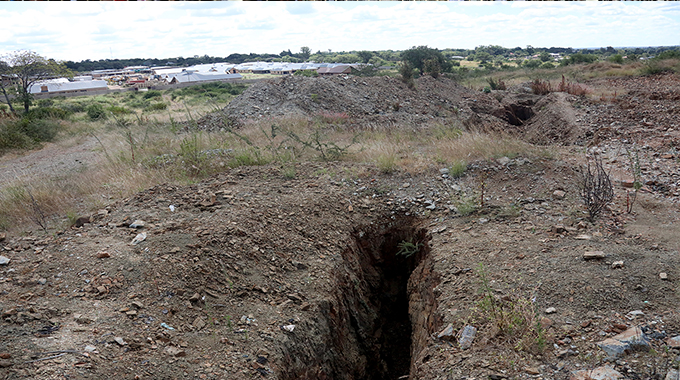
Raymond Jaravaza, [email protected]
ONE of Bulawayo’s most affluent suburbs, Mqabuko Heights, is under siege from illegal gold miners whose activities are causing extensive land degradation in a secluded part of the community.
The mining operations, located atop a small hill overlooking the suburb, have been ongoing for nearly a year, with residents growing increasingly concerned about the negative impact on their properties and the environment.
Mqabuko Heights is home to some of the city’s wealthiest residents, boasting immaculate homes built on large tracts of land. However, the continued presence of illegal gold panners has raised fears that the suburb’s property values could plummet due to the encroaching lawlessness.
Residents have called on law enforcement authorities to clamp down on the illegal mining activities, fearing that potential property buyers will be deterred by the disorder and environmental destruction.

“When the illegal gold mining started about a year ago, we assumed the panners had made a mistake and would eventually leave. But they are still here, digging at the top of the hill,” said resident, Mr Alois Mutunhu.
“Sometimes, I see them carrying picks and shovels up the hill, but I suspect they mostly work at night.”
Another resident, Mr Norman Mutero, expressed concerns over the environmental impact of the mining.
“The rate at which they are destroying the hill is alarming. One day, floodwaters full of mud and debris could flow into our homes during heavy rains,” he said.
“These gold panners have been here for a while and have figured out ways to evade police raids by only working at night and disappearing in the morning.”
A visit by Chronicle to Mqabuko Heights yesterday, confirmed the extent of the destruction. Deep trenches and extensive land degradation were evident on the hill, a clear sign of illegal mining. The panners, in their desperate search for gold, have ignored environmental and mining laws, leaving the area scarred by reckless digging.

Bulawayo has seen a rise in illegal gold mining activities in several suburbs, including Queenspark, Killarney and Mqabuko Heights. The situation has prompted authorities and environmental watchdogs to call for urgent interventions to curb the menace.
Zimbabwe Miners Federation Chief Executive Officer, Mr Wellington Takavarasha, said mining operations must adhere to strict regulations to safeguard communities.
“A mine must be at least 100 hectares away from residential areas, whether villages or urban dwellings. Furthermore, a blasting licence, which must be obtained from the Ministry of Mines and Mining Development, stipulates that a mine should be at least one kilometre from the nearest human settlement,” he said.
Mr Takavarasha added that mining operations should only commence with community consent, with relocation being an option in extreme cases.
Environmental Management Authority (EMA) spokesperson, Ms Amkela Sidange, reiterated that mining activities in Zimbabwe are governed by strict environmental laws.

“We need to understand that illegal mining can involve both unregistered individuals and some so-called established mining companies. However, EMA conducts regular raids to ensure compliance with environmental regulations,” she said.
“The challenge with conducting raids on the pick-and-shovel type of miners is that it’s almost impossible as they never stay in one place for long, especially when they do not know or trust you.”
Ms Sidange said EMA conducts awareness campaigns in communities and with organised mining groups, who come together to form mining clusters.
“Mining results in the loss of ecological ecosystems, including trees and biodiversity. From our side at EMA, it’s important to ensure that all environmental regulations are adhered to,” she said.


