admin
admin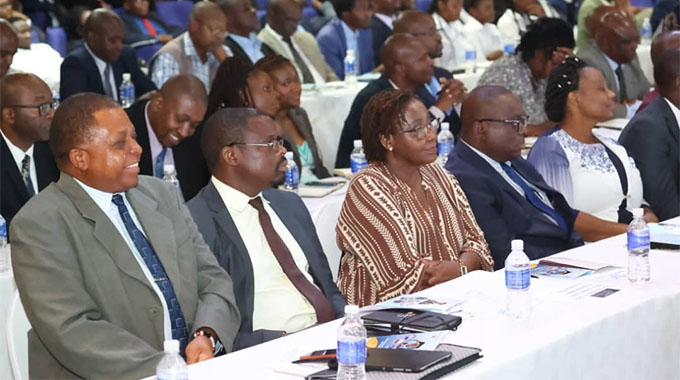
Baffour’s Beefs with Baffour Ankomah
One of the great sins of modern life – an era where you don’t even have to get out of bed to work, where gadgets have made it so easy to work while still in the blankets (well, I don’t mean the other kind of work that people do while still in the blankets) – is that you can communicate with the outside world from anywhere, including while still in the blankets.
This sometimes makes us slaves to the gadgets. Some people in fact leave their phones on 24 hours a day, seven days a week, so that while still in the blankets they can reply to their WhatsApp and other text messages.
I have actually seen people replying to their WhatsApp messages in church while the pastor is sweating away, breaking every eardrum with his high-volume sermons. One pastor’s wife in Harare apparently finds it so holy to reply to her WhatsApp messages, sitting in the front row, while her husband blasts away. The sins of modern life!
WhatsApp. Facebook. Twitter. Text messages. Where will the world be without them these days? They have become so part of us that it is now fashionable, nay the norm, in Zimbabwe and elsewhere to receive a certain magical four-letter text message, “I’m in a meeting”, whenever you try to contact high officials by phone as they sit in those interminable meetings that appear to have replaced real work in President Mugabe’s country.
Thirty-four years of journalism has taken me to a fair bit of the world, but I have never seen a country that holds more meetings than Zimbabwe! Please check your copy of the Guinness Book of Records, sorry your African Book of Records – if Zimbabwe does not come top of the countries that holds the most meetings, your Guinness or African book of records is a fake one.
A new pair of eyes
As a foreigner, who has kindly been allowed to become a mukwasha, and a good one as that if I am allowed to blow my own horn, I shudder to think when my good in-laws in Zimbabwe ever get the time to implement the decisions of the millions of meetings they hold every year!
Tell me, do they ever implement the decisions of those meetings? When they are sitting in more meetings everyday – sometimes two or three meetings in one day? To take ever more decisions! Which have to be implemented …
It must be one of the Seven Wonders of the World that Zimbabwe works at all – when people spend so much time in meetings while their paid jobs wait and wait, and sometimes do not get done. It is a strange way of working.
Which reminds me of what President Barack Obama said the other day, mocking gridlock in Washington DC during a White House Correspondents dinner in early May this year: “If you want to get paid while not working,” the American president told the journalists, “you should have to run for Congress just like everyone else.” Sweet, isn’t it?
Obama knows who works in Washington, and who does not.
So, in the country which was once part of the mighty Munhumutapa Empire, it has become the norm for officials, and not only officials, anybody in suit and tie, and there are 13 million of such people in Zimbabwe, a country whose population has forever been 13 million (and you wonder what they do in the blankets) to send out a deft “I’m in a meeting” text message back to you if you are so unlucky to phone them while they are in one of those meetings.
In effect, “I’m in a meeting” has become the shorthand for … (maybe I shouldn’t say it).
And nobody protests. In fact, to whom are they going to protest anyway? To the same high officials? Who are sitting in everlasting meetings? You can’t reach them because they are in a meeting. Don’t you see?
The clever cats at ZESA
It is like those officials at ZESA who think they are so clever to introduce pre-payment electricity meters, and yet in their infinite wisdom gives only a few shops of the OK supermarket chain the right to sell pre-payment vouchers to consumers. There are so few such selling points in Harare that consumers have to travel long distances to buy their electricity vouchers, standing in long queues!
For the sake of heaven, where did these ZESA officials go to school? Could they not have allowed all the supermarkets in town – SPAR and all of them included – to sell the vouchers so that buying electricity vouchers would be just like picking up an orange on the supermarket shelf and paying for it? Must buying an electricity voucher be another chore in this land of never-ending chores?
And even if they want only the OK shops to sell the vouchers, why don’t they let all the OK shops in town sell the vouchers? Why pick one shop here and one there to sell the vouchers, to the point where people have to drive or walk long distances to pay for their electricity?
If I have my way, and thank God I don’t have my way, the ZESA officials who sat in that meeting that decided to inflict this monstrosity on the people of Harare, and beyond, must certainly hear the sound of the boot of President Mugabe on their buttocks.
And surprise, surprise, nobody protests! It gives the impression that Zimbabweans are happy standing in long queues to buy their electricity vouchers! But are they? Really?
Beyond Zimbabwe
This disease, however, is not unique to Zimbabwe. It is only a matter of degree. This disease is very African. It afflicts a whole continent where meetings appear to have replaced real work. And we wonder why, as one Ghanaian economist, Dr Nii Moi Thompson, once put it, “we are certainly on the move, but we are doing so in circles”.
Did I say it was only a matter of degree? Out there in the West African sub region, Ghana, according to Dr Nii Moi Thompson, is “certainly moving forward, but [it is] doing so in circles”. Beautifully put. Nobody can beat it. Except maybe Ayi Kwei Armah, the Ghanaian writer of repute, whose tome, The Beautyful Ones Are Not Yet Born, still chides us from its yellowing pages.
Domiciled in Senegal for decades now, Armah, who has since become a studious Egyptologist, suggested last year a novel approach to work in Africa that the mandarins who sit in those meetings in Zimbabwe should care to know, and learn from.
Armah’s “innovative” approach to work, in fact, is not “novel” at all as it is based on the Ancient Egyptian Shemsw Matt work ethic, a millennia-old system which allowed groups of like-minded persons to get together to pursue a chosen aim, or allowed specific groups to choose their own purposes and methods of work, according to their values.
This presented a work ethos radically different from the advantage-seeking, profit-driven European work ethos.
For the good of Zimbabwe and Africa at large, allow me to quote Armah in great length here. I do so mindful of a statistic I saw last year which said Africa had, and still has, over 60% of the world’s Liberal Arts students! And we wonder why we are moving forward in circles!
What the colonialist ordered
Here is Armah, writing last year: “Among African intellectuals, interest in the sociological and economic study of work processes is low. The best-known authors in the field are likely to be Weber and Tawney. Their works focus on the rise of industrial capitalist economies in Europe and America, and the influence of ethical ideas on industrial economic systems.
“A different author, Veblen, studied a pre-industrial ethos based on the inferior status (denigration is the word) of technical and practical work. Before the Industrial Revolution, and then the French, Russian, and Chinese revolutions, academic theories of work processes were dominated by principles derived from [the Greek philosophers] Plato and Aristotle, who theorised practical [and] technical work as something to be cleverly avoided by noble, intelligent persons.
“They taught their theories in educational institutions whose names are still carried by the places we, Africans intellectuals, were trained in: the academy and the school.
“The academy was originally the place where young members of a ruling elite endowed with leisure (school is derived from leisure) because they did not have to do economic work, went to be educated for public office.
“The curriculum excluded practical or technical work. A well-educated gentleman of the ruling elite was proud to have no technical skills. Educational institutions of the Liberal Arts type were designed to produce such technically incompetent intellectuals.
“Europe and America have shifted steadily away from the Aristotelian approach to the work process since the Industrial Revolution. But the old system was implanted in Africa in colonial times, and is still the dominant educational model.
“For that reason, the majority of African intellectuals today have predominantly (and sometimes exclusively) rhetorical skills. We can teach by talking, but not by doing technical work. This means we do no economically productive work, in any case not directly.
“How then do we make a living? In the same way Plato and Aristotle did: By playing call girls to tyrants, governments, corporations, and foundations. This is not because we are committed to them. The reason we work for them full-time or part-time is that we do not know how to earn a living directly through sales of products we make ourselves.
“What we have been taught to do is to sell our acquired knowledge to the only agencies that have accumulated large economic surpluses, and therefore can integrate us into their prebendal economy.
“All African intellectuals today are trained to work inside this system-maintenance structure. Ultimately, as far as working practices go, this means we are kept busy performing routine maintenance functions (teaching, research, conferences, festivals, celebrations of the existent).
“So we have no time left for designing a different economic system, social order, or work ethos. We can talk about change, but we cannot work for it, since work takes time and skill, and we have neither.
“Philosophically, Aristotelian governance assumes that the aim of activity is to maximise leisure, and that the aim of economic activity is to secure advantage, or profit, or imbalance, or asymmetry. People who correctly socialise inside the system automatically assume that the Aristotelian work ethos is the only one, or the best one.
“They may therefore behave in accordance with the search for advantage (refuse to share sacrifices, refuse to share technical work, but agree to share benefits) not because they consciously want to cheat, but because they have acquired the reflexes of well-educated elite individuals …
“The Shemsw Maat ethic is better, original, and African. Its weakness is that it is experimental, still to be given substance, and vulnerable to puncture.”
—–The last word—–
So what am I saying with the above long quote from Ayi Kwei Armah? My message is simple: The white man who claims to have brought formal schooling to Africa, has since moved away from the Aristotelian approach to work, where practical and technical work is shunned.
Since the Industrial Revolution that occurred in the 18th and 19th centuries, Ayi Kwei Armah tells us, “Europe and America have shifted steadily away from the Aristotelian approach to the work … But the old system was implanted in Africa in colonial times, and is still the dominant educational model.
“For that reason, the majority of African intellectuals today have predominantly (and sometimes exclusively) rhetorical skills. We can teach by talking, but not by doing technical work. This means we do no economically productive work, in any case not directly”, and even more so when we sit in interminable meetings!
I am pleading that we, as Africans, must also move steadily away from the Aristotelian approach to work, and ditch the the Liberal Arts type schools and curricula.
The colonialists imposed this type of education and work process on us for their own selfish reasons. We have no excuse today to continue a system whose originators have since ditched, a system that has brought us more meetings for our own good.


 Online Reporter