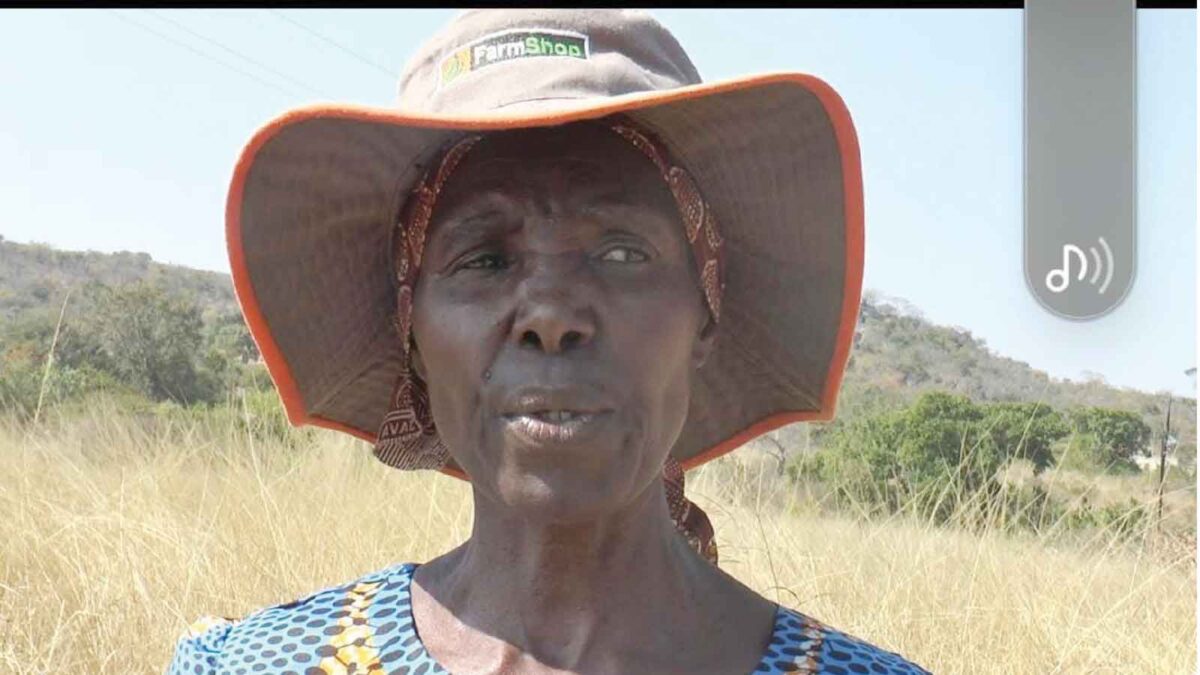
Civilians and war collaborators — mujibhas and chimbwidos — frequently found themselves at the receiving end of brutality by the Rhodesian Security Forces. They were often attacked, killed and maimed. One such tragic incident occurred during the famous Battle of Chidhoma in Hwedza in 1978. At the time, Hwedza, in Mashonaland East province, served as a critical operational zone for the Zimbabwe African National Liberation Army (ZANLA), which had deployed hundreds of liberation fighters to the area. ZANLA combatants operated in small sections and were often armed with bazookas, light machine guns and RPG-7s to execute hit-and-run ambushes against Rhodesian military convoys, patrols and supply lines. These operations relied heavily on local village networks, particularly war collaborators who provided food, intelligence and cover. LORIET GONESO, a surviving war collaborator from the Battle of Chidhoma, recounted the attack to our Society Editor PRINCE MUSHAWEVATO. She described how the Rhodesians launched an aerial bombardment in Chidhoma, killing seven comrades, several chimbwidos and numerous civilians.
*****************
Q: Could you start by identifying yourself and describing the role you played during the liberation struggle?
A: My name is Loriet Goneso.
When the famous Battle of Chidhoma took place, I was a 16-year-old war collaborator.
The battle occurred on August 8 (1978) between 10am and 11am.
I could not tell the exact time back then because I did not own a watch, but we estimated the time based on the sun’s position and the fact that we regularly fed the comrades around that time every day.
Q: Can you tell us exactly what happened on that day?
A: On August 8, we were gathered with 12 comrades and 13 female war collaborators (chimbwidos).
Our male colleagues (mujibhas) were not present — I believe they had been sent on an assignment to other bases . . . I did not see any of them at the time.
As we were gathered, a fighter jet flew overhead. Everyone became alert, as we had been trained to react to aircraft in our airspace.
While we were still trying to figure out what was happening, a large Dakota aircraft began flying directly towards us and we immediately realised we were under attack.
The comrades instantly shouted, “Take cover!”
The women were wearing brown skirts and blouses, while the comrades wore green attire. Since it was August, the trees had recently shed their leaves, leaving the area very exposed and offering us few places to hide.
Q: With few options for cover, how did you react to the approaching enemy aircraft?
A: We ran for our lives, which prompted the Rhodesian soldiers to open fire on us. They shot indiscriminately.
I saw Mukoma Chenjerai (Maorerakure) being hit by a bullet and fall to the ground, followed shortly by Mukoma Edmore.
I was with my two younger siblings, aged 13 and 14.
One of my siblings was shot and severely injured.
Still, I kept running towards Maninga Mountain for safety — carrying one sibling on my back while holding the other by the hand.
I covered a considerable distance trying to save them as the aerial bombardment intensified with more incoming planes.
At the same time, enemy aircraft were dropping paratroopers into the area.
Q: Did the freedom fighters fire back?
A: Our comrades were outnumbered, so they could not fire back immediately.
Their only logical strategy was to tactically retreat and regroup.
As I ran towards the mountain, the sibling I was holding by the hand succumbed to gunshot wounds and I had to let her go.
I kept running with my other sibling on my back. Tragically, she was then shot in the head and died instantly, but I did not drop her right away.
I kept clutching her legs while her body swung on my back, unable to accept that she was gone. Reality only struck when I realised she was unresponsive and I finally let her go.
As the assault intensified, I realised I would not make it to Maninga Mountain because the enemy was using it as an observation post to spot freedom fighters before launching attacks.
Realising they were attacking from that direction, I turned around and ran back towards the freedom fighters’ base.
When I arrived, I saw that many people — civilians, war collaborators and comrades — had been killed.
Q: What happened next?
A: With the aerial assault still underway, I wedged myself between two rocks that were barely large enough to conceal me and pretended to be dead. My right leg was severely injured, but survival was my only priority.
As the Rhodesian aircraft dropped more soldiers, they also released tear gas, making it difficult to breathe or move.
I managed to stay completely still between those rocks for the remainder of the attack, which finally ended around 4pm.
During the assault, dry fallen leaves caught fire, quickly spreading flames across the base.
The fire crept towards me and burnt part of my clothes.
Even then, I could not move — doing so would have alerted the enemy that I was still alive.
To this day, I carry permanent burn scars on my right side.
After the flames died down and the aircraft stopped circling, the assault came to an end.
Shortly after, I heard the soldiers conducting a sweep of the area to eliminate or capture survivors and they eventually reached the spot where I was hiding.
Q: How did you react at that moment?
A: One of the soldiers stepped on my back and told his colleagues I was still alive.
I thought that was the end of me.
He cocked his gun to shoot, but a white officer who appeared to be in charge stopped him . . . Miraculously, they left and continued searching the area.
During the battle, our comrades managed to shoot down one of the enemy fighter planes, which crashed near our home in Sabhuku Tavhero’s area.
I am not sure if they managed to down any other aircraft.
Around 5pm, the Rhodesian forces began gathering the bodies of those killed in the assault.
I witnessed everything.
Q: Where were they taking the bodies?
A: They slung the bodies underneath their helicopters and flew them towards Chimudhuri.
At the time, I thought they were taking them to Harare.
Around 7pm, I tried to figure out where to go.
I could not return home because our entire village had been burnt and everyone had fled.
I decided to walk towards Makanda village, but it was a gruelling journey given my injuries — a dislocated leg, shrapnel in my head, a swollen face and extensive burns.
When I reached the first house, an elderly woman was shocked by my appearance.
She asked where I had come from, gave me clothes and fed me porridge.
She also told me about an injured comrade up in the mountains, but I was in no condition to travel further.
The next morning, local war collaborators learnt that I had survived the attack.
They told my parents, who came to collect me. Later, villagers went to Chimudhuri to collect the dead.
Although I could not attend due to my injuries, I was told the male corpses had been mutilated and their private body parts handed to relatives of deceased female collaborators (chimbwidos), with the soldiers taunting them, “Takurai vakuwasha venyu (Carry your sons-in-law)”.
I was only able to attend their burial.
Q: Did you receive professional medical assistance for your injuries?
A: I was taken to Rusape for treatment, but I was advised against being admitted to a general hospital, as that would trigger an investigation by Rhodesian authorities.
Instead, I was treated by a private doctor.
My leg was dislocated and I spent three painful months in orthopaedic traction to reset it.
Doctors also discovered a bullet fragment lodged in my head.
In total, I spent five years recovering in Rusape before moving to Harare.
Around 1996, I received a one-time partial compensation payout for my injuries, though, unlike my colleagues, I never received the full amount.
The fallen comrades, including Chenjerai and Edmore, were initially buried in the village before being reburied.
Six or seven of the victims from the Chidhoma battle now rest at the Mukamba Heroes’ Acre in Hwedza.
Today, I remain a dedicated ZANU PF member, standing firm in the commitment I made during the liberation struggle.