

 Online Reporter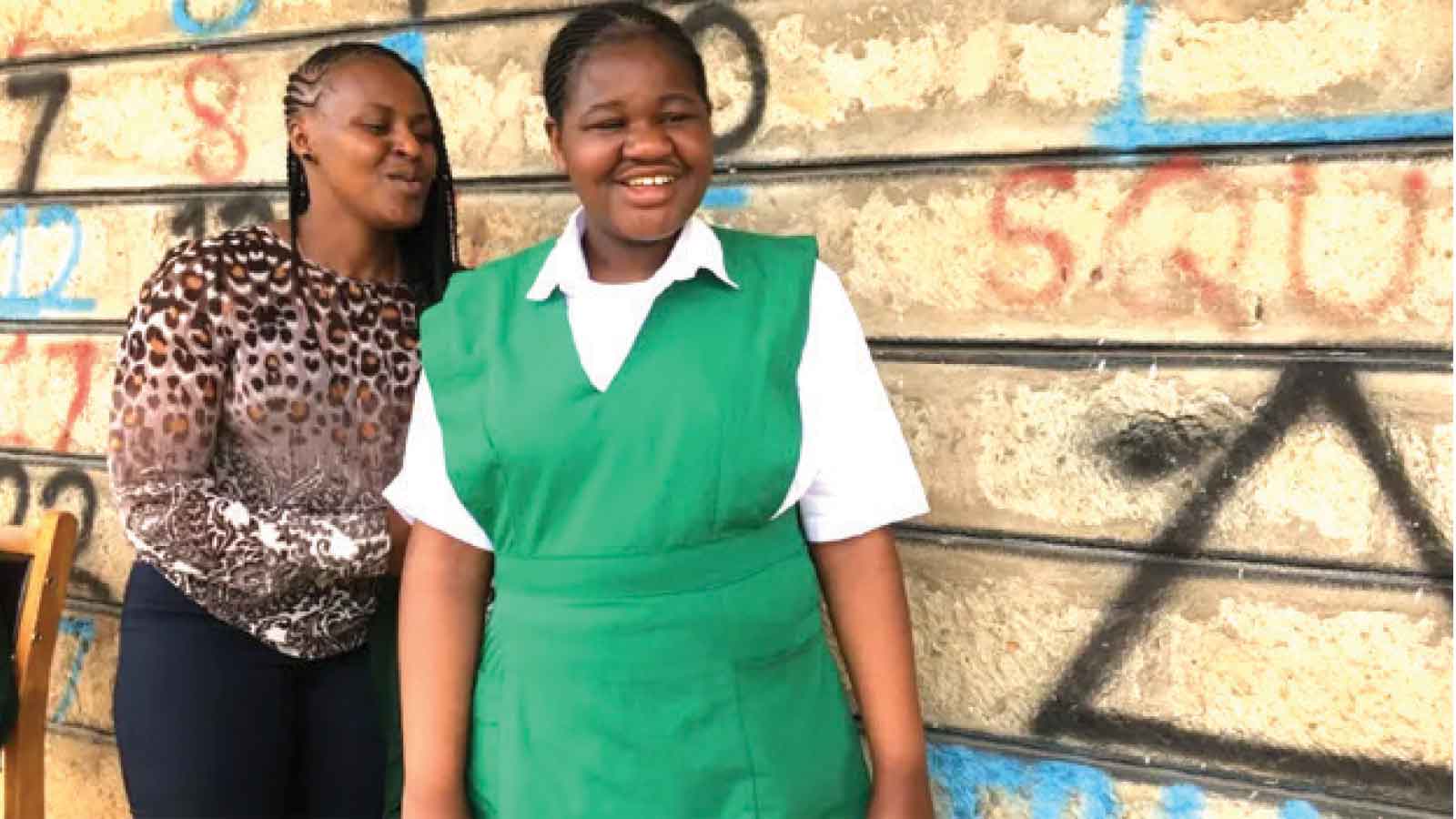
When Agnes Mutemi discovered that her first-born daughter Nambia was mentally ill at the age of two, her first reaction was to be ashamed. She remained in denial for several years until she found a school which specialised in caring for children with disabilities.
The 38-year-old mother of three says that most of her discomfort was triggered by the gawping, stares and ill treatment she faced on a daily basis.
“During the first years, I often used to ask myself why I had been given such a child.
“It was tough walking around with my child because of the looks I got,” says Ms Mutemi, who lives in Katoloni village in eastern Kenya.
Agnes says Nambia had asphyxia, a condition that occurs when a baby is deprived of oxygen during the birth process.
As a result, Nambia’s limbs were weakened and her mental development affected.
After numerous physiotherapy sessions, Agnes enrolled her daughter in an early childhood education school when she was three.
“It was only after Nambia spent six years in nursery school and still couldn’t do basic things that I realised something was wrong,” says Agnes, adding that the cost of medical care for a mentally ill child in Kenya is very high.
“I had wanted my daughter to have a career — to become a teacher, a professor or a doctor, but that was not to be.”
At one point, Agnes even decided to stay at home with Nambia since she wasn’t being accepted in “normal” schools.
But what really changed Agnes’ life was meeting an old friend who advised her to take her child to a special school.
“After seeing changes in my daughter I finally accepted her condition.
“I’m no longer in denial,” she said.
Nambia, now aged 14, goes to the Machakos Unit for the Mentally Challenged, staffed by local and foreign volunteers from British development charity VSO.
She has learning disabilities, but this has not dampened her high-spirited nature and she loves playing with her classmates.
And despite being largely non-verbal, Nambia is an active teenager and has developed a strong bond with her mother.
Nambia is among the more than one billion people in the world living with some form of disability.
The World Health Organisation says about 15% of the world’s population have some form of disability and the prevalence is higher for developing countries.
According to Unesco, 90% of children with disabilities in developing countries do not attend school.
In Kenya, there were 1,341 special units and 114 public special schools in the country in 2008, according to a 2009 report by the ministry of education, which is the most recent available.
But this is not enough and not every disabled child gets the same care as Nambia.
The 2009 report showed that about 90% of Kenyan children with disabilities were either at home or enrolled in regular schools with minimal or no specialised care.
—BBC



