Victoria Ruzvidzo and Fungi Kwaramba
Zimbabweans have the capacity to face any challenges, and through collective effort in sectors such as mining and agriculture, the country is on course to achieving its development goals, President Mnangagwa said.
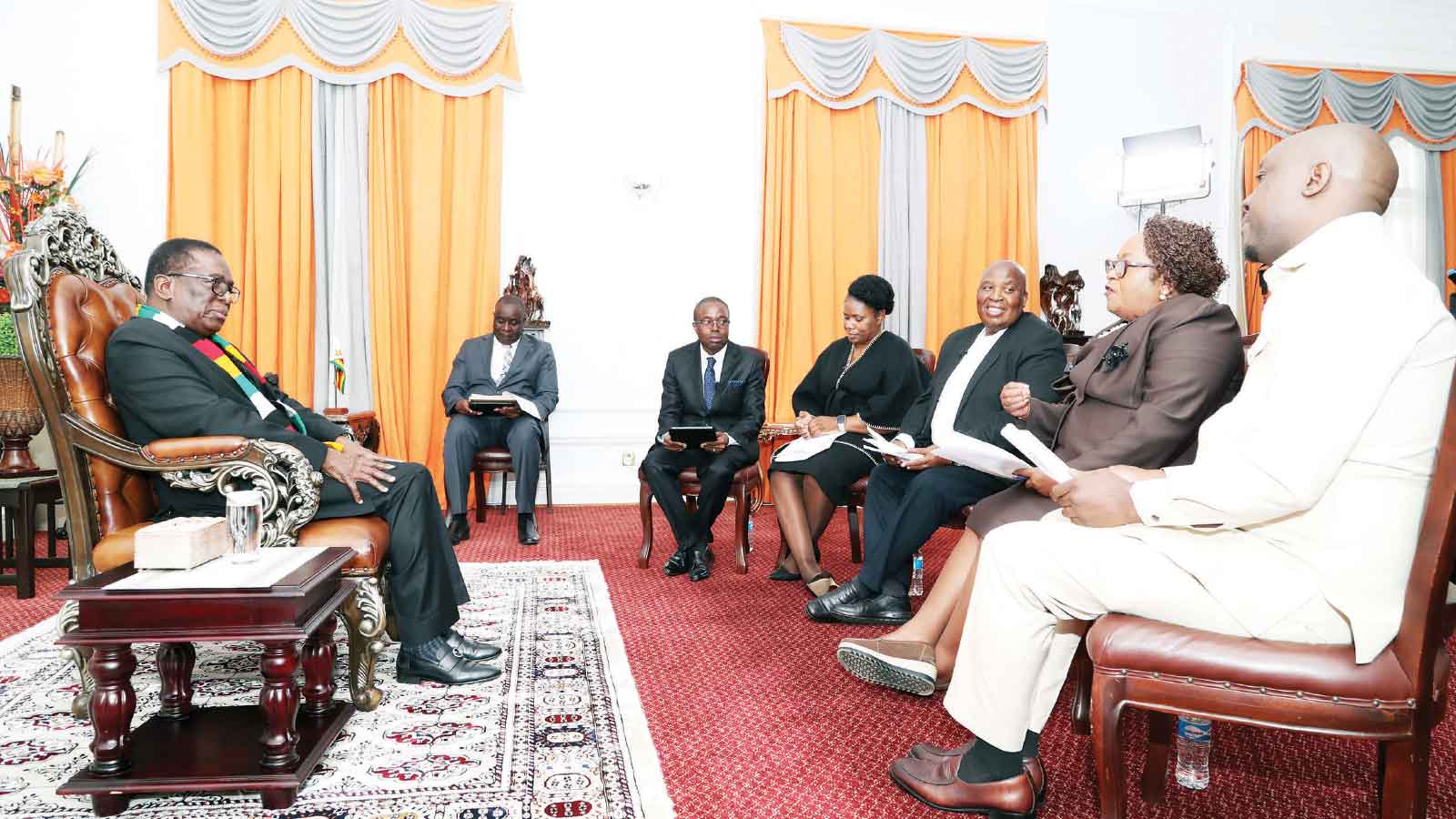
In a wide-ranging interview that touched on the recently assented Constitution Amendment Act, the return of Zimbabweans fleeing xenophobia in South Africa, mining and agriculture, at the State House last Friday, the President said even though Zimbabwe faces challenges just like any other country, he takes comfort in the fortitude and resilience of Zimbabweans who have collectively put shoulder to the wheel towards achieving a shared national vision.
“To be honest, I feel that I am privileged as President of this country, because wherever I go, you find that our people, at every level, are committed to developing the country. You can go to any part of this country; there is no part of the country — village, district or province which has no programmes.
“They have programmes, they have targets, which they set by themselves. What else would you want as a leader? I feel very proud. I can sleep comfortably with the type of country I lead,” the President told editors drawn from the State media.
The President said unity of purpose was critical in achieving national development goals.
“Everyday that passes, as long as we are breathing, we continue to consolidate (unity). There is no day or week that we say we are resting. We continue to do our best individually and collectively to consolidate and embrace the systems which we have ourselves decided to have for our Government so that everybody is on board.
“There is not a single person or leader who says he is wiser than everybody else, but collective ideas produce collective wisdom of a country. So, I believe in the collective persuasion of the country,” said President Mnangagwa.
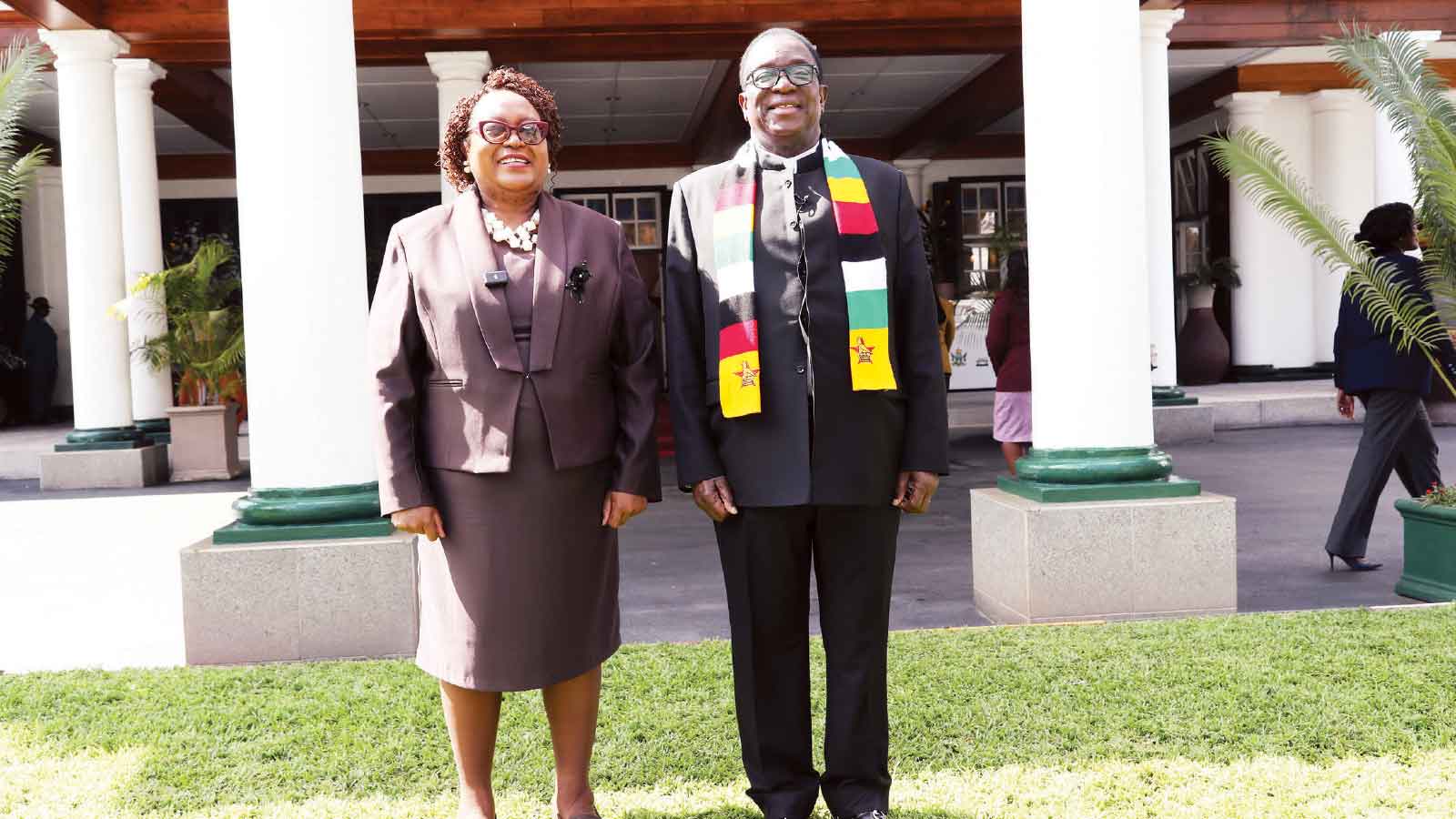
When asked whether he ever has nagging matters of national concern that give him sleepless nights, the President said, “Well, it’s not easy to have a country that has no challenges — perhaps in books. In real life, every country has challenges. And no challenges face a country unless the country has the capacity to face the challenges. Are you clear?”
To surmount such challenges that may arise, the President said it is crucial to have clearly defined goals that offer the guardrails for the country’s development trajectory.
“Well, it is critically important to have goals, to work towards goals. Whether you achieve goals, it’s one thing, but at least you can see that we are a people who are focused, who set goals for themselves. But achieving them is another story. When you set a goal and pass the period, you can ask why we have not or we have achieved, not before. But at least if you say, “Mr President, why are you not setting goals?” then you would be questioning my wisdom. But now you are saying, “Are you going to achieve the goal?” At least we have goals,” said the President.
Among the goals that the country has set is the establishment of value addition and beneficiation plants so as to extract value from its mineral endowments, create jobs and improve value.
Asked if there is a specific timeline for setting up local refineries to ensure local beneficiation and value addition, the President said while there is no date yet, the country is following the correct path.
“I think the policy is correct. We have not set up timelines for making sure everything is beneficiated, but that is the goal to achieve because it requires resources. What is important is that we are following a correct path for benefiting the country on the basis that these resources should benefit the country mostly than those to whom we will sell our resources to,” he said.
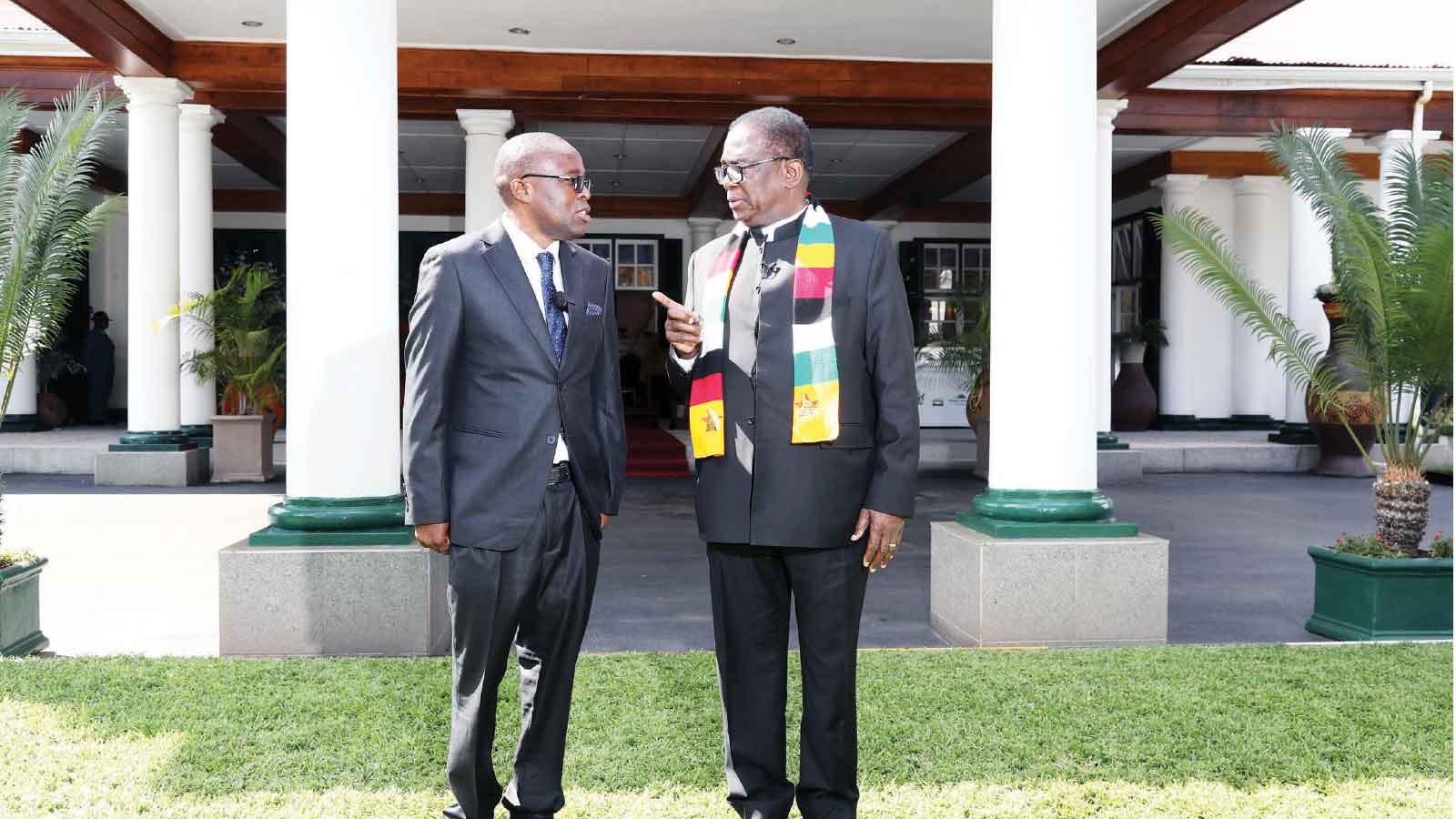
Other African countries have tried to enforce raw mineral export bans, with mixed fortunes and President Mnangagwa said the country possesses a unique set of skills that it can harness to attain its objectives.
“I can be very, very clear: Each country has its own boundaries. Zimbabwe has its own boundaries. So, we are unique. So, our issues should be dealt with uniquely as a country. We succeed as a country, fail as a country. We don’t need to emulate the failures of other countries or the successes of other countries. What we need to do is to do the best for our country on the basis of the resources and the skills that we have, and the vision as a country which we have, and what we need to achieve. That is the platform from which we develop our country,” he said.
Agriculture, which has always been the mainstay of the country’s economy, faces headwinds in the form of the predicted El Niño phenomenon, which causes low rainfall patterns in Africa and often causes devastating droughts.
To insulate the nation against weather vagaries, the Second Republic is on an ongoing mission to construct dams that will provide water for irrigation.
Overall, President !Mnangagwa said he was confident that Vision 2030 was well on course emphasising that it was critical that stakeholders sing from the same hymn book.
“As long as journalists like you can share the confidence, we will go forward. We are very very confident. But that confidence can only be exuded across the country by your selves. Are you confident? He chuckled as he asked the journalists present during the interview.
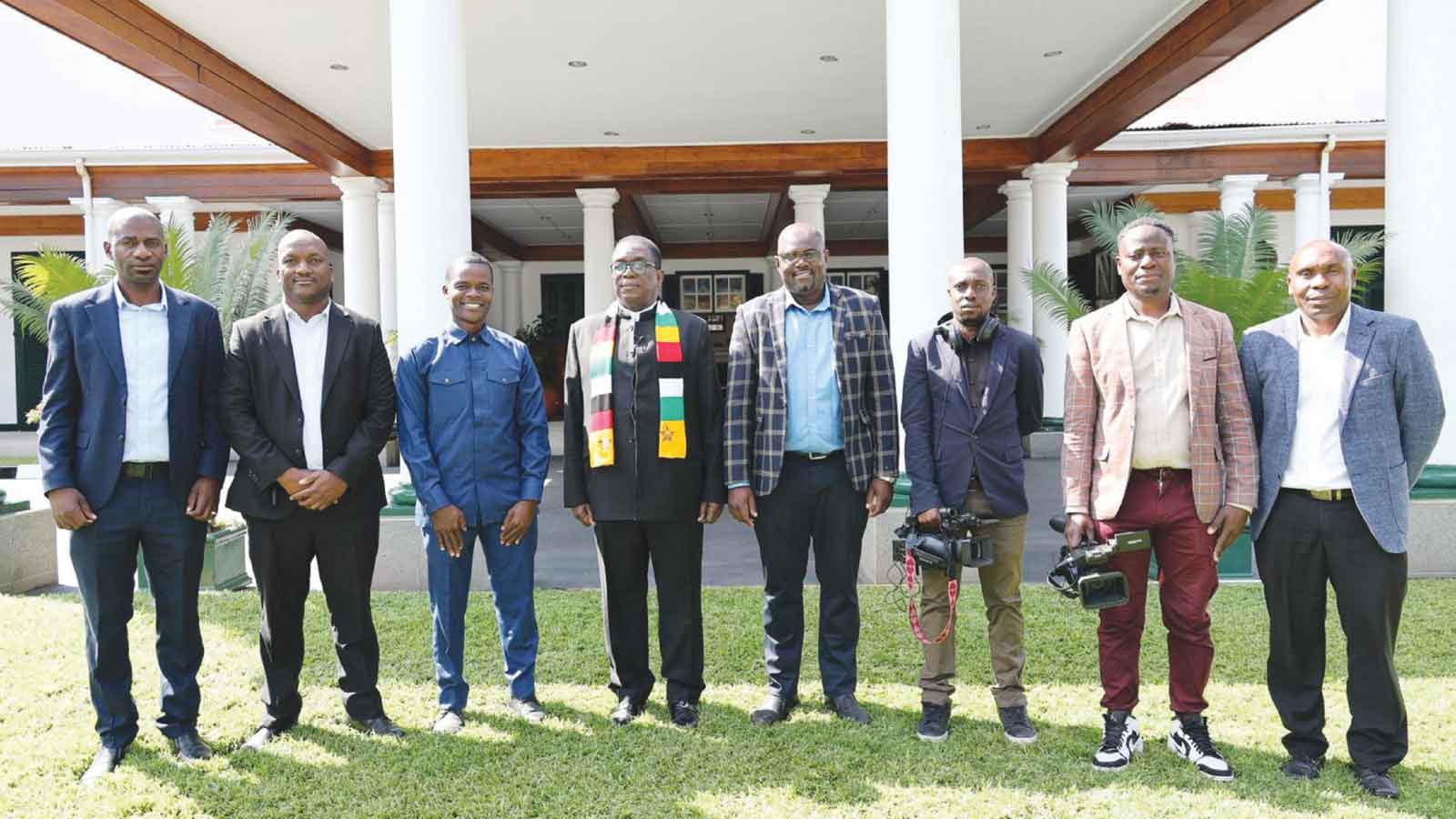
On the regional level, the President said that as Zimbabwe takes over the chairmanship of the Common Market for Eastern and Southern Africa (COMESA), the largest regional economic organisation in Africa, with 21 member states, the President again said it is the collective that is taking charge.
“I think Zimbabwe is highly qualified to be chairman of COMESA. I don’t know about the press — our media — whether it is highly qualified to be the COMESA media . . . If you are qualified to be COMESA media, then I as President, I am highly qualified. I’m happy to hear that”.
With Zimbabweans from the Diaspora, largely from South Africa, still streaming back into the country following a wave of xenophobic attacks in the neighbouring country, the President said the door remains open for everyone to come back into the country and help grow the economy towards Vision 2030, including those who have been critical of his administration.
“I have no doubt that each one who comes back knows where they came from before they went to South Africa. So, the first thing is to go back to roots and begin from there as they integrate in society. So, there is not a single problem. Government is not facing any problem at all. We do facilitate their transport, their welfare, we do that. But each one gives us an address: ‘I want to go to Chipinge, I want to go to Bindura.’ We facilitate, and they go to their homes. And whatever facilities we give to people already in the country, they will also enjoy those services we are giving. So, there is no problem at all. Every Zimbabwean who is in the diaspora is welcome back home.
“I have not received any complaint from the education system that they are overwhelmed by the children who are coming from across. Until I receive that, then I will see what to do. But for now, no complaint has come,” said the President.
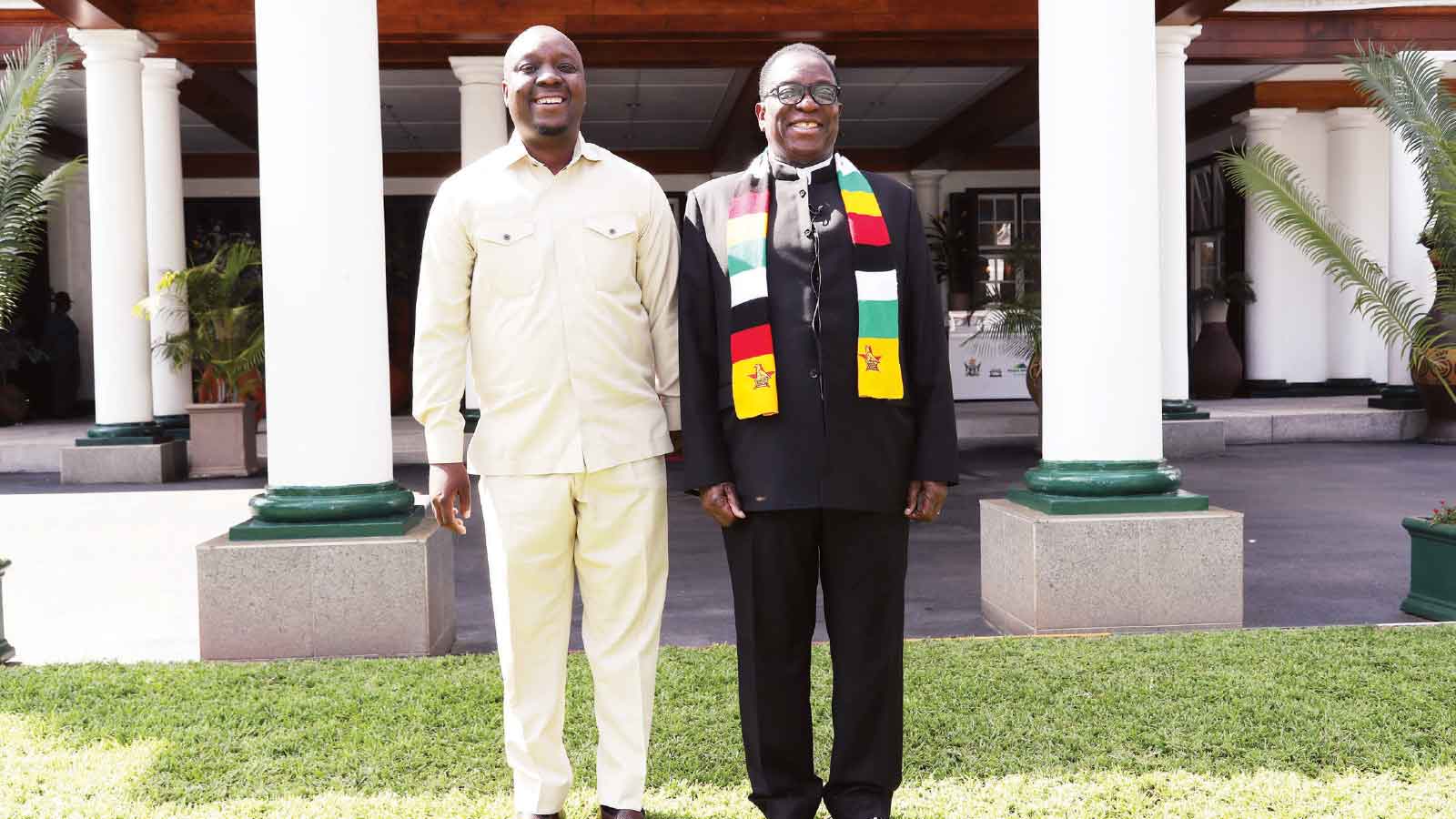
He also underscored that Zimbabwe is a democracy where divergent views are allowed.
“We are a democracy. Those who have grievances against their country, they are allowed to express their grievances. And they will not worry about that. But most importantly, they should come back home and help us resolve those grievances which they see. They can’t be resolved when they are outside the country,” he said.
A respected Pan-Africanist, whose administration is guided by Pan-Africanism, the President said Zimbabwe will use its position as a non-permanent member of the United Nations Security Council to push the region’s aspirations.
“We will not be acting individually or in isolation. We go there representing our region. So, whatever Zimbabwe will articulate will be a collective view of our region. It’s not an individualistic approach to these issues. We have to represent our region, and that is the model of representation at the UN,” said the President.
He added that the regional leadership is Pan-Africanist and acts of xenophobia in some parts of the continent are being perpetrated by “small groups”.
“To be honest, I don’t think I am aware of any Government on the continent which supports that. These are small groups who do such things. But generally, we are Pan-Africanists; we accept ourselves as Pan-Africanists wherever we are,” he said.