admin
admin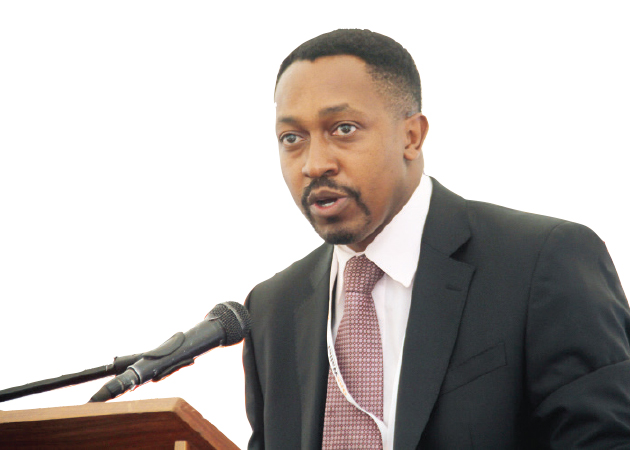
Prosper Ndlovu, Business Editor
THE capacity of Zimbabwe’s manufacturing industries to satisfy demand has come under spotlight following the promulgation of Statutory Instrument 64 of 2016, a fortnight ago, which prohibits importation of a range of products that are available locally.
Since then, there has been a lot of talk regarding the local industries’ capacity to fill the gap created by the banning of the imports.
Below, the Confederation of Zimbabwe Industries (CZI) president and United Refineries Limited CEO, Busisa Moyo (BM) responds to questions from Business Editor Prosper Ndlovu (PN) on the state of industries, the challenges, milestones and capacity to satisfy market demand.
PN: Firstly you have been steering CZI as president since last year. What is your overview of the state of industry in the country at the moment and perhaps your outlook on the first half of 2016?
BM: Industry has attracted a lot of attention and there is a lot of work in progress that has not yet fully materialised.
Special Economic Zones are yet to materialise. Agriculture Value Chains have been identified under our Value Addition and Beneficiation but require funding and investment.
The 99-year leases are still to be finalised yet this is key to production of raw materials.
The first half of 2016 had challenges and volumes indicate that capacity was between 15-20 percent below previous years.
The challenges include cash shortages and as such consumers are constrained. This ultimately leads to reduced consumer expenditure.
PN: What milestones have you achieved as an organisation under your leadership and the challenges you have faced?
BM: Continued input into Government policy and intervention has continued and we have developed a rapport that allows us to build consensus.
We have seen companies investing in manufacturing plants. These include Pepsi, Paramount Garments, Willowton, Arenel and other larger corporates.
More than 44 percent of companies have embarked on re-tooling.
Companies have also embarked on contract farming and linkages to boost production.
We also visited countries such as the United States, Italy, Botswana and France to learn from them.
The organisation also hosted delegates from several countries like Germany, South Korea, China and Turkey.
CZI signed a partnership and collaboration with Turkey in May. UNIDO will be launching the Country Industrialisation Programme and is also working closely with Ministry of Industry and Commerce on the industrial development policies.
The Special Economic Zones Bill is at final stages and CZI in 2012, was key in inputting and lobbying for these special economic zones.
We have assisted companies to re-tool by engaging original equipment manufacturers at this year’s ZITF.
To boost efficiency CZI has embarked on two lean manufacturing workshops.
PN: CZI has been vocal in pushing the value addition and beneficiation thrust alongside the Government. What is your impression on progress in this front, constraints and opportunities?
BM: The momentum in this initiative is high.
The only outstanding issue is investment and funding.
We are continuing to work with the Government on issues of value addition and beneficiation and we are eyeing London to canvas for investment.
The cotton cluster, the leather sector, horticulture (farm-to-fork) value chains including flowers and citrus are high multipliers opportunities for manufacturing.
ICT and Tourism are also complementary industries that increase demand and consumption.
PN: We have seen companies downsizing and reducing their workforce since the beginning of the year. How has this impacted on the economy and the well being of industries?
BM: The issue here is that demand is low and policy changes are slow. So, companies have to improve efficiencies to survive.
PN: Are there any new investments that you have attracted as a body since last year?
BM: We continue to facilitate and create opportunities for members through our networks and profile. Our primary focus is to create a conducive environment for investors and business.
PN: Comment on the recent tightening of imports by the government under Statutory Instrument 64 of 2016, its effects and significance on the economy in light of the public outcry?
BM: CZI supports polices and measures that promote local production which at the end of the day creates employment.
The country needs foreign currency which can only be earned by producing surplus for export.
We therefore fully support the banning of importation of some products that can be produced locally. Government and the private sector have agreed to set up a committee to monitor the situation to avoid shortages.
We should appreciate that Zimbabweans are crying for employment opportunities.
The same people who relied on imports as source of income want employment. There is also the issue of consumer choice.
PN: One major challenge for local industries has been access to finance and obsolete equipment. Is there any hope that this challenge will be resolved?
BM: We continue to canvas for investment and encourage the banking sector to support our re-tooling agenda.
Our Turkish counterparts have offered to assist in this regard with technologies and likewise local non-bank financiers are entering lease and asset finance.
PN: What is your comment on the opportunities for Zimbabwe given the external pressures such as appreciating US$ against regional currencies, falling commodity prices and stagnation in major trade partners such as BRICs?
BM: Internal devaluation or reducing production costs is required.
This is the only way we can make our products competitive internationally.
PN: Finally, the nation would love to know what is unique about your coming congress at the end of July and its significance especially to Bulawayo.
BM: Bulawayo has been identified as a Special Economic Zone and Industrialisation remains key to poverty reduction.
UNIDO will be launching its country programme at our congress.
The issue of value chains will also be discussed and once again the spotlight will be on re-igniting Bulawayo and allowing it to find a “new industrial soul”.



 Online Reporter