Chronicle Editor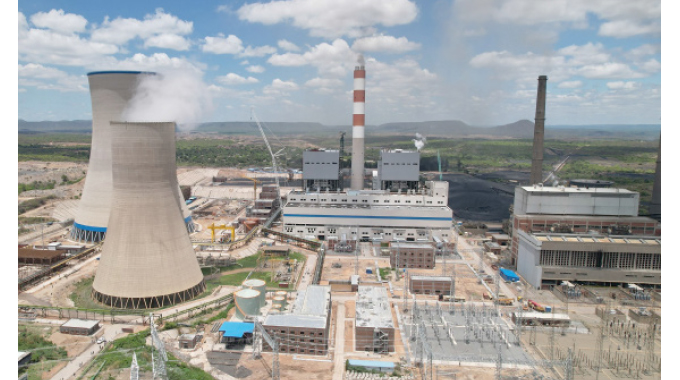
Energy is a key source of economic growth. For industrialisation and economic development, economic growth and energy consumption have a positive and linear correlation. Energy use in developing nations has increased more than fourfold in the past three decades and is further likely to increase exponentially in the future. Energy services are important for economic growth as well as for the improvement of the standards of living of people.
Various manufacturing and consumption activities use renewable energy as the primary input, so it becomes the main source of economic development and growth. If energy is not sufficient to meet demand, it will lead to a fall in Gross Domestic Product (GDP), the most important input for economic growth. Energy development offers several benefits to developed nations and contributes to economic growth in progressive nations (developing nations), which leads to improvement in every respect such as poverty and hunger reduction, raising standards of living, and a better environment, according to Rashid Farooqi et al (2021).
It is behind that background that the Second Republic looked at the energy sector as a key pillar in economic development that required special attention if the country was to attain the economic vision of being an upper middle-class economy in 2030. The country’s economic blueprint, National Development Strategy 1 (NDS1) highlights that the availability of reliable power supply is a basic requirement for all Zimbabwean citizens.
“Under the NDS1 period, priority will be on the development of reliable, adequate, low-priced power. An efficient and viable energy sector will ensure economic stability and growth, given the forward and backward linkages with the rest of the economy.”
It was noted that despite modest interventions in the sector, the country, as of December 2020, continued to experience significant electricity shortages, “mainly due to aged infrastructure dating back to 1950s that has lacked sustained maintenance and upgrading. Consequently, the national electricity access rate is around 41% (2020) and a significant urban-rural disparity exists. About 80% of the rural population lacks access to electricity. During the NDS1 period, in order to ensure improved energy supply, the objective is to increase power supply from the current installed capacity of 2 317MW to 3 467 MW by the year 2025 and construction of an additional 280km of transmission and distribution network by 2025.”
Furthermore, the Government noted that dependency on hydropower amidst the effects of climatic change was exerting more burden on the current electricity supply. The reliance on power imports on the backdrop of regional shortages was also deemed not sustainable.
The objective under the NDS1 was to improve access to modern energy by expanding and reinforcing the transmission grid to ensure system stability and security of supplies. Access to electricity for both rural and urban areas was envisaged to increase from 44% in 2020 to 54% by 2025. A number of projects were earmarked for implementation such as the transmission and distribution projects such as ZIZABONA, Alaska Karoi, Hwange Unit 7 and Unit 8 Power Expansion Project transmission Network, Batoka Hyro Power Transmission Network; and Procurement of transformers.

A lot of groundwork has been covered, with Hwange Unit 7 and Unit 8 already operational and contributing power to the national grid. Final check-ups are underway before the project is completed, commissioned, and operations put into full gear. Of note, Zimbabweans are already enjoying more hours of power supply with reduced load shedding across the country. Last week, it was reported that there was improved electricity supply across the country after Hwange Thermal Power Station started performing at its best, generating 740 megawatts as of last Monday, a 10-fold increase on the mere 74MW that was being generated in late February.
“The output of Hwange Unit 8 first achieved its full capacity of 355MW on 13 June, and then Unit 8 will subsequently carry out a series of performance experiments. Meanwhile, the total amount of electricity produced by the Hwange Power Station has reached a record-high 740MW,” said the contractor, Power Construction Company of China last Tuesday.
The increased power generation brought joy to both domestic and industrial consumers who had been enduring long hours of load shedding since the last quarter of 2022. In addition, the continued improvement in power generation reduces electricity imports and eases power cuts.
According to daily production figures released last Monday, Kariba generated 761 MW and Hwange 740MW. Power China which synchronised the Hwange Thermal Power Station said: “Unit 7 of Hwange Power Plant was officially integrated into the national grid, adding 300MW of electricity to the national grid.” The imminent completion of works at the Hwange Thermal Power Station Unit 8 will also further reduce issues of power challenges that have been bedevilling the country.
A considerable amount of power has also come from independent producers, with a number of firms, in the manufacturing and mining sector setting up solar farms to generate power for internal and external use. The Solar Power Plant in Nyabira, 30km from Harare, is set to be the country’s biggest solar plant, producing 25MW, enough to power the towns in the sizes of Mutare, Kadoma, and Chegutu, according to industry experts. The Victoria Falls Solar Project is also under construction, contributing to the Zimbabwe target to add more than 2000 MW to the national grid from solar, wind and other sources by 2030.
Companies in the large industrial and mining sector have also formed an Intensive Energy User Group (IEUG) that seeks to mobilise financial resources towards the procurement of electricity from within the Sadc and local power generating companies at competitive tariffs as well as invest in various power generation projects.
“IEUG commenced operations on 1 April 2023 with a base load supply of 40MW secured from Zimbabwe Zhongxin Electrical Energy (Private) Limited (ZZEE). The power supply agreement with ZZEE is for an initial term of five years at a fixed tariff. The Zimbabwe Regulatory Authority (ZERA) has approved a wheeling tariff of USc1,25/kWh payable to the Zimbabwe Electricity Distribution Company (ZETDC). The wheeling charge will be reviewed annually. IEUG is in the process of finalising a System Operating Agreement (SOA) with ZETDC. The SOA governs the terms and conditions for balancing the electricity secured by IEUG to guarantee a reliable, predictable and uninterrupted supply to IEUG Members,” said IEUG board member Mr Caleb Dengu in Victoria Falls recently.
This speaks to the success of the government’s plans in turning around the power supply situation for the benefit of Zimbabweans. The success story in the electricity sector is replicated in the fuel sector, where queues in fuel stations are now a thing of the past following telling interventions by the President Mnangagwa government. To solve the fuel crisis, the Government allowed businesses with reserve foreign currency to import their own fuel and sell it in foreign currency. Most fuel traders are also benefiting from cheaper foreign currency from the Reserve Bank of Zimbabwe’s Foreign Currency Auction system.


 Online Reporter