Online Reporter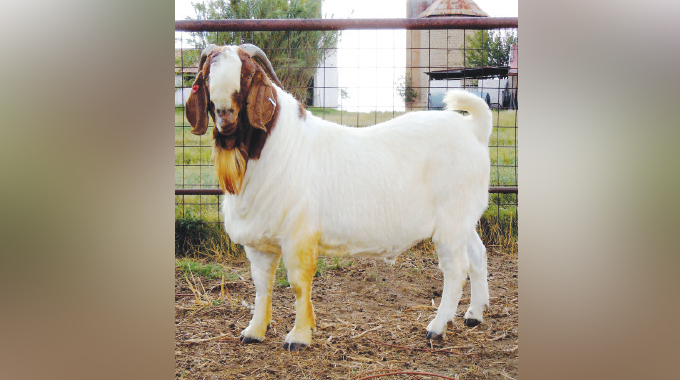
Talking Farming Ronald Veremu
GOAT production remains one of the most important livestock enterprises for smallholder and communal farmers in Zimbabwe.
Goats provide meat, milk, income, manure and a readily available source of cash during times of need. Their ability to survive under harsh environmental conditions makes them particularly suitable for resource-constrained farmers operating in drought-prone areas.
However, despite the importance of goats to rural livelihoods, productivity levels in many smallholder flocks remain low. Farmers often complain about slow growth rates, small carcass sizes, low twinning rates and poor market returns.
While management practices such as feeding, housing and disease control are important, the productivity of any goat enterprise is largely determined by two key factors: genetics and the environment.
Simply put, a goat can only perform according to its genetic potential and that potential can only be fully expressed if the animal is raised in a suitable environment.
Many small-scale goat farmers understand the importance of improving the genetic quality of their flocks. However, purchasing large numbers of genetically superior breeding animals is beyond the financial reach of most households.
Imported breeds such as the Boer, Kalahari Red and Saanen goats are known for their exceptional productivity. A purebred Boer goat, for example, grows much faster and produces a heavier carcass than most indigenous goats.
Kalahari Reds are renowned for their meat production and adaptability to semi-arid environments, while Saanen goats are among the world’s leading dairy breeds.
Unfortunately, acquiring a complete flock of these improved breeds can be prohibitively expensive for many farmers. In addition, these breeds often require better feeding, housing, healthcare and management than what is commonly available in communal production systems. The good news is that there is a practical and affordable solution.
Before embarking on a breeding programme, farmers should understand the traits that contribute to productivity in goats. Some of the most important productivity characteristics include fecundity or the ability to produce twins and triplets, fast growth rates, early sexual maturity, good feed conversion efficiency, high milk production, increased carcass weight, better mothering ability and improved survival rates of kids.
Animals possessing these traits are capable of producing more meat, milk and income over their lifetime.
In the quest for improved productivity, farmers should not overlook the strengths of Zimbabwe’s indigenous goat breeds, particularly the Mashona and Matabele goats. Although indigenous goats generally grow more slowly and produce lighter carcasses than imported breeds, they possess several valuable characteristics that have enabled them to survive for generations under local conditions.
These desirable traits include exceptional hardiness, tolerance to local diseases and parasites, ability to survive on low-quality grazing, high resistance to harsh weather conditions, lower management requirements and better adaptation to communal production systems. These characteristics are extremely important in areas where feed resources are limited and veterinary services may not always be readily available.
The most productive goat for a smallholder farmer is not necessarily a pure imported breed or a pure indigenous breed. Rather, it is often an animal that combines the strengths of both.
Farmers need goats that grow rapidly and produce heavier carcasses, but they also need animals that can tolerate local diseases, survive drought conditions and efficiently utilize available feed resources. This ideal combination can be achieved through crossbreeding.
Crossbreeding involves mating animals from different breeds to combine desirable traits from both parents. For smallholder farmers, the cheapest and fastest method of improving flock productivity is through the introduction of genetically superior bucks into a flock of indigenous female goats. Instead of purchasing expensive breeding females, a farmer can invest in one quality buck and use it to service many does. This approach significantly reduces costs while delivering substantial genetic improvement across the flock.
The breeding buck may be a purebred Boer goat, a purebred Kalahari Red goat, a purebred Saanen goat for dairy production, a first-generation crossbred buck, or second-generation improved buck. Regardless of the option selected, the objective is to introduce superior genetics into the flock.
One of the greatest benefits of crossbreeding is a phenomenon known as hybrid vigour or heterosis. Hybrid vigour occurs when offspring outperform both parents in certain productivity traits.
Crossbred kids often demonstrate, faster growth rates, better survival rates, improved disease resistance, higher fertility levels, better feed utilization and increased carcass weights. This means a farmer can achieve better production and profitability without dramatically increasing management costs.
Genetic improvement is not a one-time event but a continuous process. The first generation of crossbred offspring can be retained and bred to another improved buck. This process can be repeated over successive generations to steadily improve productivity. For example, indigenous does crossed with a Boer buck produce first-generation offspring. The female offspring are retained as breeding stock. These improved females are then mated to another quality Boer or Kalahari Red buck. Subsequent generations show even greater improvements in growth rate and carcass quality. Over time, farmers can develop highly productive flocks that remain well adapted to local environmental conditions.
While genetics are important, improved animals require proper management if their potential is to be realized. Farmers should therefore complement breeding programmes with adequate nutrition, strategic feed supplementation during dry seasons, proper housing, routine disease control, vaccination programmes, controlled breeding seasons and record keeping. Keeping simple records of births, deaths, growth rates and kidding performance helps farmers identify the most productive animals and make informed breeding decisions.
In an era of increasing climate variability and growing demand for goat meat, improving flock productivity is no longer a luxury but a necessity. Fortunately, smallholder farmers do not need large amounts of capital to begin the process. Introducing a quality breeding buck into an indigenous flock remains one of the most affordable and effective strategies for improving productivity.
By combining the hardiness of indigenous goats with the superior production traits of improved breeds, Zimbabwean farmers can develop flocks that are productive, resilient and profitable.
The road to higher productivity starts with better genetics, but lasting success comes from combining good breeding with sound management practices.
n Ronald Veremu is an independent livestock and agriculture development specialist. He writes in his own capacity.
Feedback:[email protected] Cell: +263 772898722.