Online Reporter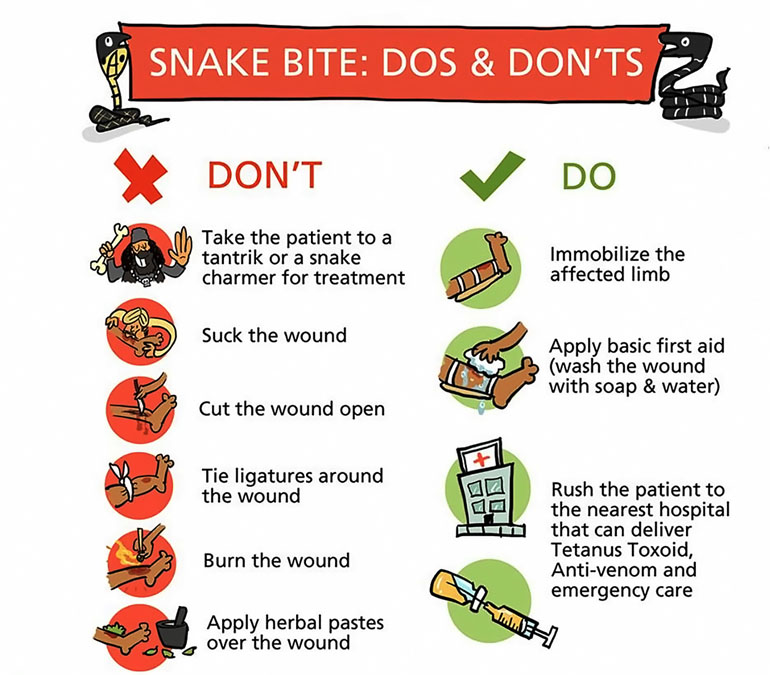
Dr Tendai Zuze
Health Matters
SEPTEMBER 9 is International Snakebite Awareness Day, and being in Mutare, we have a little more reason than most to talk about snakes.
With our mountains, farms, gardens, long grass and plenty of places for snakes to hide, a snake encounter is not something that only happens in the bush. It can happen anywhere, even around the house.
The important thing to remember is that not every snake is dangerous, and not every snakebite results in serious poisoning. But if you don’t know what bit you, it is safest to treat every snakebite as potentially serious until the person has been assessed by a medical professional.
In case you are bitten, the first thing to do is move away from the snake.
This sounds obvious, but in the panic of the moment, people sometimes try to catch or kill the snake. That is how you end up with two patients instead of one. If someone can safely take a photograph from a distance, it may help with identification, but nobody should put themselves at risk trying to get a better picture.
Once everyone is safely away from the snake, keep the person calm and as still as possible. This is particularly important because unnecessary movement can increase the circulation of venom through the body. If the bite is on an arm or leg, keep the limb still.
A simple splint or sling can be useful if one is available.
Remove rings, bracelets, anklets, watches or tight shoes from the affected limb before swelling develops. Then get the person to a medical facility as quickly as possible. Don’t wait at home to see whether the bite is going to cause problems. Some serious bites may initially produce surprisingly little pain or swelling, while other symptoms develop later.
Please don’t cut the bite and try to suck out the venom like they do in movies. Don’t burn the area. Don’t apply chemicals, herbs or other substances. Don’t tie a very tight rope or tourniquet around the limb in an attempt to stop the venom spreading. These methods don’t remove the venom and some can cause additional damage to the person’s tissues and blood supply.
If the person becomes weak, very sleepy, starts vomiting or develops difficulty breathing, this is an emergency. Keep monitoring them while arranging urgent transport. If they become unconscious, but are breathing normally, place them on their side and make sure their airway remains clear.
At hospital, the medical team will look for signs that venom has actually been injected and is causing problems.
Depending on the type of snake, these can include increasing swelling, abnormal bleeding or clotting, weakness, drooping eyelids, difficulty swallowing or speaking, breathing difficulties, shock and problems with the kidneys.
Antivenom is an important treatment for significant snake envenomation. It is not something that every snakebite automatically needs, and the decision to give it depends on the clinical picture and the suspected venom involved. Other treatments may also be needed, including fluids, oxygen or breathing support, pain relief, wound care and monitoring of the kidneys and blood clotting.
One thing I would strongly advise is not to let a relatively well-looking patient convince everyone that there is nothing to worry about. A person may walk into the clinic looking perfectly fine and still develop serious complications later. That is why proper assessment and observation are important.
Prevention also goes a long way. Around the home, keep the grass reasonably short and avoid allowing rubbish, piles of bricks, firewood and other materials to accumulate where snakes can hide. Keeping rodents under control is also useful because where there is plenty of food for rodents, there will be plenty of food for snakes.
For farms, mines and other workplaces where snakebite is a realistic possibility, it is worth having a proper plan. Workers should know what to do, where the nearest medical facility is and how they will get there quickly. First-aid training should include snakebite, because the first few minutes are often spent waiting for transport.
And perhaps the biggest lesson this Snakebite Awareness Day is that when a snake bites someone, doing less can actually be doing more. Keep the person calm, keep them still, don’t experiment with home remedies, and get them to proper medical care.
The snake doesn’t need to be caught, the wound doesn’t need to be cut and the venom doesn’t need to be sucked out. What the patient needs is a calm head, a safe journey and appropriate medical treatment.
For more on snake bites, contact [email protected]