Online Reporter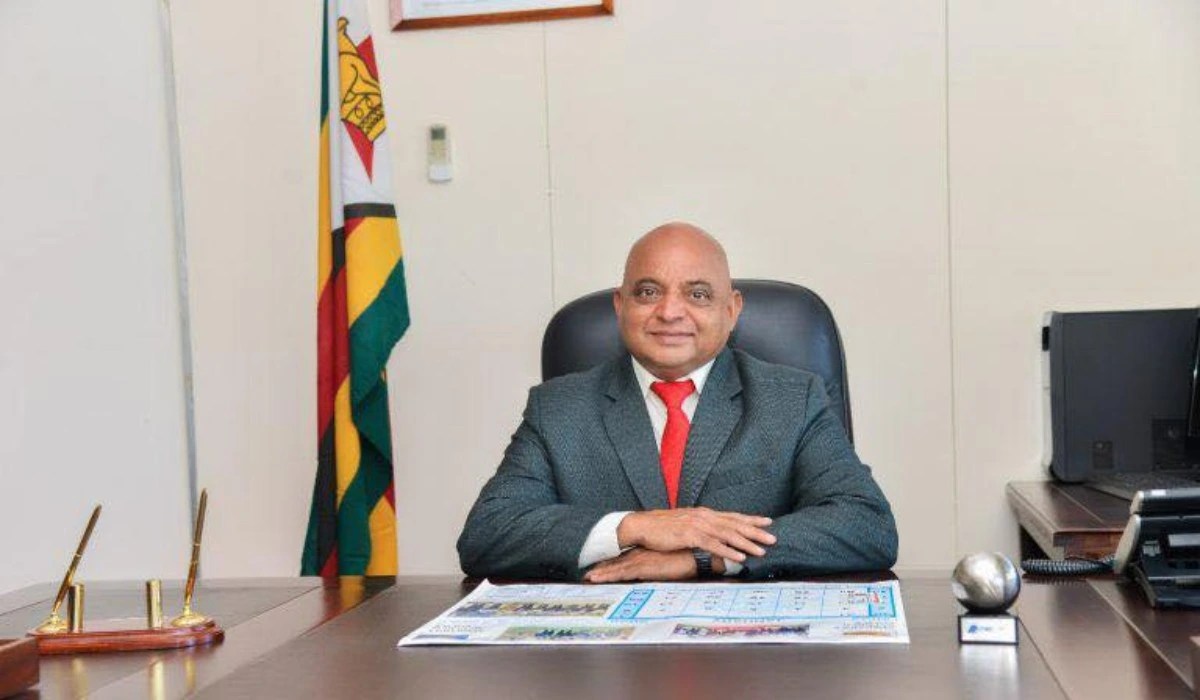
Sikhulekelani Moyo [email protected]
THE Government has promised tougher action against counterfeit goods amid plans to roll out fresh incentives to support the growth of local industry, as Bulawayo moves to reclaim its status as Zimbabwe’s industrial powerhouse, senior officials said.
This emerged during the Bulawayo Exhibition and Hall of Fame Awards held recently in the city, where entrepreneurs and businesses credited with driving jobs, innovation and community development despite economic challenges, were honoured.
Industry and Commerce Deputy Minister Raj Modi said local producers were making significant gains, with local shelf space in retail outlets growing from around 10 percent to over 60 percent.
“This is proof that Zimbabwean products can compete and win. But we cannot be complacent,” he said.
He warned that counterfeit and smuggled goods continue to undermine industry, costing Zimbabwe an estimated US$1,2 billion annually.
“Under the National Development Strategy 2, we have intensified the fight. The Consumer Protection Commission, Standards Association of Zimbabwe (SAZ), Zimbabwe Revenue Authority (ZIMRA) and the Zimbabwe Republic Police are working together to dismantle counterfeit supply chains,” said Deputy Minister Modi.
He added that the Consumer Council of Zimbabwe (CCZ)’s verifying digital platforms now allow consumers to authenticate goods instantly using mobile phones.
“My commitment to you tonight is this: We will continue to protect your markets. We will enforce quality standards rigorously, and we will ensure that Zimbabwean products receive the recognition and protection they deserve,” said the Deputy Minister.
He urged corporate leaders to open supply chains to SMEs, citing Carousel as a typical example, which has expanded production and helped SME Next Generation Consulting grow from 12 machinists to 65 while training vulnerable community members.
“The Government is committed to creating policy frameworks that institutionalise corporate-SME linkages. We will explore procurement incentives for companies that meet local content thresholds, and we will require transparency in local sourcing,” he said.
“Partner with our SMEs, mentor them, source from them. Let us grow together.”
Bulawayo Provincial Affairs and Devolution Minister Judith Ncube, represented by Mr Faison Antonio, reiterated that the Government had approved the framework for Integrated Provincial Special Economic Zones, with Bulawayo set to receive the designation.
“This will bring substantial tax, financial and logistical incentives to drive industrial revival and attract both domestic and international investment,” Minister Ncube said.
She noted that Bulawayo-based companies had absorbed 33 percent of the approved funding from the Government’s Industrial Development Fund aimed at revitalising manufacturing.
“This demonstrates that our city is ready to reclaim its crown as Zimbabwe’s industrial powerhouse.”
Minister Ncube said SMEs contribute over 60 percent of Zimbabwe’s gross domestic product and employ more than 70 percent of the national workforce.
“They are the job creators, the problem solvers and the community builders who form the backbone of our city’s economy, “ she said, urging citizens and institutions to “Buy Local, Support Local,
Grow Bulawayo” and called on financial institutions to develop products for small businesses.
Youth Network Connect (YNC) director Mr Philimon Nyirenda said localisation must go beyond sentiment to become an economic strategy.
“Localisation is not just a nice-to-have. It is a strategic imperative towards building a more resilient economy. Something we have now prioritised alongside building regional value chains with other countries in the Southern African Development Community (SADC) and within the African Continental Free Trade Area (AfCFTA),” Mr Nyirenda said.
“Building local and regional value chains will make our economy less vulnerable to global supply chain disruptions. It is not a choice. It is a necessity.”
He said Bulawayo’s entrepreneurs, from spaza shops to farmers, artisans and tech startups, were the backbone of the economy.
“When we buy locally, we do far more than purchase a product. We support jobs, we strengthen families and we invest in the future of Bulawayo,” he said.