Online Reporter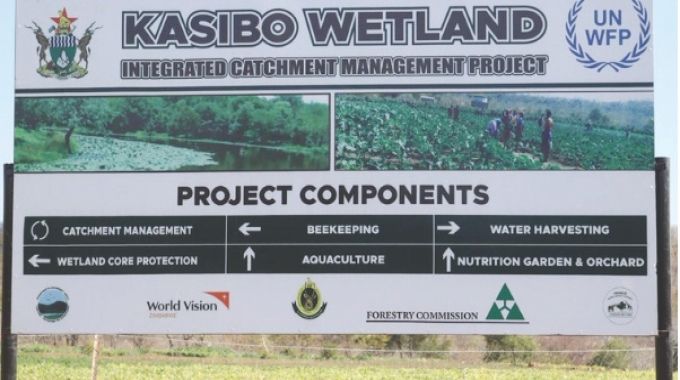
Sam Matema
ON June 5, Zimbabwe joined the rest of the world in commemorating World Environment Day under the theme, “Now for Climate”, making it imperative to reflect on how indigenous knowledge systems speak to village science and indigenous ways of knowing, or village wisdom.
Traditionally, within the African context, society was well-structured, ordered, disciplined and clearly defined in terms of roles, rights and responsibilities. However, modernity has blurred these lines and disconnected the dots to the extent that belief in African traditions and values has been eroded in the frantic pursuit of foreign Western ideals.
The interconnected, overlapping and cross-cutting relationship between all sectors of the economy and the state of the environment cannot be ignored. Put differently, the performance of the economy is intrinsically linked to the health of the natural environment.
It is therefore critical that due attention be given to environmental degradation, which is largely human-induced, and that corrective measures be implemented with the urgency the situation demands. The interconnectedness between humanity and the natural environment must be laid bare for all and sundry so that it informs policy decisions and practical interventions.
This is necessary because humanity carries the responsibility of caring for the environment, a duty clearly spelt out from the very genesis of humankind, as captured in Genesis 2 verse 15. From the outset, it must be acknowledged that the Adamic nature of man is often to shift responsibility and apportion blame to others. Adam, for instance, shifted blame to Eve.
However, because climate change is here to stay, the only viable option is to learn to live sustainably with it. We must plan around the current realities while anticipating future changes and disruptions so that we can adapt accordingly.
Equally important is the need to de-link economic activities from climate change vulnerabilities. Zimbabwe, for example, should pursue an irrigation-driven agricultural economy rather than continue depending on rain-fed agriculture. Nature-based interventions anchored on indigenous knowledge systems present a sustainable path forward, empowering indigenous people and local communities to lead activities while adopting new and appropriate technologies.
Lessons from Kasibo
This is a significant story, and as Zimbabwe continues telling its own stories in 2026 and beyond while building domestic narratives, it is prudent, pertinent and strategic to begin from a point of evidence. The revival of the Kasibo wetland in Hwange stands as testimony to the value of adapting and adopting indigenous knowledge systems.
Its recovery is rooted in recognising the critical role played by indigenous people and local communities in conserving their environment and protecting fragile ecosystems such as wetlands. As a result of the wetland’s restoration, rural livelihoods are now being supported and sustained throughout the year through approaches firmly grounded in indigenous ways of knowing and village science.
Collective failure
The Constitution of Zimbabwe is unequivocal in Chapter 73, which guarantees every citizen the right to a clean and safe environment. The Constitution further prescribes a collective responsibility and obligation, recognising that the environment is held in trust for posterity. The degree of inter-generational equity created and passed on — or the lack thereof — has become something of a barometer.
From this standpoint, the widespread environmental degradation witnessed across the country, manifesting through silted rivers and dams, polluted water bodies, and degraded wetlands and forests, points to a collective failure in our responsibility as environmental stewards.
While successes in the agricultural sector are cause for celebration, they are coming at a generational cost. The tobacco industry, for instance, remains heavily dependent on wood fuel. Although the tobacco levy is being collected, it is not adequately reaching tobacco farmers to support the establishment of sustainable woodlots.
There is therefore a need to intersect conventional science with indigenous knowledge systems so that society can benefit from the strengths of both. Conventional thinking, legislation and scientific approaches should reinforce what our forefathers put in place, because their systems proved effective in promoting environmental conservation.
A systems-thinking approach rooted in village wisdom demands that we abandon the business-as-usual mindset in the face of the growing impacts, extremes and shocks associated with climate change.
Let us ride on conventional science, deploying artificial intelligence to peer into the future, while allowing indigenous knowledge systems to become the bedrock upon which current nature-based conservation interventions are built.
How does conventional science intersect with the migration of certain bird species, animal reproduction patterns, wind direction, the behaviour of sacred mountains and forests, and the response of particular plant species in predicting seasonal weather patterns?
These questions are critical. Zimbabwe needs an integrated, nature-based approach to environmental conservation interventions. Such interventions must also align with existing legislation in a holistic manner so as to address the fragmented and scattered approach currently prevailing.
Sam Matema is the National Assembly Member for Buhera Central constituency, Zanu-PF Manicaland Provincial Secretary for Administration, chairman of the Climate Parliament Zimbabwe chapter, and chairperson of the Parliamentary Portfolio Committee on Environment, Climate and Wildlife. He writes here in his personal capacity