Online Reporter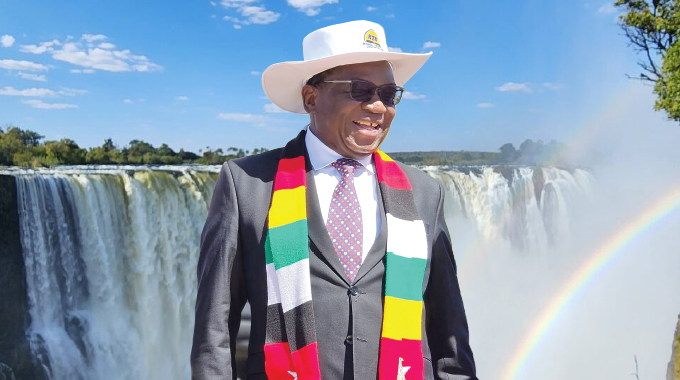
Rutendo Nyeve, [email protected]
THE resort town of Victoria Falls is quietly changing. More black indigenous Zimbabweans are no longer just working in tourism, they are beginning to own and run businesses in the sector, marking an important shift in one of the country’s most valuable industries.
For many years, the roar of the Victoria Falls masked a different reality — one where local people had limited access to ownership.
Although the Falls and surrounding attractions have drawn visitors from around the world for decades, the benefits for black Zimbabweans were largely confined to employment rather than business ownership.
Now, that story is slowly changing, helped in part by the Second Republic’s efforts to make it easier to do business, opening doors that were once difficult for locals to access.
The roots of tourism in Victoria Falls go back to colonial times, when most of the industry was controlled by foreign and white-owned businesses. From safari lodges to river cruises and adventure activities, the most profitable parts of tourism were largely out of reach for indigenous Zimbabweans.
Many locals worked in the industry, but mostly in lower-paying jobs such as porters, waiters, drivers and housekeepers. They helped run the sector but had little chance to own businesses due to lack of capital and strict licensing systems.
That is now beginning to change. The tourism sector in Victoria Falls is slowly starting to reflect the country’s population, with more indigenous-owned companies taking up space. Businesses such as Tatenda Safaris and Africa Travel are among those growing in an industry that was once difficult to enter.
Tatenda Safaris, started by the late National Hero Paul Armstrong Gunda, has grown steadily over the years. What began as a small idea is now a fully operating business. Under the leadership of Mrs Gunda, the company now runs a 49-room lodge, a car hire service, game drives and boat cruises, employing more than 40 people.
Africa Travel is another example of growth. Owned by Mr Loveness and Mrs Leana Machipisa, the company recently celebrated 20 years in the industry. It started as a small operation with just six workers focusing on transfers. Today, it has expanded into a major player.
The Chronicle recently witnessed the launch of its newest addition — a 90-seater luxury cruise boat on the Zambezi River, showing its move into the high-end tourism market.
“The company, which started with just six people, has grown to employ more than 60, with a fleet of cars exceeding 20,” Mrs Machipisa told The Chronicle at the launch.
With this new investment, the company is strengthening its position in one of the most valuable parts of the tourism sector.
Government policy has also played a role in this shift. The “Nyika inovakwa nevene vayo” approach has encouraged more local participation, with reforms making it easier for indigenous entrepreneurs to enter and grow within the industry. This has helped both existing businesses expand and new ones to emerge.
One of the major developments in recent years was the opening of Mbano Manor in 2020. Commissioned by President Mnangagwa, the luxury hotel has become a strong example of local ownership in Victoria Falls.
The hotel is owned by Dr Matifadza Nyazema, whose journey into tourism has been shaped by determination. She previously worked as a journalist and later held senior roles at British Airways and Southern Sun Hotels. Her dream of owning a hotel began when she visited Victoria Falls as a child.
Despite several challenges, she managed to raise US$8 million, including support from local pension funds, to build an 18-suite boutique hotel set in a teak forest.
“It was a brutal journey, but to actually see guests coming through is a fantastic feeling,” Dr Nyazema recently recalled.
Mbano Manor has since achieved a five-star rating and has been recognised as one of TIME Magazine’s World’s Greatest Places for 2025.
The changes are not only seen in accommodation and travel services. They are also shaping the cultural side of tourism.
Kumusha Ekhaya, a restaurant located just outside Victoria Falls, has become a popular destination for visitors. It offers traditional African food in a setting that reflects a rural homestead, giving tourists a more authentic experience.
The restaurant was founded by Mr Blessing Munyenyiwa, who previously worked on Disney Cruise Line before returning home to start his own business.
He says the change happening in Victoria Falls is both personal and national.
“I’m really excited to share the empowerment, trust and everything we are doing as Zimbabweans. As you all know, President Mnangagwa often speaks about this, and I’m happy to say that we have embraced it.
“With the support of the government, we’ve been able to host the recently held United Nations Gastronomy and Women in Tourism event, where we had 450 people.
“I’m also grateful to the Ministry of Tourism and the Zimbabwe Tourism Authority for their support. We should all be proud that one of our own now has the best venue in Victoria Falls,” Mr Munyenyiwa told Zimpapers.
These developments are being seen across the sector. From river rafting companies like Shockwave to the growth of local lodges, restaurants and transport operators, more indigenous Zimbabweans are becoming central to the tourism value chain.
What is happening in Victoria Falls is not just about business growth. It reflects a wider shift in ownership and participation.
A destination that was once shaped largely by foreign investment is now gradually being defined by local entrepreneurs.


 Bongani Ndlovu