

 Online Reporter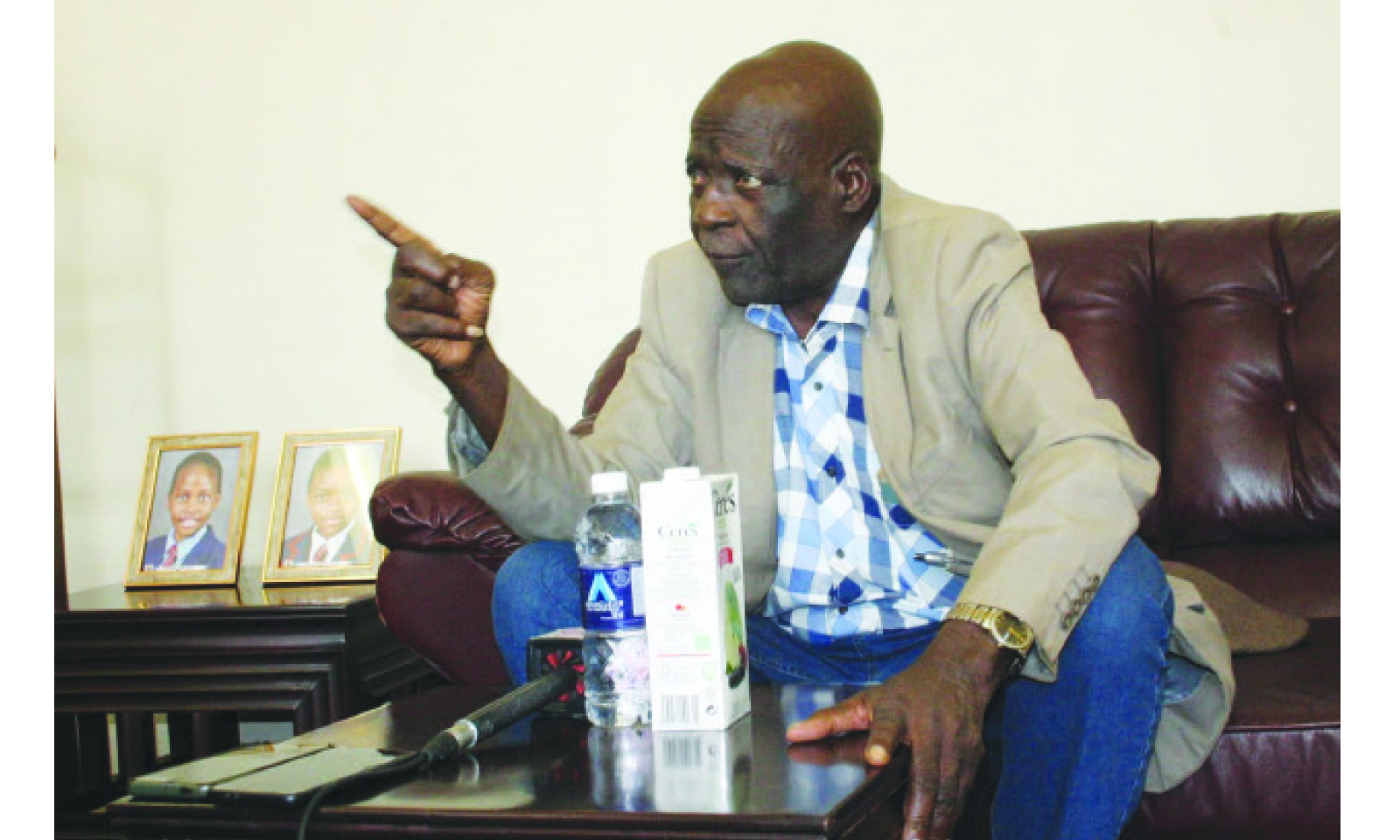
Mukudzei Chingwere
Herald Reporter
On Friday, Zimbabwe celebrates its 45th anniversary as an independent and sovereign state, a huge milestone just five years shy of a golden jubilee.
Celebrations of this nature are a result of a punishing liberation struggle which saw thousands upon thousands of supremely patriotic young Zimbabweans risking it all to dare the supremely drilled and equipped colonial army in pursuance of national independence.
Almost five decades after the gallant war that gave birth to Zimbabwe, veterans worry about the resolve of the generation they are bequeathing the liberation assignment.
Lt-Col (Rtd) Tariro Takure Maeresera, whose Chimurenga name was Mohamed Kufa, says it is incumbent upon the younger generation to catch on the undefeatable spirit of the liberation struggle and finish off the establishment of a just and prosperous Zimbabwe as is being championed by the Second Republic.
With lived experiences that encapsulate the spirit of resilience, sacrifice and unwavering commitment Cde Kufa narrates a story of hardship, bravery and an enduring legacy that continues to inspire.
“It is now almost 45 years since the guns went quiet amid ululation of the arrival of baby Zimbabwe, bringing closure to the suffering and segregation of our people that had been perpetuated for decades,” said Cde Maeresera as he sat for an interview with The Herald.
“Most of our colleagues who partook in that gallant and fulfilling liberation war have either passed on with some still in public service. I obviously don’t speak for the rest of them, but I don’t think I am far off the mark if I say most of us worry about whether this generation will manage to sustain our dream of a just and prosperous self-governing state for which we sacrificed so much.
“Huge sacrifices were made to bring about this Zimbabwe we have and enjoy today, and it is vital that we remember our history, never to forget and use this as the firm foundation of our very nationhood and in the pursuit of our national goals.
“All this will be achieved, first and foremost if we — as Zimbabweans, manage to cultivate and water the flower of love for one and another and the need to preserve peace as per the daily call of our national leadership,” he said.
Cde Kufa, with his rich history of national and patriotism, is well-positioned to comment on today’s generation’s capacity to uphold the legacy envisioned by those who endured the protracted struggle for liberation.
Early life and the seeds of resistance
Born in a small village of Buhera, Cde Maeresera grew up amid the struggles of a country under colonial rule. The oppressive atmosphere shaped his worldview from an early age.
He was raised by his mother Kandisaya Maregere, affectionately known as VaMamoyo, or VaHejo.
“I was just a boy when I first understood the weight of oppression,” he recalls.
The injustices faced by his people ignited a fire within him, a desire to fight for a future free from the chains of colonialism.
By the early 1970s, Cde Maeresera found himself working at Art Printers in a warehouse in Harare.
Though the job provided him with a modicum of financial stability, it was a constant reminder of the limitations placed on him and his fellow Zimbabweans.
The Rhodesian Government, sensing his growing discontent, began to keep a watchful eye on him.
“I was tailed by the police for months, if not years,” he said, his voice steady, but laced with frustration.
This surveillance not only affected him but also instilled fear in his family, particularly his mother, who worried for his safety.
The call to action
During that time, the Rhodesian authorities dispatched representatives to schools to recruit promising students for roles in the police service or teaching profession, aiming to perpetuate the colonial system. Cde Kufa met their criteria but steadfastly declined their offer.
Each time he turned them down, the pressure on him and his family mounted. The consciousness to resist their advances during his school days was particularly sharpened by Jacob Nyashanu, his Standard 4 teacher at Bika School.
“They wanted me to be part of the very system that oppressed my people. Refusing them was not just a personal decision, it was a moral stand,” said Cde Maeresera.
His mother, however, bore the brunt of this defiance, often expressing her fears about the potential repercussions.
As the oppressive atmosphere thickened around him, Cde Maeresera realised that staying in Zimbabwe would mean living in constant fear and subjugation. The decision to flee was not taken lightly.
In 1974, he made the difficult choice to leave behind his wife and two young children to join the liberation struggle.
Accompanied by his close friend Charles Nhapata, the two embarked on a perilous journey that would change their lives forever.
“Those days there were natives who worked for the system, they were against the status quo so they supported the struggle in a subtle way,” said Cde Maeresera.
“So, one day at work I received an anonymous call from a secret police officer who patrolled the Mutare border area. He told me that they had apprehended people trying to cross the border to join the liberation struggle.
“He said during interviews and interrogation they implicated you (Maeresera) as having influenced them to join the struggle, so he advised me to go into hiding because soon I would be arrested.
“After that phone call I called my friend Charles Nhapata to tell him of the news and we planned to meet immediately at our hostel to make journey. I lied to my boss that my mother was critically ill and has been taken to the to the hospital and I had to leave immediately. He agreed and gave me some money.”
A network of activism
Throughout his journey, Cde Maeresera was not alone. Many comrades shared similar paths, including Major General (Rtd) Gibson Mashingaidze, who worked at the Postal and Telecommunications department.
“Mashingaidze and I would often meet at Chiwashawasha hostels during our activism work. He eventually left for the war via Mozambique and his departure intensified the scrutiny I faced from the Rhodesian forces.
Full story: www.herald.co.zw
Another prominent figure was the late Major General (Rtd) Paradzai Zimondi, who was employed at Kunzwana Credit Store while living in Kambuzuma.
“We met during activism meetings, united in our fight against oppression,” says Cde Maeresera.
Each of these connections reinforced their collective commitment to the struggle, even as it made them targets for the authorities.
Cde Chimombe was another comrade who worked at Bata and shared similar experiences.
“The departure of these comrades for the war meant that I was tailed even more by the authorities.”
Crossing borders: A journey of resilience
The trek from Harare to Zambia, to join the liberation struggle, was fraught with challenges particularly the Plumtree to Francistown, Botswana leg.
“From Harare to Plumtree we had challenges. We were skirting surveillances but we got transport to flee, the challenge was from Plumtree. We walked for days, often under the cover of night, trying to avoid detection,” Cde Maeresera recalls.
The landscape was unforgiving and the constant fear of Rhodesian patrols heightened their sense of urgency.
“Every rustle in the bushes made our hearts race,” he adds. The journey was not just physically demanding, it was a test of their mental fortitude.
Upon reaching Botswana, Cde Maeresera and Charles were taken to a refugee camp (nestled in the Tswana prison) where they began the process of integrating into the liberation movement.
However, the transition was not seamless. They were quickly moved to Zambia for initial military training, a step that would prepare them for the battles ahead.
“The conditions in the training camps were harsh. Food was scarce and we often went hungry.”
Despite these challenges, the camaraderie among the recruits provided a sense of purpose and hope.
Personal sacrifices
However, the path to liberation was not without personal sacrifices. Before joining the struggle, Maeresera left behind his pregnant wife, Emerita Zvinowanda Fundisai (now late), and two young children – in his absence his wife named their daughter Dzokai as per his wish to return home after the war.
His in-laws later took custody of his first-born son and raised him in Museva village in Masvingo to lessen the burden on the wife he had left behind.
“Every day, I thought about them and hoped they would understand why I had to fight,” said Cde Maeresera,” he says, emotion surfacing in his voice.
The pain of separation was compounded by the loss of his younger brother, Chiparamu Maeresera whose Chimurenga name was Ronald Dube, who also joined the liberation struggle earlier than him.
His brother Cde Dube was among the first group of 10 special reconnaissance recruits which included Major General (Rtd) Mashingaidze that was trained by VP Chiwenga specialising in the recoilless rifle.
“He was the first in our family to take up arms. I met him at Mgagao after he finished his training.”
Tragically, Ronald’s journey was cut short, Maeresera was informed that his brother died during the harrowing journey through Zambia to the front lines, a loss that still weighs heavily on his heart.
“The year he died coincided with the Nhari-Badza rebellion, which added to the chaos we faced,” he recalls.
Cde Maeresera’s voice trembles as he reflects on the cost of war, not just in terms of physical battles but the emotional toll it takes on families.
Facing the frontlines
After completing their initial training, Cde Maeresera and his comrades were deployed to the front lines to engage the Rhodesian forces.
It was during this time that he developed a close relationship with Rex Nhongo (the late national hero General Solomon Mujuru), a prominent commander known for his strategic acumen.
“Rex was a mentor to many of us. He trusted me with significant responsibilities, deployed me to the commissariat department and that trust pushed me to perform at my best.
“This department was very critical at the front and rear, we were the ones responsible for communicating with the masses and we gave feedback on the progression of the war to our commanders.”
Cde Maeresera’s experiences on the battlefield introduced him to several notable commanders, including Cde Chiwenga, who served as one of his engineering instructors and later a member of the high command as well as a commander in the commissariat department.
“Dominic (as VP Chiwenga was affectionately known) was not just a fighter. His engineering skills helped us adapt to the challenges we faced on the ground,” Cde Maeresera states with admiration.
As he fought alongside these leaders, Cde Maeresera also took on the role of recruiter, bringing in new fighters to join the cause.
Among those he recruited were individuals who would go on to become significant figures in Zimbabwe’s military history, such as Air Vice Marshall Biltim Chingono, the current Air Force of Zimbabwe Chief of Staff Operations.
“I believed in the power of unity. The more of us who stood together, the stronger we became.”
The battle of Mavhonde: A guerilla commander’s personal experience
One of the significant chapters in Cde Maeresera’s life was his role as the base commander of the Mavhonde logistics base.
This base played a crucial role in supporting operations against the Rhodesian forces.
Cde Maeresera was in charge of the Mavonde Forward Logistics Base, a pivotal location for ZANLA operations during the liberation struggle.
At the height of the war, this base served as a crucial waypoint for fighters heading to the front lines. It was here that they would fine-tune their strategies before embarking on their missions.
Additionally, recruits who joined the struggle passed through the base for essential logistical support before proceeding to training.
During the Lancaster House talks, the Smith regime launched an attack on the Mavonde base, hoping to capture it and leverage their victory in the peace negotiations.
They dispatched highly trained personnel to overpower the guerillas. However, Cde Maeresera and his comrades stood resolutely firm, determined to protect their base during this critical period, despite suffering heavy casualties.
“The Battle of Mavhonde was intense. It was a critical moment in our struggle and I was proud to lead my comrades in defending our base.”
However, the bravery of the fighters was met with ferocity from the Rhodesian forces.
“Our base was eventually bombed. I survived the bombing, but not without sustaining injuries.”
The scars of war run deep, both physically and emotionally, as he reflects on the sacrifices made during that harrowing time.
After several months of intense fighting, Cde Maeresera was selected for further training in Romania, “it was a privilege, but it also meant leaving the front lines.”
He received further military training in Romania with Cdes like Air Marshall (Rtd) Shebba Shumbayawonda, Air Vice Marshall Chingono and Air Vice Marshall Jasper Marangwanda.
The training in Romania was rigorous, equipping him with advanced military skills that would prove invaluable upon his return to Zimbabwe.
A new dawn: independence and military service
With Zimbabwe’s hard-fought independence achieved in 1980, Cde Maeresera returned home, a changed man.
The euphoria of freedom was tempered by the memories of those who did not survive the struggle.
“We lost so many comrades and their sacrifices weighed heavily on our hearts. Independence was a victory, but it came at a great cost.”
Following independence, Maeresera joined the newly established Zimbabwe National Army, where he served with distinction and rose through the ranks.
His experiences in the liberation struggle endowed him with a unique perspective on leadership and strategy.
He retired as a Lieutenant Colonel, having dedicated his life to the service of his country.
“The army was my second family. We were building a new nation together,” he says, a sense of pride evident in his voice.
Legacy and reflection
Cde Maeresera has taken a proactive role in farming in Patchway, a community located near Kadoma.
His commitment to agriculture goes beyond personal cultivation, he often finds himself involved in various Zanu PF party and Government initiatives aimed at enhancing community awareness and engagement.
In addition to his farming endeavors, Cde Maeresera is frequently assigned to community programs that focus on educating the masses about party policies and initiatives.
His efforts are instrumental in fostering a deeper understanding of the political landscape among local residents.
Moreover, Cde Maeresera actively supports programs such as Pfumvudza, which are designed to bolster agricultural productivity across the country.
By championing these initiatives, he not only contributes to the improvement of national agriculture but also strengthens the livelihoods of farmers within his community.
“It is vital that we remember our history. The sacrifices made by those who fought for our freedom must not be forgotten.”
Cde Maeresera’s legacy continues through his family as well. His first-born son followed in his father’s footsteps, who has risen to become a Colonel in the Zimbabwe National Army.
As Zimbabwe navigates its post-independence challenges, the stories of veterans like Cde Maeresera are crucial in understanding the complexities of the country’s journey.
His story of courage, sacrifice and resilience serves not only as a testament to the struggles of the past but as an inspiration for future generations.
“We must continue to strive for unity and progress. The fight for freedom is ongoing and it requires the commitment of every citizen.”
The journey of Cde Maeresera, from a young man under colonial oppression to a war veteran and respected community leader, embodies the spirit of the Chimurenga.
His unwavering commitment to the liberation struggle and the sacrifices he made for his family and country are a powerful reminder of the indomitable spirit of the Zimbabwean people.
The legacy of Maeresera and his fellow freedom fighters lives on, inspiring future generations to uphold the values for which they fought so valiantly.
“Our hope as war veterans is that Zanu PF and the national leadership remain united for the benefit of our country, ensuring that we prioritise developmental issues,” said Cde Maeresera.
“It’s encouraging to see that our presidium consists of three veterans of the liberation struggle, who have played pivotal roles in our history and continue to stand together.
“Their unity dates back to our fight for freedom. Unfortunately, I hear of young people attempting to sow discord among our leadership. Such efforts will not succeed; this trio cannot be divided. These tactics come from the opposition, who wish to weaken us by fostering division,” said Cde Maeresera.



 Bongani Ndlovu