


 malvernmugadzikwa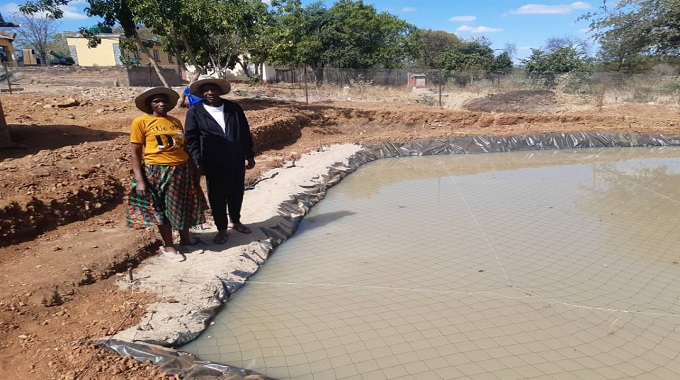
Theseus Shambare recently in MUTOKO
RURAL homes have long been favoured by many retirees, especially after spending years toiling in the city.
In line with the Southern African Development Community (SADC) common agenda of poverty eradication and quality life enhancement, this long-held notion is, however, rapidly losing currency.
An increasing number of people in the prime of their lives are now moving from urban centres to live in their rural homes, which seem to be changing into semi-urban settlements.
This, in no small part, is due to Government’s Rural Development 8.0 programme, which is designed to help promote the establishment of rural agro start-ups and drive rural industrialisation through value addition of agricultural produce.

Mr John Kapfunde’s home in Mutoko, Mashonaland East province, resembles a nascent modern agro-industrial complex.
After retiring from his job as a salesperson for a Harare company more than two decades ago, the 68-year-old and his wife, Martha (62), would never have imagined that life in the village would turn out the way it has.
“We embarked on serious traditional grain production after receiving inputs through the Presidential Inputs Scheme.

“As you can see, our area is drought-prone, but if you go for traditional grains, you will get a bountiful harvest,” said Mr Kapfunde.
“When we moved to Mutoko permanently, our lives changed for the better.
“We really appreciate the help we got from the President.
“I always tell my wife that this is the best decision we have ever made in life.”
The couple’s brightly coloured homestead stands out amid the dry shrubbery that envelopes much of the village in Chiutsi Village, Mutoko.
Their neatly built home is as spacious as any other one would find in a middle-income Harare suburb.
But what makes it a superlative piece of skill over the urban setup is its conformity to SADC protocol on environmental management.
The home has since transitioned to green energy as the whole region collectively work towards Greenhouse gas emissions reduction in the face of climate change.
The home is fully electrified by a high-end solar system.
A stone’s throw away are two grinding mills housed neatly under a well-built shed, adjacent to the couple’s electrified traditional kitchen hut, which has chromadek roofing sheets.
The Kapfundes are renowned producers of traditional grains in their area.
“We do millet and sorghum for our consumption,” added Mr Kapfunde.
“We do not do farming for fun; we do it as a business.
“So, we get people coming with trucks to buy traditional grains from us here, and we also sell to the Grain Marketing Board (GMB).”
The drought-resistant seeds tend to be economic since they thrive more with organic fertilisers than hybrid products that require expensive synthetic products that are also environmentally harmful.
This led them to establish a homestead seedbank which they replenish from time to time from seed exchange fares held nationally and regionally.
SADC has since established SADC Plant Genetic Resource Centre (SPGRC) in Zambia to conserve germplasm collections (genetic resources such as seeds) as backup storage for the seeds that were at the brink of extinction after regional countries had switched to hybrid seeds.
They also use that grain to produce stock feed. They blend it with formulated premixes from stock feed manufacturers.
The couple can produce more than eight tonnes of maize meal and livestock feed daily. Today, they boast 20 cattle; 35 goats; and eight pigs, four of which are expected to farrow piglets next month.
They also have hundreds of free-range chickens. On average, they rake in about US$6 000 annually from their enterprises.
Further, their homestead has a 10-cubic-metre biogas digester, which has tremendously improved their lifestyle.
“The digester feeds on animal waste such as cow dung, and pig and chicken manure. The digester has many advantages, the most important being that we no longer have to rely on firewood or electricity for cooking.
“We save money and my pots are always clean,” said Mrs Kapfunde.
Residue from the anaerobic decomposition of the waste in the digester is used as manure for their garden.
“The manure from the biogas digester is weed-free since all the weed seed in the waste would have decomposed,” she said.
Horticulture
There have been further developments.
This year, the couple used proceeds from the sale of traditional grains to drill a 60-metre-deep borehole, which has enabled them to establish a thriving horticultural enterprise.
Some of the produce is sent to Mutoko centre, some 25 kilometres away and even in Kotwa Business Centre, where business is booming.
Some Mozambiqueans who live along the Mudzi borderline even rely on their supplies.
The family is hopeful that if the intra-African trade in agricultural commodities and services is fully-implemented, their fresh produce will grow regionally.
“Our Mozambiquean customers always encourage us to cross the border with our produce.
“We hope that the initiative on free trade is made practical such that we may not be limited to local markets,” said Mrs Kapfunde.
The couple also received 10 fruit trees, under the Presidential Rural Horticultural Programme.
Today, their orchard is teeming with over 50 fruit trees — orange, mango, avocado and banana.
With assistance from the Department of Fisheries and Aquaculture Resources, they have also established an aquaculture enterprise after building a fish pond in their yard.
They have stocked 1 200 fingerlings in the pond.It is, therefore, not surprising that their enterprise is now a model for the local community.
The couple, together with 40 other families, have since joined hands to establish an aquaculture association called Pathfinders Club.
Members are contributing US$2 000 each to drill solar-powered boreholes and build fish ponds at their respective homesteads.
The family recently hosted delegates from the Southern African Development Community (SADC)’s multinational Programme for Improving Fisheries Governance and Blue Economy (PROFISHBLUE), who were touring the country.
The delegates had been invited by the Government to introduce the project in Zimbabwe and capacitate fish farming communities with cold chain facilities.
SADC, in partnership with the African Development Bank (AfDB), has set aside US$10,1 million to develop aquaculture projects in seven countries, including Zimbabwe.
A state-of-the-art cold room for the Pathfinders Club is now set for construction, under PROFISHBLUE.

SADC PROFISHBLUE project manager Dr Alexander Kefi, said the main goal of the project is to ensure intra-regional trade and build adaptive capacity against climate change and other external shocks.
“The funding will provide business development services, accelerator and incubation or investment support for women and youth SMEs in fish trade and eco-tourism.
“As we promote self-sustaining development on the basis of collective self-reliance and the interdependence of member states, we strive not to leave anyone behind,” said Dr Kefi.
The families will receive a three-tonne refrigerated truck and an ice-making machine, among other essentials to meet the regional guidelines in order to move towards the targeted progressive elimination of obstacles to free movement of capital and labour, goods and services.
Overall, Government plans to fundamentally transform Zimbabwe into an upper middle-income economy within the next seven years.
With this support by the regional bloc, Zimbabwe is poised to be in a position of achieving the seven Malabo Declaration commitments— recommitting to the principles and values of the Comprehensive Africa Agricultural Development Programme (CAADP) process; enhancing investment finance in agriculture; ending hunger in Africa by 2025; reducing poverty by half by 2025 through inclusive agricultural growth and transformation; boosting intra-African trade in agricultural commodities and services; enhancing resilience of livelihoods and production systems to climate variability and other related risks; and strengthening mutual accountability for actions and results.
Twitter @TheseusShambare


 Online Reporter