

 Online Reporter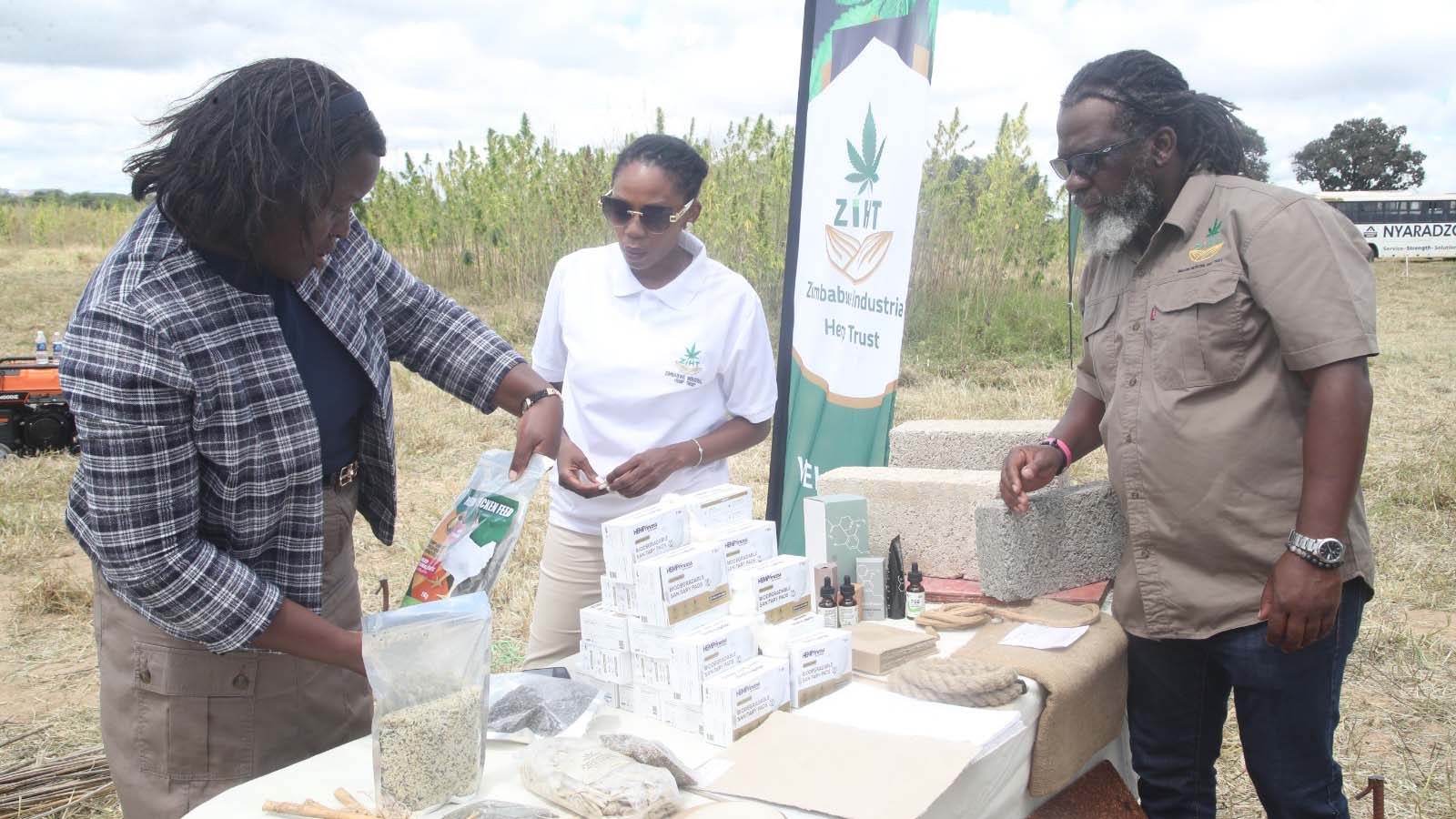
Theseus Shambare recently in MVURWI
INDUSTRIAL hemp is emerging as a potentially billion-dollar crop for Zimbabwe, with stakeholders projecting it could unlock investment, drive industrialisation and create jobs across multiple sectors.
This follows the recent rollout of the country’s first-ever commercial hemp trials at Disi Farm in Mvurwi, a milestone that signals Zimbabwe’s entry into large-scale production of the crop.
The Industrial Hemp Field Day — organised by the Zimbabwe Industrial Hemp Trust — brought together policymakers, investors, researchers and farmers to assess the crop’s performance and explore opportunities along the value chain.
Head of the trust, Dr Zorodzai Maroveke, said global trends show strong economic potential for hemp, positioning it as a viable alternative crop for Zimbabwe.
“Industrial hemp undoubtedly can be a very profitable crop. The business case is there,” she said.
The trials, covering 10 hectares, are the first of their kind in Zimbabwe and are expected to generate critical local data needed to guide the commercialisation of the sector.
Experts say industrial hemp has multiple applications, including in construction materials, textiles, biodegradable plastics, paper packaging, food and stockfeed — making it a key driver of value addition and import substitution.
Dr Maroveke said the ongoing research will help determine production models suitable for both large-scale and smallholder farmers.
“We do not yet have comprehensive local data, and this is critical for building a sustainable industry,” she said.
Authorities say the success of the sector will depend on the structured development of value chains linking farmers, processors and markets.
Agricultural Marketing Authority (AMA) chief executive officer, Mrs Alice Mapfiza, said the Government is working on frameworks to ensure coordinated growth of the industry.
“We want to move hemp from being just a crop into a fully-fledged industry that supports both small-scale and large-scale farmers,” she said.
Mrs Mapfiza said the hemp value chain has strong potential to stimulate local manufacturing and employment.
“We want the products from this industry to create jobs in Zimbabwe, not elsewhere,” she said.
The field day also served as a platform to attract investment into production, processing and value addition, as Zimbabwe seeks to diversify its agricultural base beyond traditional crops such as tobacco and cotton.
Industrial hemp, which is distinct from psychoactive cannabis varieties, is regulated under the Ministry of Agriculture and is increasingly being promoted globally as a climate-smart crop due to its versatility and relatively low environmental impact.
As Zimbabwe intensifies efforts to modernise agriculture under the National Development Strategy 1, stakeholders say industrial hemp could become a key pillar in transforming rural economies and unlocking new industrial opportunities.



