Judith Phiri
Zimpapers Business Hub
CAPTAINS of industry and commerce have called for investment-friendly energy regulations to enable businesses to invest, increase production and compete favourably in domestic, regional and international markets.
The business leaders urged authorities to work on refining current regulations to enhance predictability and transparency to attract significant fresh investments into energy.
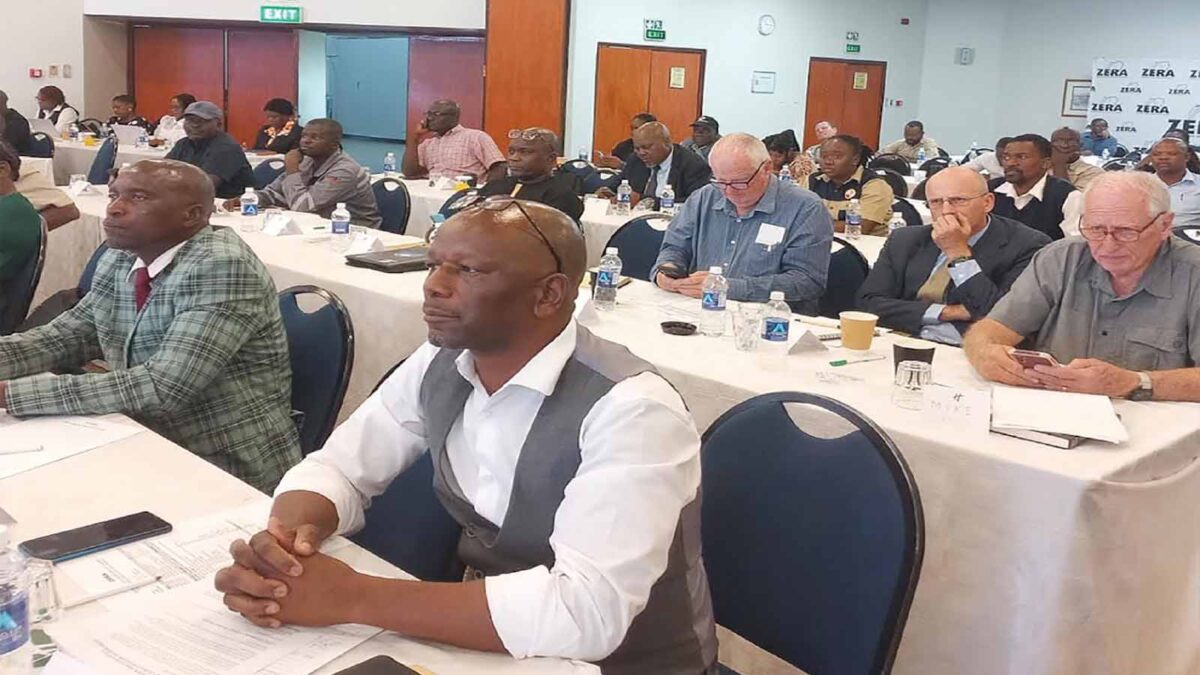
This was revealed during the 2026 Pre-Strategy Review Meeting Workshop — Stakeholder Consultation and Feedback hosted by the Zimbabwe Energy Regulatory Authority (ZERA) in Bulawayo on Thursday.
Speaking at the event, Confederation of Zimbabwe Industries (CZI) National vice president Mr Stephen Ncube, said industry players appreciate the progress recorded in 2026, particularly regarding electricity supply stability, regulatory engagement, the publication of energy prices, and continued attention to LPG safety.
“The next strategy must move ZERA from being primarily a licensing, pricing and compliance authority toward becoming a performance-based regulator and investment enabler,” Mr Ncube said.
“Industry is not asking for cheap energy at any cost. It is asking for energy that is reliable, competitively priced, predictable, transparently regulated and available in sufficient quantities to support industrial expansion,” he added.
“The strategic test for ZERA is no longer simply whether energy is regulated.
“It is whether energy regulation enables Zimbabwean industry to invest, produce and compete.”
He called on the authority to introduce a regulatory compact for industrial competitiveness, under which every major electricity, fuel, or LPG (Liquefied Petroleum Gas) decision would be assessed against four key questions:
What will it do to production costs?
How will it affect regional competitiveness?
What investment or efficiency behaviour will it encourage?
What measurable public or consumer benefit will it produce?
“There is need to publish a short regulatory-impact assessment with every major tariff or rule change, while also establishing a tariff-for-performance framework that links electricity tariff approvals to measurable utility obligations,” Mr Ncube noted.
He added that these obligations should include supply availability, outage duration and frequency, power quality, fault-response times, new-connection turnaround times, metering accuracy, reduction of technical and commercial losses and complaint-resolution times.
“Performance should be published by customer category and geographic area — not only at the national level — along with a transparent fuel-price calculator to provide the complete price build-up and the assumptions behind each adjustment.”
He further urged ZERA to separate the distinct effects of international product prices, exchange-rate movements, freight, taxes and levies, blending, and industry margins.
Mr Ncube stated that ZERA should introduce a formal, symmetrical pass-through rule so that downward price movements are transmitted as promptly as upward movements, while also publishing a monthly comparison with selected SADC fuel prices.
Also speaking at the event, Zimbabwe National Chamber of Commerce (ZNCC) Matabeleland regional manager, Mr Mduduzi Ncube, acknowledged several positive developments in the energy sector and ZERA’s contribution toward creating a more enabling regulatory environment.
“These include the authority’s public communication of fuel price build-ups and maximum prices, ongoing consumer education on energy safety and efficient energy use, and its work to strengthen technical standards and compliance,” Mr Mduduzi Ncube said.
“The reduction of petroleum licensing fees under the 2026 amendments is also welcome.
“Lower regulatory costs can improve the viability of operators, encourage formal participation, and support investment, provided the changes are implemented transparently and consistently,” he added.
“We also recognise the reported shortening of electricity licensing timelines to 90 days or less, as well as the publication of ZERA’s 2026–2030 Strategic Plan and 2025 Annual Report.
“These are useful steps toward more predictable regulation and greater accountability.”
At the wider sector level, he noted that the commissioning of Hwange Units 7 and 8 added approximately 600 megawatts (MW) to national generation capacity, while the growth of solar and other captive-generation projects is broadening options for businesses seeking energy security.
Mr Mduduzi Ncube remarked that while these sector-wide achievements are not attributable to ZERA alone, they provide a strong foundation upon which the authority can continue to enable investment through clear, timely, and proportionate regulation.
“The next step is to consolidate these gains and measure their impact on businesses and consumers. We encourage ZERA to report regularly on licensing turnaround times.