admin
admin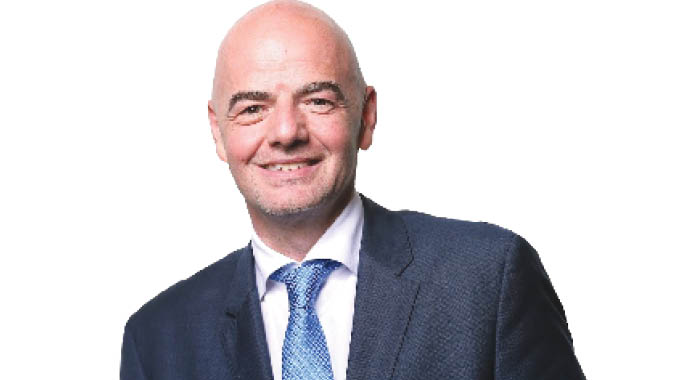
Eddie Chikamhi
Senior Sports Reporter
FIFA president, Gianni Infantino, has received the backing of local football medicine experts who agree professional footballers are not a priority group in the roll-out of the Covid-19 vaccine.
Former national team doctor, Nick Munyonga and Robert Musara, who is the head of the Dynamos medical team, yesterday said the vaccination was a welcome relief.
The domestic game failed to get underway last year following the Covid-19 outbreak.
Infantino told reporters that professional footballers should not jump the queue in accessing the vaccination, ahead of more vulnerable groups.
“The priority for the vaccines is, of course, the people at risk and for health workers,” said Infantino in Geneva on Tuesday.
“This is very clear in our mind. I don’t consider, we don’t consider, football players as a priority group in this respect.
“Of course, for safety reasons, in the context of the months to come, in the context of international competitions and travel, vaccination might be recommended at some point and the Olympic Games are, of course, only in the summer.
“But, all this will happen, of course, respecting the established order of distribution.
“There are people who are at risk and these people should have priority of course and it is not football players or officials.”
Munyonga, who has also worked for a long time in sports medicine with local and international organisations, told The Herald Infantino adopted a practical approach to the challenge.
“I think he was being practical in the sense that Covid-19 has affected mostly the elderly, those with comorbidities and the frontline workers.
“These are the groups that have borne the brunt of the pandemic and, in those groups, you cannot find where the footballers fit in.
“The footballers cannot fit in any of the groups and they are not in any case one of the most vulnerable people.
“So, I think, Infantino was well-informed when he made the comment.
“If you would ask me, I would also say the vaccination should first be given to the most vulnerable groups that include the elderly, those with underlying conditions, the front-line workers and then the generality of the population.
“That’s where the footballers would come in,” he said. Musara, who is the team doctor at Dynamos, felt the vaccine has to go according to the order of priority.
“I think Infantino’s comment is coming from the background of elite sports people,’’ he said.
“The trend, so far world over, has shown that people who are active in sport, the elite athletes who train regularly, tend to be healthier.
“Of course, there have been cases of sports people getting infected but their situations have not been as dire as the elderly and those with underlying illnesses.
“They are also suffering but the recovery rate among the sports people has proved to be better.
“We had some cases at our club but if you ask those guys, some of them will tell you that they got back to full recovery without suffering from the severe symptoms.’’
Munyonga said the vaccine should not be linked to the return of domestic football.
“Unfortunately, the Zimbabwean environment has failed to get football back after the pandemic set in,” he said.
“Other countries in the region like South Africa, Zambia and Tanzania have been playing football, even before the discovery of the vaccine.
“So, it’s basically not the vaccine that brings the breakthrough for the resumption of football in Zimbabwe but proper planning that addresses, at least, the minimum health requirements in the fight against the spreading of the disease.
“That would mean there is need for the buy-in from the health experts, funders and all the other stakeholders.
“The vaccine has been seen to offer some form of protection against the virus which we would all want to ride upon but that’s not to say it does perform magic.
“There are still some health protocols that need to be put in place.
‘’If football, and other sports are already being played elsewhere in the middle of this pandemic, then it means there is some thorough planning that has been done in those countries.
“There are health guidelines that are being implemented, people are getting tested continually and bubbles are being used for the safety of players and officials.
‘’Even at the Olympic Games, these will still be implemented apart from that plan to vaccinate the athletes.’’
Musara said all stakeholders should unite for the return of the game.
“Football can be played if we get full commitment from all the stakeholders,” Musara said.
“In our case, we might not be able to have the bubble because of the huge costs involved.
“So, this would mean that we may need to increase the testing, limit the movements of the players and officials and follow all the set down health guidelines.”


 Online Reporter