Chronicle Editor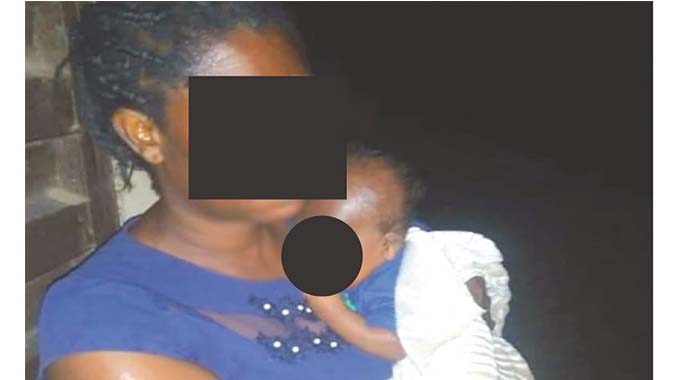
Andile Tshuma
THE pressure exterted on childless women is often so hurtful and insensitive to those on the receiving end.
This week, headlines were screaming about a Harare woman who stole a baby to raise as her own.
As much as her behaviour cannot be condoned, bearing in mind the pain that she put the baby’s mother through, her actions of infant theft speak mouthfuls about the society we live in. There was a vacuum that she needed to fill and stealing the baby may have been the answer to her troubles.
As women, we are brought up to aspire to marriage, settling down and having babies. However, when that does not happen, we are made to feel like failures. No matter how successful a woman is professionally, the career is not enough because society will ask — does she have a husband? Does she have children? So for most women, at the back of their minds is that success is reached when they have a husband and children.
Without that, you would not have quite gotten ‘‘there’’, because that is one thing that you would have been living up to from your childhood.
In some communities, I learnt that a woman’s worth is measured by her ability to reproduce. This is a society where a child is valued way more than its mother.
In Africa, women are often blamed when pregnancy fails to materialise and Zimbabwe is not an exception. Women are often publicly ridiculed, humiliated and ostracised by friends, relatives, neighbours and in some cases by their partners.
While efforts have been made to address male fertility, the subject remains a taboo and a woman is often blamed for failing to produce a child without testing both couples for fertility.
While having no children is a choice for some women, some struggle for years to conceive, before eventually giving up. Some women conceive but fail to carry pregnancies full term. Some men fail to reproduce due to infertility problems such as low sperm count, however this is less talked about, as compared to all that is said about women.
Sometimes women are the worst when it comes to treading on other women and making them feel less feminine. You may find that at church gatherings, workplaces, and family meetings, it is often women who whisper about other women’s problems. Some are so daring enough to ask straight up, ‘‘hey makoti, you have been married for years, when are you giving us a little one’. While it may seem as a little innocent joke, it may cut deep on someone who suffers secretly and wants to have children. Some women ridicule other women for not having children. When a childless woman tries to correct or discipline another woman’s child, she is quickly told to bear her own children so that she can exercise her own parenting styles. But sisters, why are we like this?
Those who suffer from infertility, both men and women, although women will suffer to a higher degree in most cases, often receive very little to no support at all from their communities as they battle with the inability to have children.
It becomes very hard for childless women to attend social functions such as weddings and baby showers.
At weddings, the relatives will remind you that they attended your own wedding four years ago and the family has had three weddings since, all the couples have since had children, what are you waiting for? they will ask.
Because of such treatment, and after having tried all known and unknown herbal concoctions, remedies, prayer, traditional healers, women are left with the pressure of proving that they can have babies.
When out of desperation the women commit the serious offences, the same society whose expectations pushed them to their tipping point, judge them again without taking into consideration the fertility challenges they face.
It’s a vicious cycle, one that traps women and difficult to untangle as women struggle to fulfil the expected reproductive health roles.
Infertility is not a curse; it is a health condition which may sometimes be sorted out. It is high time society stopped looking down upon women without children. It’s high time society also stopped pressuring men who have not reproduced. It must stop. Childless couples are still a family even without that blessing of little ones in the home.
After all, in actual fact, it is nobody’s business except for the couple, whether they have a child, why they do not have a child, how many children they will have, or if they want any children at all. Everyone else must just mind their own business.
In these modern times, women and men that are having problems to conceive need not suffer anymore as fertility clinics offer support and medical facilities that could bring them joy. Various options are available for different conditions that manifest in failure to conceive. Some of the medical interventions may prove to be a bit costly for some members of the community but it brings hope to men and women that at least such facilities are available in the country.
While we celebrate the availability of such facilities in the country, it might be said clearly that a woman’s worth is not in her womb abilities and disability. Men must equally be spared and not treated as boys just because they are not called by the names of their sons and daughters. It takes a community to change such demeaning practices that are disguised as norms, values, culture and religion.
Some couples struggling with having their own children may consider adoption, however, society also frowns upon couples who adopt children when they fail to conceive.
In many African societies, Zimbabwe included, the decline in adoption is influenced by traditional beliefs condemning couples that fail to conceive in further distress.
It is such women, who out of desperation end up stealing babies to fulfil the need of becoming a mother.
Conversations to sensitise society on infertility and childlessness are key, and conversations on teaching people to respect the privacy of couples are also very important.
According to the World Health Organisation, about 50 percent of infertility is due to male factors while female factors also constitute the other 50 percent. Failure to conceive in women may be as a result of blocked fallopian tubes due to previous surgery, sexually transmitted diseases and endometriosis.
It can also be caused by polycystic ovary syndrome, premature ovarian insufficiency, excessive exercise and stress.
Men can fail to reproduce due to factors such as low sperm count and blocked sperm ducts, among others.
Infertility must not be viewed as a woman or man’s problem, but as a couple’s problem to face together. — @andile_tshuma


 Online Reporter