Online Reporter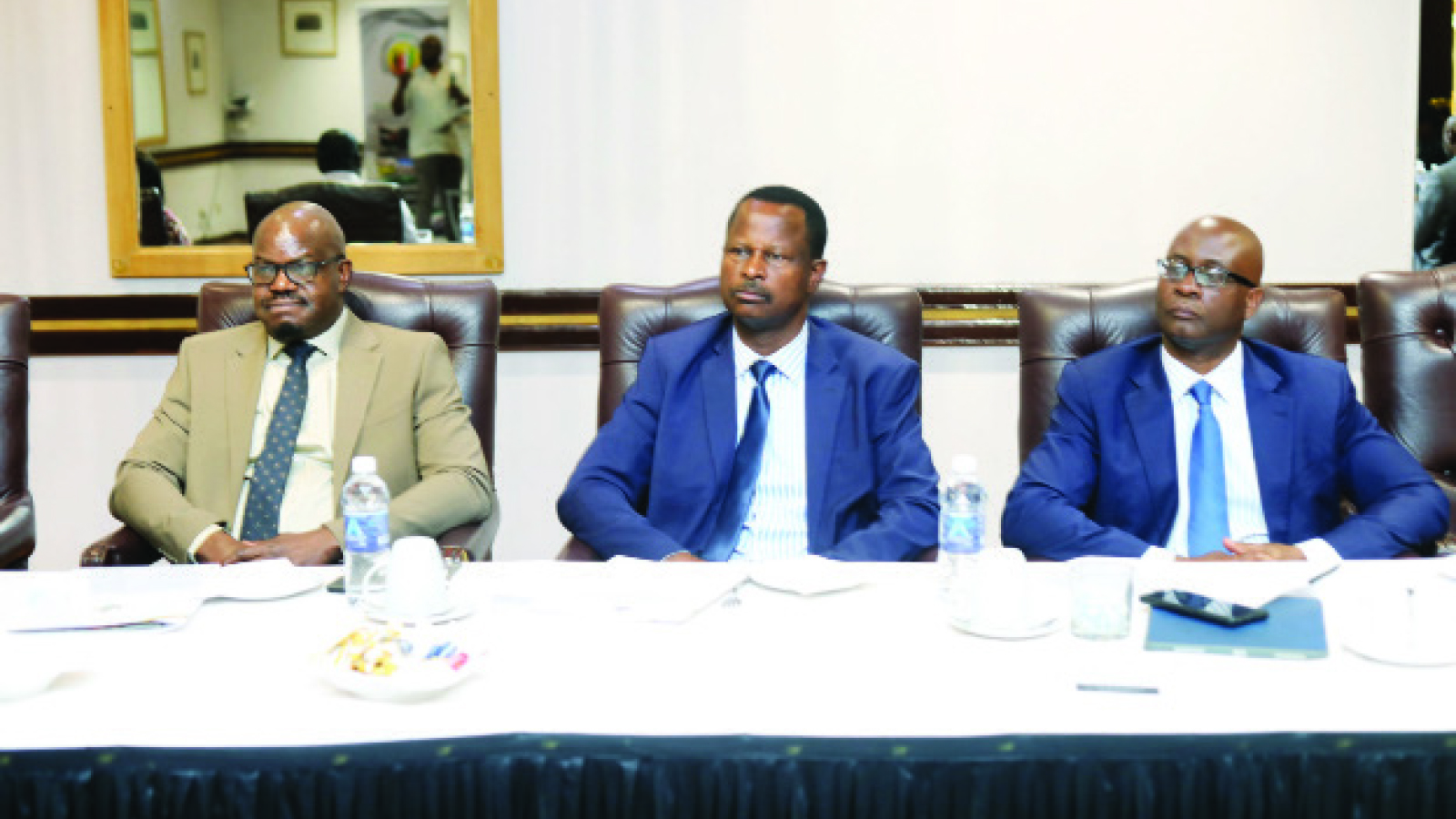
Wallace Ruzvidzo-Herald Reporter
ACCURATE information is central to the country’s national goals, including the attainment of an upper-middle-class economic status by 2030, Information, Publicity and Broadcasting Services Minister Dr Jenfan Muswere has said.
In a speech read on his behalf by Information, Publicity and Broadcasting Services Deputy Minister Omphile Marupi at the Second Consultation on Media and Information Literacy Strategy for Zimbabwe held in Harare yesterday, Dr Muswere said communities become more resilient and innovative when accurate information is readily available.
“To achieve Vision 2030, we need reliable information promoted through this strategy we are collectively shaping. Let us commit to fostering an environment where truth travels faster than rumours, providing every Zimbabwean with the knowledge needed to thrive.”
Dr Muswere said there was a need to safeguard and educate the general citizenry on detecting inaccuracies, raising awareness about communication pitfalls, and deterring the spread of falsehoods.
“In line with His Excellency, President Mnangagwa’s vision of ‘Leaving No One and No Place Behind’, I am pleased that our Government is collaborating with private sector partners to implement a powerful and impactful MIL strategy.
“This partnership exquisitely reflects the President’s call for Public-Private Partnerships (PPPs), which we are actively witnessing today.
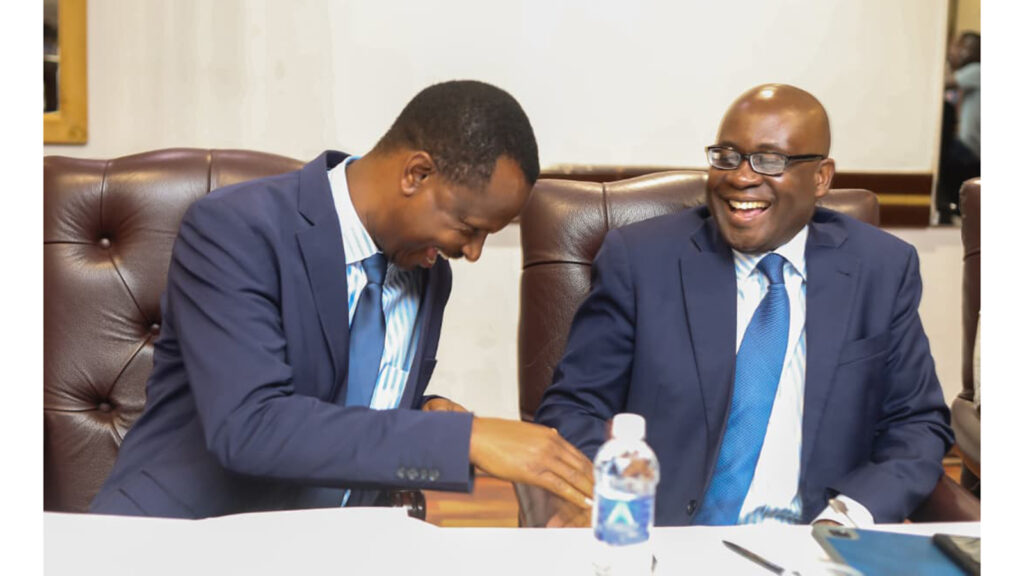
Information, Publicity and Broadcasting Services Deputy Minister, Dr Omphile Marupi (left) shares a lighter moment with Zimpapers acting chief executive officer, William Chikoto, during the Media and Information Literacy (MIL) Strategy Validation breakfast meeting at Rainbow Towers this morning. – Pictures: Edward Zvemisha.
“The Media and Information Literacy Strategy is fundamental to improving access to information, knowledge, freedom of expression, and quality education.
“It empowers us with the skills to understand how media functions in an ever-changing environment, critically assess the accuracy of information, counteract misrepresentation, challenge extremist views, and make informed media choices,” he said.
Dr Muswere said the MIL strategy would nurture essential skills in creativity and problem-solving within technology-rich environments.
“With the rise of Artificial Intelligence, distinguishing between disinformation, misinformation, and accurate facts will become increasingly challenging.
“Our goal is to equip everyone with the ability to think critically and engage thoughtfully with the media and information they consume.
“Allow me to stress that accurate information is vital; it empowers individuals and communities, while misinformation or incomplete data wastes resources and opportunities,” he said.
The minister said it was crucial that citizens receive factual and precise updates to make informed decisions.
“We all understand that access to reliable information is key to advocating for our rights, pursuing education, and participating fairly in the economy. Information must be delivered in all 16 recognised local languages, using culturally relevant examples, and tailored to different literacy levels instead of adopting a one-size-fits-all approach,” he said.
The Government, the media fraternity, and citizens, said Dr Muswere, share the responsibility to promote open data, verify facts, and critically evaluate sources.
“We must all recognise the importance of this upcoming strategy, engaging seriously in these consultations to develop the best possible outcomes.
“In today’s digital age, false information spreads rapidly, making it essential to strengthen fact-checking, media literacy programmes, and timely corrective communication.
“We must also guard against information overload, ensuring the public receives and comprehends what truly matters,” he said.
Information, Publicity and Broadcasting Services Permanent Secretary Mr Nick Mangwana said it was critically important that the populace is aligned to Vision 2030.
“ . . . the only way the populace can be aligned to Vision 2030 is when they get information, and when they get that information, they have to consume it with a sceptical and analytical eye that separates the fake and the correct, the biased and the fair.
“That is very, very important because right now there is competition out there to offload information onto the people.
“It’s an avalanche . . . so you need to be very, very incisive about what this person is trying to sell you, if they are selling anything, and you should be able to pick whether this is a sales talk, or are they trying to politically recruit you somewhere, is it propagating an agenda, or is it quite simply informative, flat information, no flavour,” he said.
In his presentation, Zimpapers acting chief executive officer Mr William Chikoto said there was a need to focus on bridging the urban and rural divide that currently exists in terms of literacy.
“Whether it’s the legacy media or digital media, the gap is wide and also within cities, there is a gap between the former Group A schools and the former Group B schools.
“When we went to Bulawayo, we had all the 18 schools in Bulawayo there because this is a programme that we work with the Ministry of Education. The former Group A schools came with high-end cameras; they have all the equipment that is needed because they are already running programmes that are successful, and the engagement was amazing,” he said. The consultation meeting was attended by various stakeholders in the country’s media industry.