


 Chronicle Editor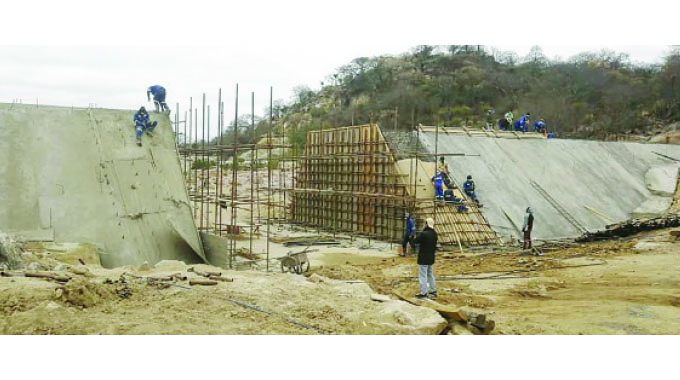
Yoliswa Dube-Moyo, Features Editor
The Second Republic has had its nose to the grindstone to change the face of the rainbow province of Matabeleland South over the last five years or so.
Since the coming in of the New Dispensation in November 2017, President Emmerson Mnangagwa has reiterated his Government’s national vision encapsulated by the rallying call towards a prosperous upper middle-income economy by 2030.
The key goals of Vision 2030 entail transforming Zimbabwe into an upper middle-income economy with per capita gross national income of between US$4 256 and US$13 205 in real terms and rising employment rates in both the formal and small-to-medium enterprise sector.
The Government also intends to progressively reduce the poverty rate to levels consistent with upper-middle-income economies through interventions under the National Development Strategy 1 (NDS1).
National food security, affordable, competitive, and accessible education and health services, and infrastructural development are some of the targeted key deliverables.
President Mnangagwa did not mince his words when he said no one or no place would be left behind and the evidence is there for all to see.
The face of Matabeleland South province has changed drastically through the development of infrastructure and implementation of various programmes around the rural province.
Tuli-Manyange Dam
For years, communities surrounding the Tuli-Manyange Dam site in Gwanda District would watch helplessly as water flowed along Tuli River without being harvested.
But under the Second Republic, financial resources have been channelled towards the dam project whose idea was mooted in the 1960s to provide water to surrounding communities in the semi-arid region characterised by low rainfall patterns.
Communities living in areas around Tuli-Manyange Dam have started benefiting from the massive Government project as they are now accessing water for their livestock throughout the year.
The dam, with a holding capacity of 35 million cubic metres of water, is a significant milestone under the Second Republic in improving the livelihoods of rural communities as it will provide raw water for irrigation purposes.
It is envisaged that once Tuli-Manyange Dam is complete, at least 2 000 hectares will be put under irrigation. The dam is expected to service Vela, Guyu Business Centre, Ntalale Business Centre, Chelesa Business Centre, Sizhubane Barracks, Manama Mission and Business Centre, Sebasa and Mankonkoni irrigation schemes.
The project highlights Government’s investments in key and strategic water bodies around the country with the construction of new water bodies expected to help support the switch from rain-fed agriculture and help food-insecure communities through provision of water for both irrigation and fisheries.
Gwanda Magistrate’s Court
Construction of the Gwanda Magistrates’ Court is well on course after the Government allocated funds for the completion of the project.
The construction of the building began in June 2004 but work was suspended in 2008 due to financial constraints. Work on the project resumed in 2019 with very little ground covered as limited funds had been allocated for the project.
Government then allocated more resources towards the project in 2021 and a lot of progress has been made since then Gwanda is the provincial capital of Matabeleland South province and court officials in the town operate from different buildings.
The town has an establishment of six magistrates who take turns to use the improvised courtrooms at the different buildings in the mining town. The Magistrates’ Court, which is a state-of-the-art complex, is expected to accommodate approximately 500 Government workers.
It will accommodate all relevant departments within the judiciary including the High Court, meaning that high-level offences like murder will be handled locally, which will ensure the timeous completion of cases. The new court complex will also address the shortage of offices for Government workers.
Joshua Mqabuko Nkomo Polytechnic
Home Economics Block
During a tour of the polytechnic’s Home Economics Complex recently, head of department for administration Mr Mandlenkosi Moyo said several efforts to complete the building over the years had been futile, but the Second Republic had seen it come to pass.
Government recently availed $60 million for the procurement of industrial machinery for the Home Economics Complex which will be turned into an innovation hub.
The construction of the Home Economics Complex, which is now in its final stages of completion, is going to be a game changer in the industrialisation of the country. The innovation hub is expected to benefit graduates who intend to start their own businesses in line with the Education 5.0 model, which is a five-mission model of teaching, research, community service, innovation and industrialisation.
It speaks to the utilisation of local resources for social and economic development. The new model, which was adopted five years ago, seeks to produce graduates who solve national problems instead of just being job seekers.
The Home Economics Complex will also address the shortage of learning space at JMN Nkomo Polytechnic. Once complete, it will house a clothing factory and accommodate students pursuing practical courses such as tourism and hospitality, professional cookery, textile and clothing design. It is envisaged to become a major Food Science and Technology Centre and an incubation ground for new companies.
Gwanda State University Engineering
Laboratory and Innovation Complex
The construction of an Engineering Laboratory and Innovation Complex at the Gwanda State University Epoch Mine Campus, which is nearing completion, is set to spur mineral beneficiation and exploration initiatives as the country moves towards attaining a US$12 billion mining milestone by 2023.
The project dovetails with Government’s NDS1, which supports establishment of centres of excellence to provide universities and colleges platforms for innovation and domestication of value chains.

The university’s Vice Chancellor, Professor Doreen Moyo, said the complex was key in addressing the critical skills gap in the country and development of students and communities with critical skills and competencies for future industry needs.
“Matabeleland South province is endowed with mineral wealth and there is need to provide appropriate solutions in exploration, extraction, beneficiation and value addition, which leads to sustained economic affluence.”
As such, Prof Moyo said the complex will enable technology transfer, adaptation, incubation and commercialisation leading to the proliferation of start-ups and spin-off companies within the university structure.
The Engineering Laboratory and Innovation Complex has six laboratories, three staff offices, a computer room, a warehouse, storeroom, boardroom and ablution facilities. The laboratory is also expected to go a long way in enhancing operations of miners in surrounding communities.
Revitalisation of irrigation schemes
Government, working with various partners, has rehabilitated irrigation schemes that have been lying idle and established new ones in order to improve food and nutrition security and ensure the attainment of Vision 2030. Irrigation schemes that were being underutilised have since been capacitated and expanded.

Mtshabezi Irrigation Scheme in Gwanda, which had remained a pipe dream for 87 years, was last year established on a 200-hectare piece of land that had been idle.
Government is targeting to rehabilitate and develop 350 000 hectares of land by 2025 across the country to safeguard against the negative effects of climate change and ensure food security.
Through the revitalised irrigation schemes, beneficiaries can now afford to feed their families and sell the surplus to generate income. This is in line with the country’s rural industrialisation drive.
Filabusi Registry Office
Funds were recently released for the completion of the Filabusi Registry Office in Insiza District which had stalled for 18 years. The completion of the project will see community members from Insiza District being able to obtain passports and other travel documents locally.
Applicants have had to travel to Bulawayo or Gwanda to access these documents. Staff from the Registry Department in Filabusi operate from limited space where they are only able to issue birth and death certificates, as well as national identity cards.
Under the Second Republic, Government has moved with speed to complete key infrastructural projects that have stalled for years, especially in remote places, to empower every citizen.
The project is in line with Government’s decentralisation and devolution agenda with the completion of the Registry Office expected to help ease congestion at the Bulawayo and Gwanda offices as the structure will service other districts in the province once it’s open.
Construction of health facilities
More than 20 health facilities are under construction in the province as Government moves to improve access to medical services. The Government under the Second Republic remains committed to improving healthcare services through building and revamping facilities.
More than 40 clinics and hospitals have been built across the country since 2018 while many more were upgraded. The provision of quality health care services is one of the critical requirements for the country to attain an upper middle-class economy by 2030.

In the past, some people in Matabeleland South province’s rural areas used to walk up to 20 kilometres to access health services. Government has said its target is to ensure health facilities are as close to the people as possible.
e-Passport Centre
The construction of an E-passport centre in Gwanda is underway with the facility set to be operational mid-next month. The ultimate goal is to have an e-passport facility in each of the country’s 59 districts.
At the moment e-passports are issued in Harare, Bulawayo, Gweru, Chitungwiza, Hwange, Lupane, Beitbridge and Murehwa among other areas. The President launched the new secure electronic passport at Chiwashira Building in Harare in December last year with Zimbabwe being one of the few countries in Africa producing e-passports.
The e-passport was launched after Government partnered a Lithuanian company, Garsu Pasaulis, on a build, own, operate and transfer basis to produce the new passports that meet modern international standards.
Community radio stations
Lotsha FM and Ntepe-Manama Community Radio were recently launched in Beitbridge and Gwanda districts respectively as Government is committed to mainstreaming local languages and promoting sustainable development through establishment of community radio stations in formerly marginalised areas across the country.
In line with the devolution policy, community radio stations give a voice to people who lack access to mainstream media, expedite information dissemination and uphold creative growth and democracy at the community level. The devolution policy is anchored on values and principles that guarantee equitable sharing of local and national resources including enhancing participation of local communities in decision making processes.
Modernisation of Beitbridge Border Post
Civil works on the three border post terminals have been completed and the Zimborders Consortium is now fine-tuning ancillary works. The project is expected to wind up at the end of June this year. The US$300 million project will pave way for the implementation of a one-stop border between Zimbabwe and South Africa. 220 housing units have since been handed over to Government.
The staff houses, a 11,4 mega litre water reservoir, a fire station, an animal, plant and quarantine and oxidation dam, were constructed by the consortium as part of the out-of-port works under the modernisation project.
Many other projects are underway across the province with the construction and rehabilitation of roads being a top priority. Efforts to improve water, sanitation and hygiene particularly at schools and health facilities are also in progress. With the Second Republic at the helm, the only way is onwards and upwards. – @Yolisswa



 Bongani Ndlovu
 Online Reporter