Youth Interactive Writer
Life at university is often associated with academic pursuits, but for some students, it also presents an opportunity to turn classroom knowledge into practical solutions that can transform communities and create business opportunities.
At the University of Zimbabwe, two enterprising students are doing just that, using their academic knowledge to blend architecture and artificial intelligence in an innovative project aimed at preserving the country’s history for generations to come.
The initiative is evidence of how universities can translate theoretical knowledge into practical innovations that promote entrepreneurship, industrialisation and economic development.
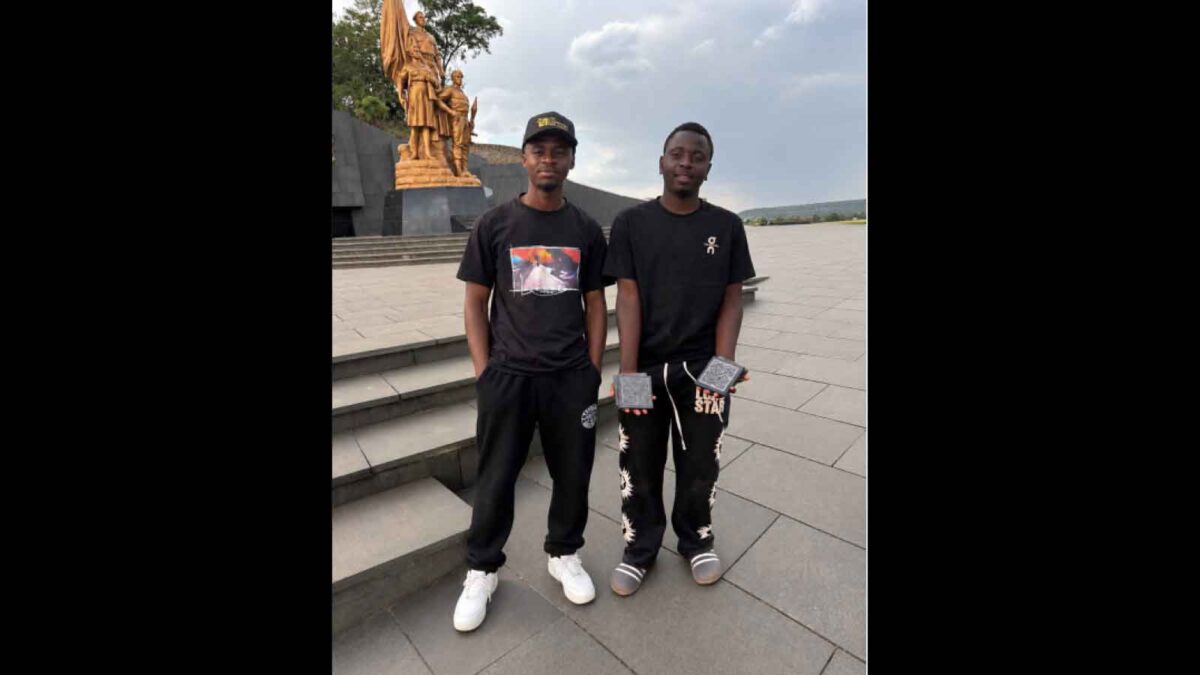
Two UZ students, Takudzwa Mbofana (22) and his close friend Christian Madiro (21), may not yet be household names on campus, but their innovation could soon put them on the map.
Mbofana is studying Architecture, while Madiro is specialising in Artificial Intelligence. With the support of the University of Zimbabwe Innovation Hub, which promotes the country’s heritage-based Education 5.0 model, the pair have every reason to celebrate.
Operating under their company, Memory Tag Incorporated (Pvt) Ltd, the two have received the green light to install QR codes on the tombstones of national heroes and heroines buried at the National Heroes Acre.
Having already installed more than 10 QR codes at the national shrine, with the blessing of the National Museums and Monuments of Zimbabwe (NMMZ), the young innovators are turning their ambitions into reality.
“We started this application in 2024 and got the blessing of the University of Zimbabwe to implement it under the institution’s Innovation Hub,” said Mbofana, who has teamed up with Madiro.
“Prior to this, I had installed QR codes for other citizens of Zimbabwe with the assistance of Ngoda Granites, who have been sponsoring us.
“It was easy for us to click and combine forces after I heard about Christian’s brilliance on campus.
“In other words, it is a combination of well-thought-out architecture and artificial intelligence.”
Mbofana, who appears to have found the right business partner, added:
“With the world going digital, this was the best way to preserve the history of the departed in digital form.
“In our case, we have simply found a way to put into practice what we are learning at university.
“We are only using information obtained from the National Archives of Zimbabwe, ensuring that we remain guided by credible historical records as we do our work diligently”
His counterpart, Madiro, said they were targeting all the tombstones at the National Heroes Acre.
“So far, we have installed QR codes on the tombstones of national heroes, including Herbert Chitepo, George Silundika, Jason Ziyapapa Moyo, Simon Mazorodze, Tapfumaneyi Maurice Nyagumbo, Rekai Tangwena, Josiah Chinamano and Robson Manyika. We are also working on others,” he said.
The two young innovators are equally excited about the possibilities their project presents, particularly its potential to turn ordinary family memorials into digital archives.
“Beyond bridging the gap between theory and practice, we have developed an application that can also be used by families to preserve the history of their departed loved ones.
“Instead of having only biblical verses inscribed on tombstones, families can now opt for something unique that resonates with changing times.
“Through this initiative, families can include photographs, audio recordings and detailed profiles of their loved ones, which can be accessed by scanning the QR code embedded in the granite.
“These granite QR codes are designed to last for generations and can also be updated whenever there is a need to make changes or correct omissions.”
For Mbofana and Madiro, their innovation is more than an academic project.
It is a practical demonstration of how young minds can harness knowledge, technology and entrepreneurship to preserve national heritage while creating solutions for the future.