Online Reporter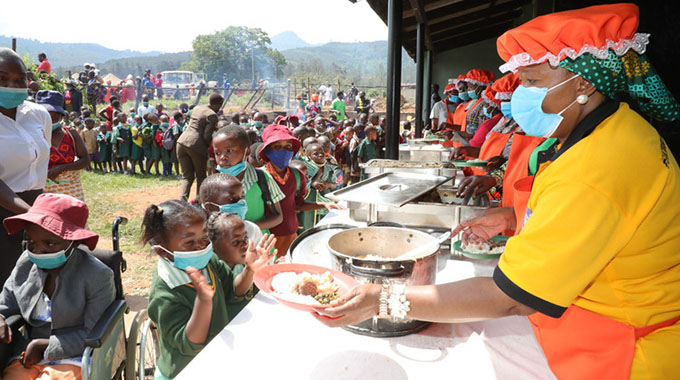
Darlington Tshuma-Correspondent
March 1, Africa commemorated the Day of School Feeding, with stakeholders working to fight against illiteracy, poverty, and malnutrition.
Africa Day of School Feeding celebrates the progress achieved while serving as a critical moment to reflect on the challenges and opportunities in achieving the School Meals Coalition’s ambitious goal of providing every school-going child with a healthy and nutritious meal by 2030.
School feeding programmes are widely recognised as education interventions that not only improve the nutrition of school children, but also facilitate access to education, and increase attendance and retention rates.
There is evidence that school meals, even as they contribute to children’s learning and health, they also increase their productive potential later in life.
Moreover, when made part of a larger package of investment in education, these feeding programmes help maximise the return on investment and contribute to reducing poverty in the long term.
School meals go beyond providing food to children; they are strategic investments that drive progress across multiple Sustainable Development Goals (SDGs), including education, health, agriculture, energy, and economic development.
Every dollar invested in school feeding yields a return of US$9, directly impacting improvements in education, health, agriculture, and economic outcomes.
Beyond the schools, these feeding programmes’ benefits can be further increased by building partnerships between schools and local small-scale farmers.
Home-Grown School Feeding (HGSF) programmes present an opportunity to improve the livelihoods of smallholder farmers and strengthen the nexus between nutrition and agriculture.
Linking schools to local production also increases sustainability and is critical in transitioning school feeding programmes to sustainable national programmes.
However, as we near the mid-point of the School Meals Coalition goal, (a network of over 100 governments and over 130 partners committed to school meals), we face significant obstacles.
The financing gap required to sustain and expand these programmes is widening.
Investment and spending in school meals have declined, threatening to derail the hard-won development gains of the pre-Covid-19 period.
For example, of the US$3 billion in grant aid and multilateral financing pledged for school meals in the global South, less than US$300 million has been raised and delivered, putting millions of children at risk of hunger and lost educational opportunities.
Also, between 2020 and 2022, development partner funding and international support declined by 6 percent, dropping from Us$267 million in 2020 to just US$214 million in 2022.
The need for innovative financing
To ensure the continuation and sustainability of school meal programmes, it is imperative to explore innovative financing models for scale-up.
Innovative and scalable financing models offer a promising pathway to bridge the funding gap and mobilise the US$6.8 billion in additional finance required to ensure that every child can receive a healthy, nutritious meal in school by 2030.
By leveraging partnerships with private sector entities, philanthropies, and international organisations, we can create sustainable funding streams to support these vital programmes in the long-term.
Countries like Brazil, which have invested in home-grown school feeding programmes, have seen progress in other SDG-related areas, including education, health, poverty reduction, food and nutrition security, and energy access.
While many African countries have shown great ambition and commitment, including the establishment of national school feeding policies, the financial resources required for sustainable investment in these programmes remain insufficient.
This challenge is particularly acute in Low-Income Countries (LICs), where the resourcing landscape is marked by declining donor contributions, fiscal pressures, and rising debt levels.
Transforming debt into opportunity
Debt-for-food swaps, an arrangement where a country’s debt is forgiven in exchange for a commitment to invest in food programmes such as school meals, can serve as effective policy tools with high potential to trigger catalytic investments in SDGs in two main ways:
Ensuring efficient resource management
First, a debt-for-food swap that focuses on building and strengthening national systems with robust legal and regulatory frameworks would help ensure efficient resource management.
Enhancing domestic resource mobilisation
Second, robust Domestic Resource Mobilisation (DRM) systems can serve as powerful de-risking and trust-building mechanisms, allowing African countries to mobilise domestic resources more efficiently and access international capital markets, all while enhancing fiscal transparency and accountability mechanisms that mitigate perceived risk by creditors.
For debt-for-food swaps to be truly transformative and drive lasting impact, they must be integrated into robust domestic resource mobilisation capabilities leveraging digital public infrastructure for efficiency and real-time monitoring.
By strengthening their national systems and deploying digital public infrastructure, African countries can improve revenue collection from the current 16.6 percent of GDP to sustainable levels, enabling investment in critical programs like health, education, social protection, and school meals.
Digital public infrastructure plays a crucial role in enhancing the effectiveness of national systems.
By integrating digital innovations, countries can improve the monitoring and management of national economic flows, ensuring greater transparency and efficiency in resource generation, deployment, and allocation.
For instance, digital platforms like the World Food Programme ‘School Connect’, currently operational in over 20 countries, are being used to streamline the integration of school feeding programmes into broader social protection systems.
These platforms help improve targeting and resource allocation.
Policy strategies
To ensure the scalability and sustainability of school meal programmes across Africa, the following policy recommendations are critical:
• Invest in building robust country systems: Integrate digital public infrastructure to enhance domestic resource mobilisation efforts.
• Utilise Debt-for-Food Swaps: Use these swaps as de-risking and trust-building mechanisms to build trust and confidence in Africa’s governance systems.
• Align school feeding with national development priorities: Ensure that school feeding programmes are integrated into broader national development programmes.
Achieving universal school meal coverage in Africa is not just a moral imperative — it is a strategic investment in the continent’s future.
By adopting innovative financing mechanisms, African countries can mobilise the resources needed to provide every child with a healthy and nutritious meal at school.
Doing so not only addresses the continent’s immediate challenges like peace and security, poverty reduction, malnutrition, and food insecurity but can support long-term development objectives and accelerate progress towards Agendas 2030 and 2063. —Africa Renewal
Dr Tshuma is a Programme Policy Officer (WFP), on secondment to the UN Special Advisor on Africa.