Online Reporter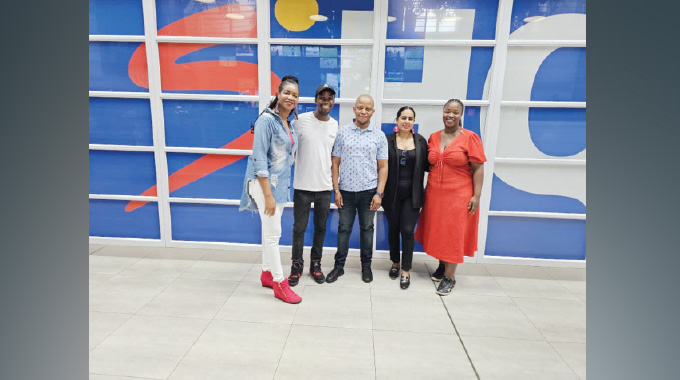
Mbulelo Mpofu, recently in Randburg, South Africa
When news first emerged that MultiChoice Group (MCG) would be partnering with global media giant Groupe Canal+, viewers across the region expressed concern. Questions around possible price hikes, reduced access and changes to service packages quickly surfaced.
Just weeks ago, those concerns felt valid. However, after an immersive tour of MultiChoice City in Randburg, South Africa, it is clear that the core operations remain intact.
The technology and production hub that delivers popular entertainment and live sport continues to function as usual. Viewers can still access their favourite content without disruption.
For now, the impact of the partnership appears to be limited to changes at the executive and board level, rather than on the platform’s day-to-day services.
It is impossible to overlook MultiChoice’s significant role in shaping Africa’s television landscape and urban cultural identity. Guided by its mission of “Enriching Lives”, the company has invested in initiatives such as the MultiChoice Talent Factory (MTF), which continues to develop creative talent across the continent. The platform is also home to popular Afrocentric productions such as Shaka Ilembe, Big Brother Mzansi and Big Brother Naija.
For Zimbabwean audiences, MultiChoice remains a vital space for telling our own stories. Local films such as Joe Njagu’s The Gentleman and Nick Zemura’s Stay With Me, along with channels like ZTN Prime, NRTV, ZBCtv and 3Ktv, are reaching broader regional and international audiences through the platform. Seeing the scale of the operation that brings such content to screens across the continent was both insightful and humbling.
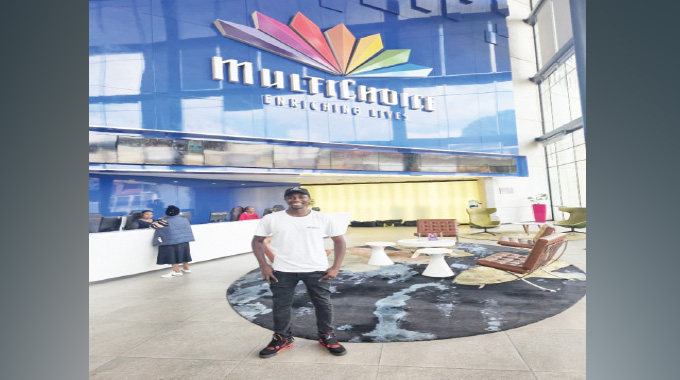
My guides through this technological marvel were Media Technology manager, Edwin Tlhalatsi and Nadine Moonsamy, publicity manager for M-Net Channels at MultiChoice Group. Their competence and precision in explaining the labyrinthine systems, departments and workflows was truly awe-inspiring and insightful.
Together with acclaimed US cultural entrepreneur and coach Le’Kedra Robertson, I toured the heart of MultiChoice’s broadcasting operations, beginning with the high-definition (HD) studios.
The visit to the SuperSport production facilities, where the intensity of live sport is captured and expertly packaged for millions of viewers, was particularly eye-opening.
Next came the production control rooms — the absolute command centres. This is where the raw footage from the studios undergoes its transformation. Audio is meticulously managed, separate language tracks are generated for different channel feeds and the final product is crafted.
“These production control rooms are the absolute heartbeat of our broadcast operations. Their importance cannot be overstated, especially now as MultiChoice advances its video resolution towards Ultra High Definition. Processing UHD isn’t just about sharper pictures; it demands exponentially higher bandwidth, more complex signal management, and flawless synchronisation of high-bitrate audio.
“Every frame, every language feed, every graphic overlay — it’s all orchestrated here with zero margin for error. This is where we ensure that the stunning clarity promised by UHD actually reaches our decoders, perfectly synchronised and crystal clear, so viewers experience the future of television without a glitch,” said Tlhalatsi.
His remarks underlined the constant push for higher quality and the technical backbone required to support it.
The journey continued into the sanctum of the server room. Here, the sheer volume of content processing became tangible. This is where programmes are played out, logos and subtitles are seamlessly added, media is cued, layered and finally processed for its journey skyward. From these servers, signals are beamed to satellites, embarking on the final leg to reach our decoders at home, often in real-time.
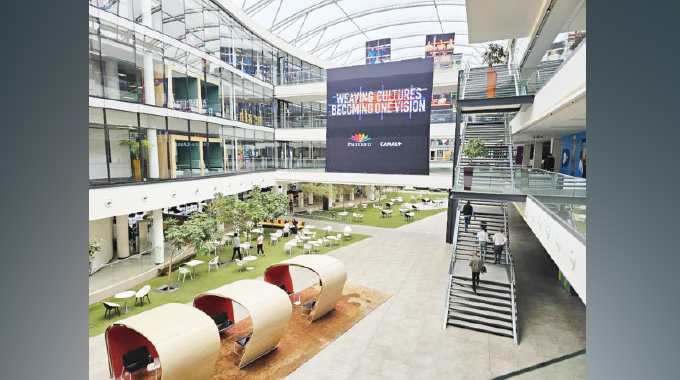
It is not only about local production. While MultiChoice continues to curate a wide range of global content, its defining strength lies in its Africanness. We observed how international programmes are carefully adapted for local audiences through tailored advertising, strategic graphic placement, and, importantly, the addition of local language commentary, ensuring global stories feel relatable and close to home.
As if scripted to underscore the dynamism of this place, fate intervened during our tour. We stumbled upon the live broadcast of the SuperSport TotalEnergies Caf Africa Cup of Nations (Afcon) Morocco 2025 media conference.
The presence of Canal+ Africa CEO, David Mignot, and Caf President, Patrice Motsepe, engaging with staff and media created an electrifying atmosphere. Equally compelling was witnessing legendary South African sportscaster Carol “First Lady of Sport” Tshabalala presenting live. Observing the seamless co-ordination behind her confident delivery highlighted the meticulous planning and teamwork required to broadcast world-class content to millions.
Mignot’s presence carried particular weight, coming shortly after the completion of Canal+’s acquisition, which now places MultiChoice Group as a wholly owned subsidiary.
His recent statement at MultiChoice City outlined the new company’s direction.
“As a combined company, we are building on strong foundations to create a media and entertainment powerhouse to serve African consumers. I am proud to lead Canal+’s operations across the continent, including our operations in South Africa. Canal+ and MultiChoice have both been pioneers, and we are now uniting our cultures of excellence, creativity, technology and storytelling to create something unique.
“Together, we will harness digital innovation, from streaming and mobile platforms to advanced distribution, to expand access, enhance experiences, and bring compelling programming to more homes, while giving Africa a stronger voice on the world stage.”
This acquisition, Canal+ confirmed, is the largest in the group’s history. The combined entity now serves a staggering more than 40 million subscribers across close to 70 countries in Africa, Europe and Asia, powered by approximately 17 000 employees.
Leaving MultiChoice City, any initial skepticism about possible service disruptions had faded, replaced by a deeper appreciation for the complex and dedicated systems that bring entertainment and information into our homes. — Follow on X @MbuleloMpofu