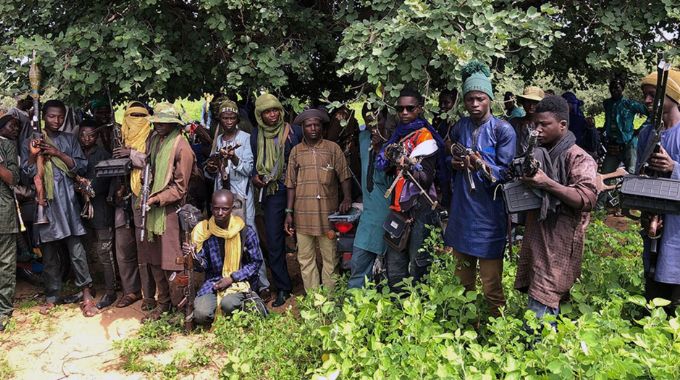
NIGERIA is facing a wave of mass abductions, but kidnapping is only one aspect of a much broader and more complex security crisis. Despite claims by some international figures that the violence is primarily driven by religious persecution, Nigeria’s insecurity stems from a mix of criminality, insurgency, communal conflicts and separatist movements.
With more than 250 ethnic groups and a population divided between a predominantly Muslim north and largely Christian south, Nigeria faces overlapping challenges that stretch its security forces. Criminal gangs operate in the north-west, Islamist insurgents remain active in the north-east, farmers and herders clash in central regions, and separatist groups continue to fuel unrest in the south-east.
Bandits and Kidnap Gangs
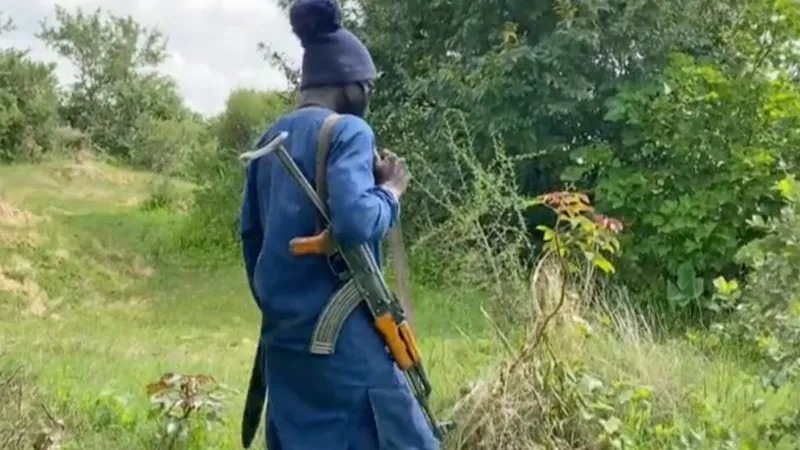
The most immediate security threat in many parts of northern Nigeria comes from criminal gangs commonly known as “bandits”. Many are drawn from Fulani communities traditionally involved in cattle herding.
Armed with weapons that proliferated across the region after the collapse of Libya in 2011, these groups have turned kidnapping for ransom into a lucrative business.
Operating in large numbers on motorcycles, bandits can strike quickly and avoid capture. They frequently target schools, villages and travellers, while also extorting local communities through taxes and protection payments. Unlike ideological groups, bandits are primarily motivated by profit. Their activities have spread across north-western and central Nigeria, and the government officially designated them as terrorists in 2022.
Boko Haram’s Enduring Threat
Boko Haram remains one of Africa’s most notorious extremist organisations. Founded in 2002 by Mohammed Yusuf in Maiduguri, the group seeks to establish an Islamic state and rejects Western-style education.
The group gained global attention in 2014 when it kidnapped more than 200 schoolgirls from Chibok, many of whom remain missing. At its peak under Abubakar Shekau, Boko Haram controlled significant territory in north-eastern Nigeria.
Although weakened by internal divisions and military operations, Boko Haram continues to carry out attacks on civilians and security forces. The group’s insurgency has killed thousands and displaced millions over the past decade.
Iswap and the
Jihadist Fragmentation
A major split within Boko Haram led to the emergence of the Islamic State West Africa Province (Iswap) around 2016. Led by commanders who opposed Shekau’s indiscriminate killing of Muslims, Iswap generally concentrates on military and government targets.
The group remains active around the Lake Chad region and continues to battle Boko Haram for territory and influence. Iswap has demonstrated considerable military capability, including attacks on Nigerian security installations and personnel.
Authorities have blamed recent school abductions on jihadist groups, though some security analysts argue that such kidnappings are more likely the work of bandits rather than Iswap or Boko Haram.
Ansaru and Other
Splinter Groups
Several smaller jihadist factions have emerged from the Boko Haram movement. Among them is Ansaru, which has expanded its operations beyond north-eastern Nigeria.
The group has been linked to high-profile attacks, including the 2022 assault on a train travelling between Abuja and Kaduna, during which passengers were killed and many abducted. Ansaru’s leader, Khalid al-Barnawi, remains on trial over terrorism-related offences.
Another faction, Mahmuda, has established a presence around Kainji Lake National Park in western Nigeria. Though smaller, the group has carried out targeted attacks on markets, vigilantes and local communities, particularly in Kwara State and neighbouring areas.
Lakurawa and Expanding Extremism
Lakurawa is a relatively new militant group operating in north-western Nigeria and across the border in Niger. Initially presenting itself as a force against banditry, it has since adopted increasingly hardline tactics.
Authorities accuse the group of imposing strict religious controls, recruiting local youth, rustling cattle, kidnapping civilians and attacking government officials. Nigeria formally designated Lakurawa a terrorist organisation in 2025.
JNIM’s Possible Expansion
Security analysts are also closely monitoring Jama’at Nasr al-Islam wal Muslimin (JNIM), a powerful jihadist network active in Mali and Burkina Faso. There are growing concerns that the group is attempting to establish itself in Nigeria.
A reported attack in Kwara State, if confirmed, would represent JNIM’s first operation inside Nigeria. Its emergence would further complicate an already crowded security landscape where multiple armed groups are competing for influence.
Herders and Farmers Conflict
One of Nigeria’s deadliest but least-understood conflicts occurs in the Middle Belt, where herders and farmers compete over land and water resources.
While often portrayed as a religious struggle between Muslim herders and Christian farmers, the conflict is fundamentally driven by disputes over grazing routes, farmland and access to water. Population growth, urbanisation and environmental pressures have intensified competition for resources.
States including Benue, Plateau, Kaduna, Nasarawa and Taraba have experienced repeated outbreaks of violence. Both communities have increasingly armed themselves, creating cycles of retaliation that have devastated rural populations and displaced thousands.
The conflict has also spawned ethnic militias, some of which have themselves become involved in criminal activities and mass violence.
The Biafra Separatist Movement
In south-eastern Nigeria, separatist agitation continues to fuel instability. The movement traces its roots to the Biafran civil war of the late 1960s, when attempts to establish an independent state resulted in a conflict that claimed up to a million lives.
The Indigenous People of Biafra (Ipob), led by Nnamdi Kanu, has become the most prominent organisation advocating for Biafran independence. Nigerian authorities designated Ipob a terrorist organisation in 2017.
Its armed wing, the Eastern Security Network (ESN), and various splinter groups have been linked to attacks on civilians, security personnel and government facilities. The separatists have also imposed periodic stay-at-home orders that have disrupted economic activity across the region.
Both Kanu and breakaway leader Simon Ekpa have recently faced terrorism-related convictions, highlighting the Nigerian government’s determination to suppress separatist activities.
A Multi-Dimensional Security Challenge
Nigeria’s security crisis cannot be reduced to a single cause or viewed solely through a religious lens. The country faces a combination of criminal banditry, jihadist insurgencies, communal violence and separatist unrest, often occurring simultaneously in different regions.
These overlapping threats have placed immense pressure on Nigeria’s military and police forces. As mass kidnappings continue to dominate headlines, the broader challenge remains restoring stability across a country where insecurity is driven by a complex mix of historical, economic, ethnic and ideological factors.