
By Innocent Kurira
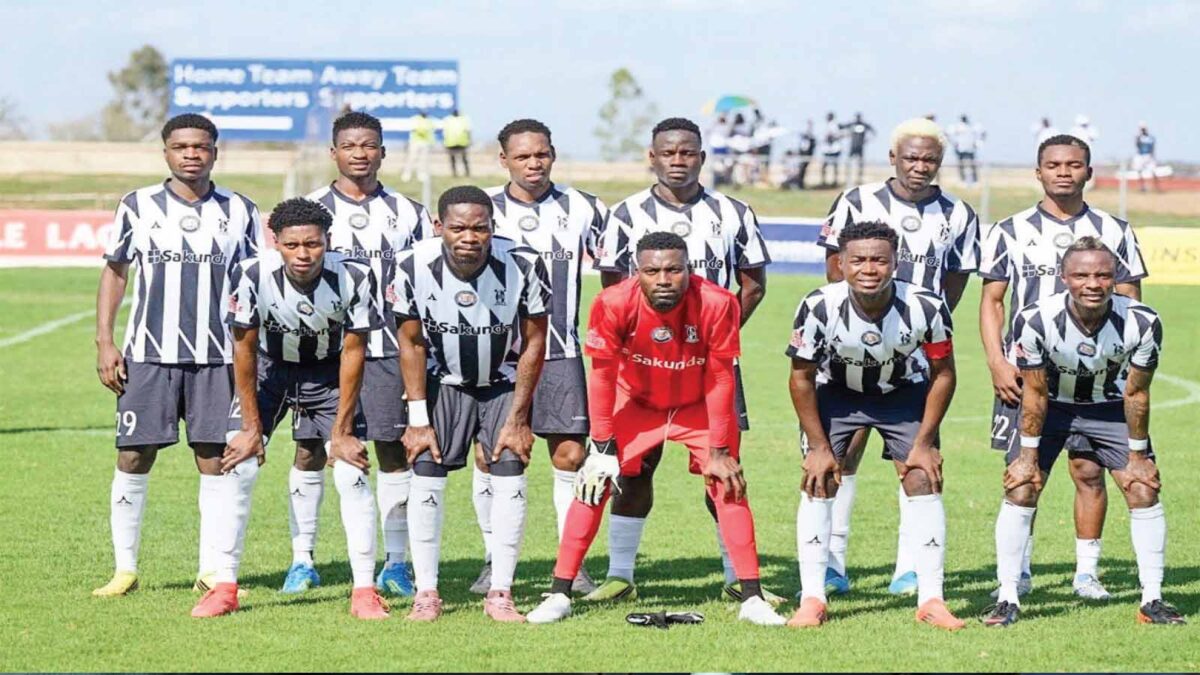
HIGHLANDERS’ centenary celebrations were meant to honour 100 years of football history, but behind the milestone, a dispute over unpaid player salaries escalated into a confrontation involving the Footballers Union of Zimbabwe (FUZ) and the Premier Soccer League (PSL).
Correspondence exchanged between November 13 and 19 shows how a matter FUZ says it had been pursuing since April developed into a conflict that threatened to disrupt Highlanders’ league programme.
At the centre of the dispute was an issue Highlanders eventually acknowledged publicly: the club owed players outstanding salaries and signing-on fees. While Highlanders maintained it was making efforts to settle the debt, FUZ argued that repeated assurances and occasional payments were no longer enough.
The latest phase of the dispute began on November 13, when FUZ wrote to Highlanders chairman Kindman Ndlovu demanding payment of outstanding salaries and signing-on fees owed to players registered during the 2026 season.
FUZ said it had formally engaged the club on April 22 and had since held telephone discussions and exchanged emails in which Highlanders repeatedly undertook to clear the arrears.
Although the union acknowledged that some payments had been made during the year, it said substantial amounts remained unpaid. It also raised concerns about former players who were allegedly still owed money and accused club officials of repeatedly failing to attend Labour Court hearings related to the matter.
The union gave Highlanders seven days to settle the debts, warning that it reserved the right to withdraw its members from competition if payment was not made. Three days later, the dispute reached the PSL. In a letter dated November 16 to PSL chief executive officer Rodwell Thabe, FUZ advised the league that its members would withdraw their labour from Highlanders matches from November 20 if the club failed to meet its obligations.
Beyond the salary issue, FUZ also raised concerns about alleged failures to provide contractual medical cover and injury insurance for players. It asked the PSL to suspend Highlanders’ upcoming fixtures.Highlanders responded on November 17 through chief executive officer Denzil Mnkandla, acknowledging the club’s financial obligations and expressing commitment to resolving the situation.
“The Club acknowledges its financial obligations to the affected players and wishes to assure the Footballers Union of Zimbabwe that it remains fully committed to honouring these obligations,” Mnkandla wrote.
He said the club was actively working to mobilise the resources needed to settle the debt and stressed that the financial challenges did not diminish its commitment to player welfare or contractual responsibilities.
Highlanders also acknowledged previous industrial action by players over unpaid salaries and other grievances. However, the club’s response did not provide a specific payment date or a binding repayment schedule.
That omission became a major point of contention. In its November 19 response, FUZ argued that assurances alone were no longer sufficient.
“Phrases such as ‘mobilising resources’ and settling obligations ‘as resources become available’ do not constitute a binding remedy,” the union said. FUZ maintained that players had endured prolonged financial hardship and could not continue rendering services based solely on open-ended promises. Meanwhile, the PSL initially decided that league fixtures would continue. In a letter dated November 18, Thabe said the league had engaged Highlanders and noted that the club had acknowledged its obligations while continuing discussions with players and the union.
The PSL said Highlanders had expressed a desire to maintain open communication with all stakeholders.
“In appreciation of this position we will be proceeding with the Castle Lager PSL Matchday 34 fixtures as scheduled,” Thabe wrote.
FUZ challenged that decision the following day, arguing that the PSL had relied on a general expression of goodwill despite the absence of firm commitments, repayment timelines or proof that the alleged shortcomings in medical cover had been addressed.
The dispute intensified when Highlanders released a more detailed response on November 19.
Mnkandla admitted that the club owed current players three months’ salaries, in addition to outstanding signing-on fees. However, Highlanders disputed FUZ’s portrayal of the payment situation, saying players had received salary advances of between US$1 200 and US$1 500 during the season.
“These payments were made in good faith, with the intention of alleviating the financial difficulties experienced by the players while the Club continued to mobilise resources,” Mnkandla said.
The club argued that these payments demonstrated its efforts to assist players despite difficult financial circumstances. Highlanders also turned attention to what it described as the reciprocal nature of the employment relationship. The club questioned FUZ’s position regarding repeated industrial action, which it said had disrupted training programmes, preparations and football activities during the season.
“The employment relationship is reciprocal,” Mnkandla wrote, arguing that players were equally obliged to fulfil their contractual responsibilities and maintain professional discipline.
On the issue of medical cover, Highlanders rejected FUZ’s allegations, saying it had an established partnership with Corporate 24 designed to provide medical aid and injury insurance. The club challenged the union to specify any shortcomings it believed existed.
At the same time, Highlanders acknowledged that outstanding obligations to former players still required attention. FUZ remained unconvinced. In its final response on November 19, the union delivered one of the strongest criticisms in the correspondence.
“Length is not a substitute for substance,” it said.
According to the union, despite Highlanders’ detailed explanation, there was still no immediate payment, no specific settlement date and no binding repayment plan.
“Goodwill has been exhausted,” FUZ declared.
The union outlined conditions it wanted met before players proceeded with travel arrangements scheduled for November 20. These included an immediate payment, a binding repayment agreement covering both current and former players, submission of the agreement to the PSL for validation and proof of active medical insurance.
FUZ warned that players would not travel for official club engagements unless those conditions were satisfied.
The exchange highlighted deeper issues than a simple disagreement over unpaid money. Highlanders acknowledged its debts and pointed to salary advances and ongoing efforts to raise funds. FUZ accepted that some payments had been made but insisted they did not resolve the club’s contractual obligations.