admin
admin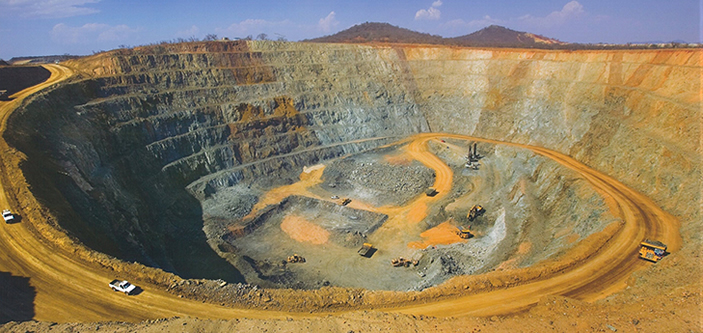 Debswana’s Jwaneng mine is a giant cauldron of pale dust, 2 kilometres across at its widest point and patrolled by colossal 300-tonne trucks that labour up the terraced slopes.
The operation, owned as a joint venture between De Beers and the government of Botswana, is the richest diamond mine in the world and, as managing director Albert Milton says, “one of the most important assets in the country.”
Nicknamed “the Prince of Mines”, Jwaneng was opened in 1982, as the diamond trade propelled Botswana from one of the poorest countries on earth to one of Africa’s wealthiest.
The mine’s current production output is about 10,6 million carats per year, or just over 2 100 kilos.
Today, diamonds make up more than 60% of Botswana’s exports, and nearly 25% of its gross domestic product. Unlike many other countries that are similarly dependent on a single export, Botswana has avoided the “resource curse” of poor governance and slow economic development. By regional standards, its public services are strong, education is free, and corruption is largely in check.
Good luck
“There are many examples of countries that have had the good luck and then made a complete mess of it.
Botswana has avoided that, and it has been translated into a general increase in living standards, particularly in the fast expansion in the provision of public services,” says Keith Jefferis, one of the country’s leading economists and a former deputy governor of its central bank.
However, he says, the good times cannot last forever. Unemployment in the country is persistently high, and the mechanised, capital-intensive mining industry does not create many jobs.
Botswana needs to figure out how to move away from its dependence on exporting rough diamonds – a calculation that has been given greater impetus by economic slowdowns in China and India, which are both key markets for the stones.
The largest sorting facility in the world
De Beers, the world’s largest producer of rough diamonds, moved its “sightholder sales” – the facility through which it sells boxes of rough diamonds to its exclusive client list of major buyers – to Gaborone in 2013, as part of a new deal with the government.
De Beers secured a 10-year contract to sell Debswana’s stones; the government got a major investment.



 Online Reporter