

 Chronicle Editor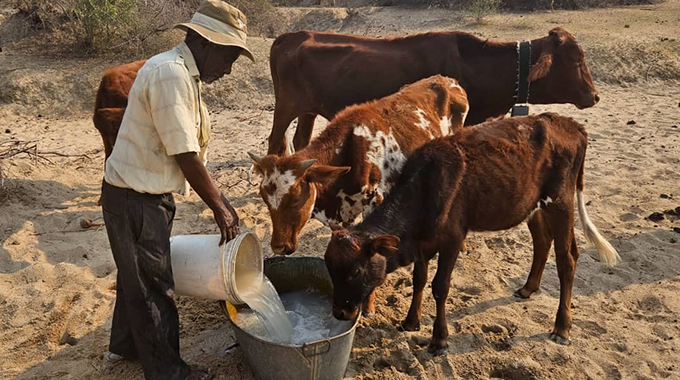
Sukulwenkosi Dube-Matutu, [email protected]
FARMERS in Matabeleland South continue to adopt different survival measures to mitigate the effects of the El Nino-induced drought, which is threatening to wipe out the country’s herd.
According to statistics from the Ministry of Lands, Agriculture, Fisheries, Water and Rural Development, Insiza and Gwanda Districts recently lost about 900 cattle in a week.
This has prompted farmers to adopt different strategies including supplementary feed, kraaling animals overnight, herding cattle and destocking, among others.
Mr Jacob Moyo (70) of Zhukwe East Village in Gwanda drives his herd of 10 cattle each day to a nearby river where villagers have dug wells along the river bed.
Mr Moyo also provides supplementary feeding and keeps a close eye on his beasts.
He said he fears that if his animals wander off unattended their condition might deteriorate.

“The situation is dire, our area is dry, we don’t have water for our animals and our animals don’t have enough grazing. I have 10 cattle and their condition has deteriorated because of this situation,” said Mr Moyo.
He appealed to Government to assist farmers by providing affordable stockfeed.
Ms Olice Dube from Zhukwe East said the education received from Government through Agritex has helped change the mindset of farmers.
“We now understand that our cattle, no matter how small the herd may be, are our source of wealth. Our cattle are an asset and we have to protect and preserve them at all costs,” she said.
Government is working with its development partners to put in place measures to assist livestock farmers whose cattle are under threat due to drought. Lands, Agriculture, Fisheries, Water and Rural Development Deputy Minister, Cde Davis Marapira, said strategies to boost water supply have been put in place as part of efforts to prevent cattle deaths.

Government is also developing an 800km pastures greenbelt at the confluence of Tuli and Shashe rivers in Gwanda with a water reservoir having been established along the Zimbabwe-Botswana Border.
The project is expected to address water and pasture scarcity problems in the area as well as illegal movement of cattle between Botswana and Zimbabwe. — @DubeMatutu


 Online Reporter
 Blessing Chizhande