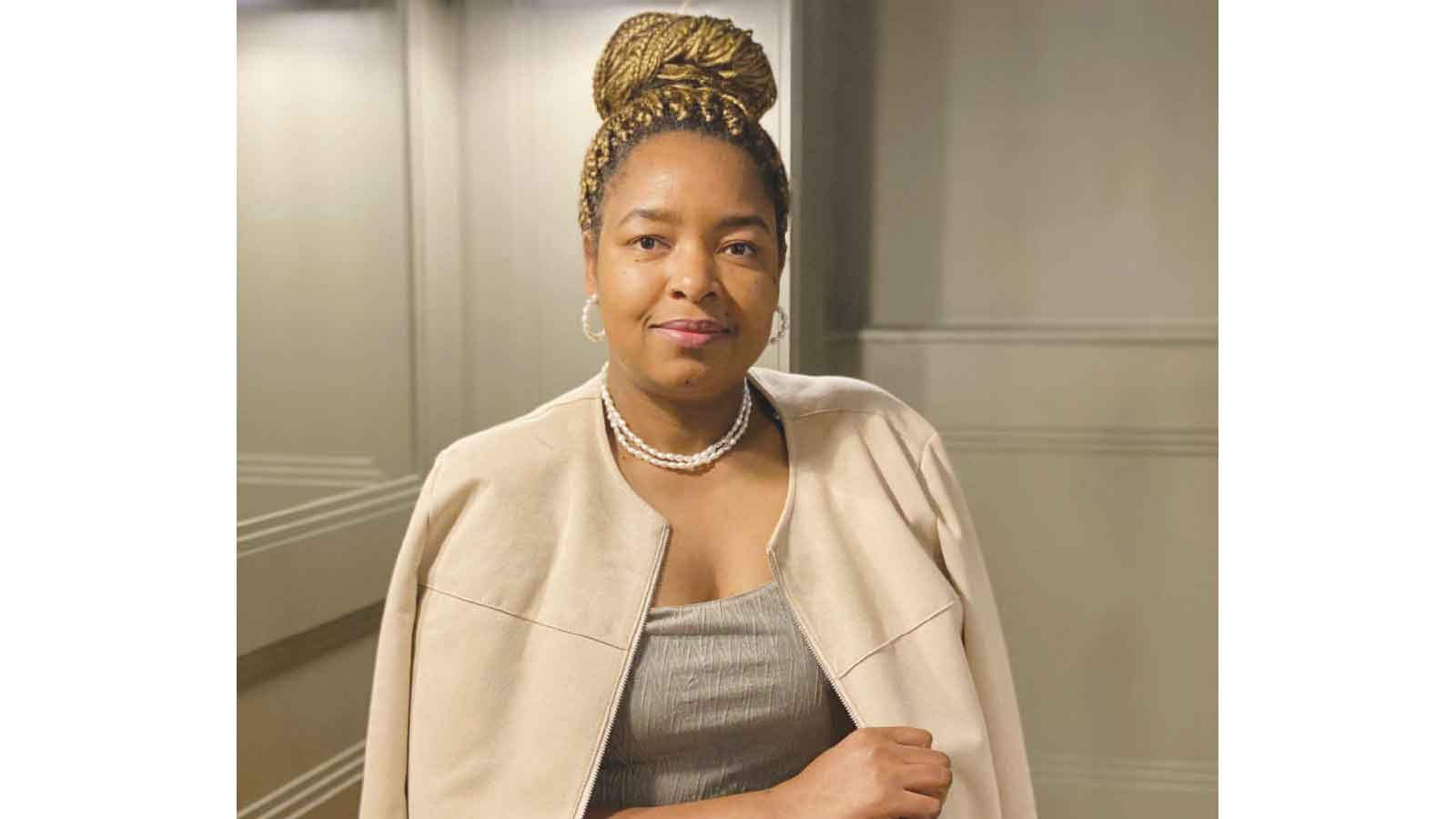
Thandiwe Chidzungu
Features Correspondent
Catching up with Alexia Press-Sibindi took me back to our high school days, when we would walk together from school towards Milton Boys High School.
There, we would part ways: Alexia would head towards the eastern suburbs, while we took the road towards the western suburbs.
There was no Uber or InDrive then — just school buses, taxis, and, most often, our own feet! Yet, even in those simple days, we were girls with big dreams and a belief that our futures could be bigger than our circumstances.
Alexia captures that spirit beautifully: “It is okay to dream big because only then can you believe in the possibility of changing your situation.”
For a woman whose journey began in rural Plumtree, Matabeleland South Province, the road to becoming an award-winning social entrepreneur in Ireland was far from predictable.
Today, she is the founder of Alexia Press Hub, a social enterprise dedicated to empowering migrant parents, strengthening family resilience, and supporting integration in Ireland.
Her work has received funding from organisations including the Department of Children, Equality, Disability, Integration, and Youth; Tusla, Dublin South Partnership; Children and Young People’s Services Committees (CYPS); and the Department of Home Affairs, Justice, and Migration.
But behind the organisation is a deeply personal story shaped by poverty, migration, motherhood, loss, resilience, and an unwavering belief that life can be better.
If she could speak to her five-year-old self today, she would tell her to dream big.
That advice is rooted in lived experience. Her childhood began in Khalanyoni, Plumtree, where she was raised for a time by her grandparents, the late MaNdebele and the late Mahamba Ngwenya, after her mother, Silibaziso Ngwenya, remarried.
“Growing up, we were so poor that even other poor people called us poor,” she recalls.
Yet even as a child, she believed her circumstances did not have to define her future. At five, she travelled by bus with her father, the late Lieutenant Colonel D. D. Press, to Bulawayo, where she went to live with her aunt, uncle, and cousins in Thorngrove.
It was a completely new world. She had never heard anyone speak English, seen water coming from a tap, or experienced electricity.
Her father, who fought in Zimbabwe’s liberation struggle, strongly believed in educating the girl child.
He sent her to Robert Tredgold to begin her schooling.
“Talk about being thrown into the deep end!” she says, remembering that she arrived without even knowing the nursery rhymes familiar to other children.
She later attended Townsend High School and Speciss College, where she earned a secretarial diploma.
Her career began as a typist and secretary before progressing into personal assistant roles at the Royal Hotel, Grey’s Inn Hotel, and Selborne Hotels.
She later joined Innscor as a personal assistant to the regional manager. Her determination to build a better life eventually took her beyond Zimbabwe.
Following the death of her first husband, she migrated to South Africa in search of better opportunities for herself and her son. Migration brought discovery and opportunity, but it also involved difficult sacrifices.
Initially, she could not take her son with her. She had to first establish a stable environment before bringing him over.
“Time spent away from him was difficult,” she recalls.
She lived in South Africa for seven years, where she continued building her career and met her second husband, Wonder Sibindi. Together they would have five children.
Still searching for greater opportunities, she migrated to Ireland in 2010. Again, she had to start over.
Living in Ireland as a single parent presented new challenges, particularly because parenting expectations and social systems differed from those she had known. Those experiences would eventually become the foundation of her life’s work.
Turning pain into purpose
In March 2022, she experienced one of the most difficult periods of her life in Ireland. Her parenting came under scrutiny following a misunderstanding that resulted in a formal report from her son’s school to social workers and the Gardaí.
The investigation lasted approximately six months. The possibility of losing her children caused enormous anxiety.
Although the investigation concluded without her children being physically removed from her care, she says the experience affected her psychologically.
“I lost them psychologically, though,” she explains. “For a while I lost all confidence as a parent.”
She began questioning her parenting decisions and second-guessing herself. But eventually she asked an important question: How many other migrant parents are experiencing this same confusion, fear, and lack of support?
That question became the beginning of Alexia Press Hub. She retrained as a facilitator, learning how to design and deliver training.
She developed programmes aimed at helping migrant parents understand parenting expectations, child welfare systems, and cultural differences in Ireland.
Through Social Entrepreneurs Ireland’s Ideas Academy, she refined her concept and launched Alexia Press Hub as a social enterprise in March 2023.
The organisation is built around five pillars: empowerment, parenting, resilience, integration, and inclusion.
Parenting between two cultures, systems
Her experience as a Zimbabwean migrant has taught her that migration affects the entire family.
“Immigration and acculturation are disorganising and reorganising experiences,” she explains.
Migrant parents must learn to navigate unfamiliar education, social welfare, and child protection systems while adapting to new cultural expectations.
Children, meanwhile, are also on their own migration journey. They may struggle with belonging, racism, discrimination, identity, and the pressure to fit into their new environment while remaining connected to their family’s culture.
She, therefore, encourages migrant parents to listen to their children.
“Sometimes children are confused why parents would leave an environment that seemed stable and happy for a new country that is met with racism and discrimination,” she says.
Children need safe spaces to express those feelings. Parents need to recognise that behavioural changes can sometimes be a child’s unspoken cry for help.
Her training encourages parents to spend quality time with their children, discuss emotions openly, and create an environment where worries and fears can be shared without judgment.
One of the significant differences she observed between Zimbabwe and Ireland concerns discipline.
Growing up in Zimbabwe, corporal punishment was widely accepted within society and historically used both at home and in some educational settings. Ireland operates within a very different legal and social framework, where corporal punishment is prohibited.
For migrant parents arriving without adequate information, the transition can be confusing. Her work, therefore, seeks to bridge the gap between cultural expectations and laws and practices of the host country.
She believes migrant parents need information and culturally competent support rather than being expected to understand unfamiliar systems immediately.
At the same time, parents need to recognise that practices accepted in their countries of origin may not be appropriate or lawful in their new environment.
The solution, she believes, lies in education, dialogue, and support.
Building Alexia Press Hub
Launching the organisation has not been without challenges. Funding was a major hurdle, while gaining trust as a migrant social entrepreneur and facilitator was another.
Collaboration with a charity organisation helped create links between funders, centre managers and migrant communities.
Support from Social Entrepreneurs Ireland through its Action Lab cohort also helped her grow her impact.
Alexia Press Hub has since received funding from several organisations and continues to work with migrant parents to build resilience, improve parenting confidence, and facilitate integration.
One of her biggest lessons as a social entrepreneur has been understanding that social impact cannot always be measured through conventional business models.
She explored both business-to-business and business-to-customer approaches, but ultimately chose a model that would not place an unreasonable financial burden on parents.
“For me, the social impact had to come first,” she says.
That is the philosophy behind her approach. She has also learnt the importance of time management while balancing entrepreneurship, training, and family life.
A mother and advocate
Motherhood remains central to her story. She once dreamt of having a large family, and that dream came true.
She is now the mother of five children — four boys and a girl, aged 27, 18, 17, 13, and 10. She describes her marriage to Wonder Sibindi as supportive and believes strongly in never giving up on love. Her experiences have shaped the kind of mother she strives to be.
The message she shares with other parents is that children need to be listened to, supported, and understood.
Her advice to migrant parents is simple: listen to your children. Talk openly about the reasons for migration and acknowledge that their experience may differ from yours. Give them a safe space to express their emotions.
Spend quality time together. Talk about feelings. Encourage children when they experience failure or disappointment, praising effort rather than focusing only on results. Parents must also take care of themselves.
“Most importantly, mind your mental health,” she says.
Migration can be stressful. Parents cannot effectively support their children if they are overwhelmed.
Looking back on her journey, her greatest lesson is: never give up. She reflects on the idea that everyone wakes up with the same currency — 24 hours.
What matters is how those hours are used. Her own story demonstrates the power of perseverance.
The little girl from Khalanyoni, who arrived in Bulawayo unfamiliar with English, running water, and electricity, went on to build a successful career, migrate across countries, raise five children, and establish a social enterprise supporting migrant families.
She was even invited by the President of Ireland to present a book she has written for her son — a moment that would have seemed unimaginable to her five-year-old self.
For young women seeking to break barriers, her advice is equally clear: surround yourself with like-minded people, network, build your brand, and invest in your own growth. And remember that impact is not always measured in numbers.
“Sometimes it’s in the way you make people feel by changing your community,” she says.
From rural Plumtree to Ireland, her journey demonstrates that difficult beginnings do not have to determine the ending.
She turned personal hardship into purpose, migration into advocacy, and adversity into an opportunity to empower others.
Her message remains, “Dream big, use your time wisely, follow your passion, look after your mental health — and never give up.”