Online Reporter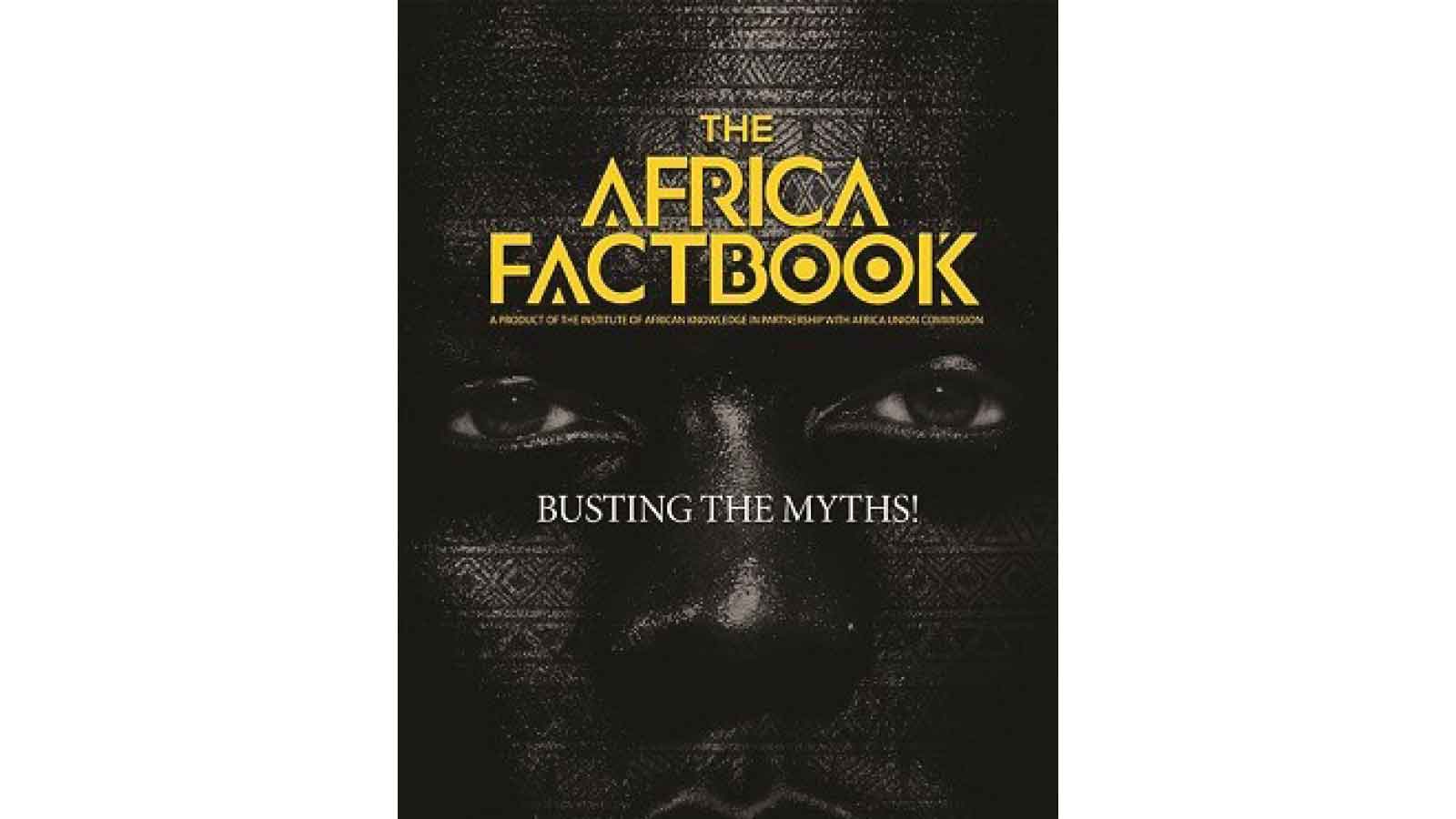
Ambassador Kwame Muzawazi
On July 23, 2026, the Institute of African Knowledge (INSTAK) marks its 10th anniversary under the theme “Celebrating a decade of advancing African knowledge, heritage and liberation”.
Anniversaries are occasions for both celebration and reflection.
They invite us to examine not merely what has been accomplished, but why the journey began, what historical forces shaped it and what responsibilities lie ahead.
Measured by the calendar, INSTAK is 10 years old.
But when measured by history, INSTAK is more than five centuries in the making.
Its origins lie not simply in a decision taken to establish it in 2016, but in Africa’s long and often painful struggle to reclaim ownership of its history, its identity and ultimately its destiny after centuries of slavery, colonialism and neo-colonialism.
For 500 years, Africa was subjected to not only slavery, colonialism and neo-colonialism, but also to something equally devastating: the systematic conquest of knowledge.
The continent’s history was rewritten. Its civilisations were diminished. Its intellectual traditions were ignored or appropriated. Africans were taught to see themselves through the eyes of others, while narratives about the continent were increasingly produced outside Africa and often without Africa.
Political independence liberated African territories. Yet intellectual liberation remained incomplete.
Knowledge is never neutral.
It shapes how societies understand themselves, how they formulate public policy, how they educate future generations and how they engage with the rest of the world.
Nations that surrender the production of knowledge about themselves ultimately surrender the power to define themselves.
INSTAK was, therefore, conceived not merely as another research institution, but as part of a continental effort to restore Africa’s intellectual agency.
Its establishment was also remarkably timely.
INSTAK hit the ground running, and the “Book of African Records” was published in 2016. That same year, continental leaders meeting at the African Union (AU) Summit in Kigali reaffirmed one of the continent’s most ambitious knowledge initiatives by endorsing publication of the first-ever Africa Factbook by INSTAK.
The decision recognised the urgent need for an authoritative reference work that would present Africa through African scholarship, African data and African perspectives rather than through fragmented external interpretations.
Subsequent memoranda of understanding between INSTAK and the AU Commission transformed that continental aspiration into a practical programme of work.
“The Africa Factbook” became more than a publication; it was a statement that Africa possesses both the capacity and the responsibility to document itself.
That vision aligns seamlessly with the aspirations of the AU’s Agenda 2063.
Among its seven pillars, Aspiration Five calls for “an Africa with a strong cultural identity, common heritage, shared values and ethics”.
It recognises that the continent’s future cannot be separated from its history, and that development must be anchored in culture, identity and collective memory.
These principles have guided INSTAK from its earliest days.
Every publication produced, every partnership signed, every exhibition mounted and every project undertaken has sought to advance that continental vision of restoring African confidence through African knowledge.
These are not abstract ideals.
They are practical foundations for nation-building, continental integration and sustainable development.
They resonate profoundly with Zimbabwe’s own national development trajectory under the leadership of His Excellency, President Mnangagwa.
Vision 2030 is rightly recognised for its emphasis on achieving an upper middle-income economy.
Yet economic transformation alone cannot sustain national development without equally investing in culture, heritage, identity and knowledge.
Prosperity must rest upon a confident understanding of who we are as a people and what contribution Africa has made — and continues to make — to global civilisation.
President Mnangagwa has always appreciated that heritage is not a luxury to be pursued after development has been achieved.
It is one of the essential pillars upon which development itself is built.
His unwavering support for INSTAK over the past decade reflects this appreciation.
From championing the Museum of African Liberation as a continental project, to granting Liberation City National Project Status, to encouraging partnerships across Africa and beyond, the President has consistently recognised that knowledge institutions are strategic national assets.
They shape not only how a nation remembers its past, but also how it imagines and constructs its future.
For that confidence and guidance, INSTAK remains profoundly grateful.
Likewise, the strategic leadership of INSTAK board chairperson Professor Simbi Veke Mubako has been indispensable to the institution’s evolution.
Prof Mubako has brought to INSTAK an extraordinary combination of scholarship, legal acumen, diplomatic experience and institutional leadership accumulated over decades of distinguished public service.
More importantly, he possesses a deep historical consciousness and an unwavering commitment to Pan-African ideals.
Under his stewardship, the board has ensured that the institute has grown not by chasing fashionable projects, but by remaining faithful to its founding purpose.
His insistence that every initiative should ultimately advance African knowledge, heritage or liberation has provided the intellectual discipline that has enabled INSTAK to expand while preserving its identity.
One of the enduring lessons of Africa’s liberation struggle is that vision alone is never enough. The generation that defeated colonialism — which counts in its revered ranks President Mnangagwa and Prof Mubako — understood that political freedom required institutions capable of sustaining it.
Africa’s knowledge renaissance requires enduring institutions that generate scholarship, preserve heritage, shape public policy and inspire future generations. That understanding explains why INSTAK deliberately chose a path that differs from that of a conventional think tank.
Traditional think tanks produce ideas and leave implementation to others.
At INSTAK, research goes further and seeks practical relevance to the challenges confronting contemporary Africa.
Whether examining the enduring consequences of slavery and colonialism, advocating reparations and the restitution of cultural artefacts, analysing the impact of illegal sanctions or exploring questions of governance, development and regional integration, INSTAK’s scholarship is grounded in the conviction that understanding history enables societies to make wiser choices about the future. Knowledge must do more than explain the world.
It must help transform it.
This commitment to transformation is one of the drivers behind Liberation City, which was conceived around the organising principle of African civilisation.
Spread across 101 hectares in Harare, it is an ambitious attempt to create a living ecosystem where heritage, research, education, diplomacy, tourism, recreation, hospitality and commerce reinforce one another.
It is a place where visitors encounter not only buildings, but also ideas; not only monuments, but also memory; and not only attractions, but also identity.
At the heart of this development stands what is undoubtedly one of the most significant heritage initiatives ever undertaken on the African continent — the Museum of African Liberation.
The museum is not simply another cultural institution.
It is the physical embodiment of Africa’s collective memory of liberation.
Its galleries will preserve artefacts, documents, oral testimonies and archival material from liberation movements throughout Africa, ensuring that future generations understand not only how freedom was won, but why it must continually be defended.
That is why President Mnangagwa has consistently described the museum as an African project.
The decision to accord Liberation City National Project Status underscores its strategic importance to Zimbabwe’s development agenda.
And President Mnangagwa’s welcome suggestion to name the broader development Liberation City captures the philosophical essence of the project itself — a city dedicated to celebrating Africa’s liberation heritage while building confidence in its future.
And recognising that a project of such continental significance requires high-level diplomatic engagement, President Mnangagwa appointed former Minister of Foreign Affairs Ambassador Simbarashe Mumbengegwi as his special envoy on the Museum of African Liberation.
Ambassador Mumbengegwi’s distinguished public and diplomatic career, deep Pan-African credentials and longstanding relationships with world leaders made him uniquely suited to this responsibility.
As special envoy, he has undertaken extensive diplomatic engagements, successfully engaging at least 22 Heads of State and Government to encourage participation in and support for the museum.
These consultations have reinforced an important principle — The museum belongs not to Zimbabwe alone, but to Africa.
Its collections, its scholarship and its symbolism represent a shared continental inheritance.
As a result, increasing numbers of governments, liberation movements and regional institutions now regard the museum not as a national initiative, but as one of Africa’s defining heritage projects of the 21st century.
Liberation City itself has increasingly become a centre of continental engagement.
From the Heritage Village and Skydeck Gazebo to conferences, exhibitions, diplomatic meetings and cultural festivals, it has evolved into a space where ideas are exchanged, partnerships forged and Africa’s heritage experienced in tangible ways.
It is no coincidence that Liberation City hosted leaders during the 2024 SADC Summit, including the groundbreaking ceremony for the SADC Liberation Square.
Nor is it accidental that the development is expected to play a central role as Zimbabwe prepares its bid to host the 2027 African Union Mid-Year Coordination Summit.
As we look towards the future, INSTAK’s ambitions are bolder than they were in 2016.
The objective is not growth for its own sake.
It is to ensure that African children inherit institutions that instil pride rather than doubt.
It is to ensure that African policymakers have access to scholarship rooted in African realities.
It is to ensure that visitors to Africa encounter a continent that speaks authoritatively about its own civilisation.
And it is to ensure that future generations inherit an Africa that no longer asks others for permission to define it.
As we celebrate 10 years of advancing African knowledge, heritage and liberation, we do so with humility for the journey travelled, gratitude to the many governments, institutions, partners and individuals who have made it possible, and confidence in the road that lies ahead.
The work of building Africa’s future has only just begun.
Ambassador Kwame Muzawazi is the chief executive officer of the Institute of African Knowledge (INSTAK).