Online Reporter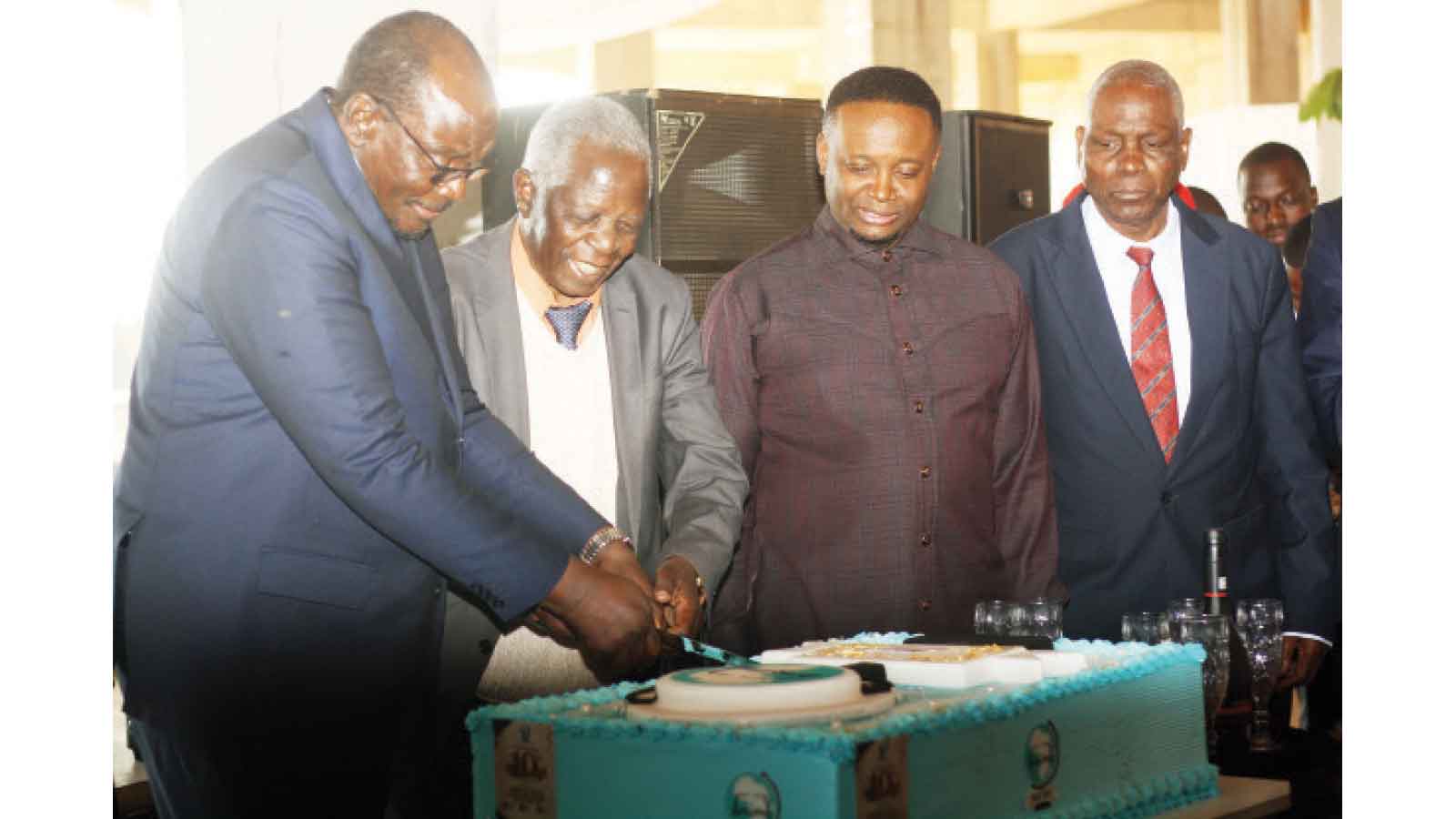
Nyore Madzianike-Senior Reporter
THE Institute of African Knowledge yesterday celebrated its 10th anniversary in Harare, with Vice President Dr Kembo Mohadi reiterating Government’s commitment to supporting initiatives that preserve the country’s liberation heritage, strengthen research, promote cultural diplomacy and celebrate African civilisation.
All this is part of efforts to build an informed public capable of driving national development.
Speaking at the celebrations held at the Museum of African Liberation, VP Mohadi said the country’s development aspirations under the Second Republic required citizens who understood their history, identity and national values.
The celebrations were held under the theme: “Celebrating a decade of advancing African knowledge, heritage and liberation.”
VP Mohadi said: “The Second Republic’s Vision 2030 is associated with economic modernisation and industrial transformation.
“Such development must be underpinned by a citizenry that understands who they are, where they have come from and where they are going.
“For this reason, Government has consistently supported initiatives that preserve our liberation heritage, strengthen research, promote cultural diplomacy and celebrate African civilisation.”
VP Mohadi commended the growing partnership between Government and Instak, describing it as a successful example of collaboration among the State, private institutions, academia and development partners in pursuit of national goals.
The partnership demonstrated that successful public-private partnerships extend “well beyond roads, bridges and energy infrastructures”.
VP Mohadi said the partnership was producing results that extended beyond the country’s borders by positioning the country as a centre of African scholarship, heritage preservation and Pan-African cooperation.
Institutions such as Instak, he added, played a critical role in safeguarding the country’s liberation history and ensuring that future generations remained grounded in the values that shaped Zimbabwe’s independence.
One of the enduring lessons of the country’s liberation struggle is that freedom had to be defended by strong institutions that preserve memory, nurture leadership, and sustain national values across generations.
“As we celebrate Instak’s first decade, we are reminded that such institutions play an indispensable role in ensuring that the sacrifices of the liberation struggle continue to inspire Africa’s future,” said VP Mohadi.
The achievements recorded by Instak over the past decade demonstrated what could be accomplished when vision was guided by purpose, strong leadership and alignment with national priorities.
Reflecting on Africa’s historical experience, VP Mohadi said the continent endured political domination, economic exploitation and the erosion of its knowledge systems, historical memory and cultural confidence.
“Our civilisations were misrepresented, our achievements overlooked, and our voices marginalised.
“Our liberation movements corrected political injustice and we won our independence through blood, sweat and tears, but another struggle remained unfinished, the struggle for intellectual sovereignty and, of course, economic independence.
“It is this historical responsibility that institutions such as Instak have embraced. This explains why the Government of Zimbabwe, under the astute leadership of President Mnangagwa, who is himself one of the heroes of our struggle for independence, regards the advancement of knowledge, culture and heritage as strategic pillars of national development.”
The Government was encouraged by the growing international interest in the Museum of African Liberation and the broader Liberation City project, which continued to attract Heads of State and Government, diplomats, scholars, investors, traditional leaders and visitors from across the world.
VP Mohadi said the increasing attention demonstrated the country’s ability to establish institutions of genuine continental significance.
He described the museum as more than an architectural landmark, saying it would serve as a repository of Africa’s collective memory and preserve the history of liberation movements across the continent for future generations.
“For Zimbabwe, whose liberation struggle occupies a distinguished place in African history, it is fitting that such a continental institution should find its home here.
“The Government is proud to support this initiative because it reflects values that have always guided our foreign policy: Pan-African solidarity, regional cooperation and respect for the sacrifices made by those who fought for Africa’s freedom,” he said.
VP Mohadi said the Liberation City project would also play an important role in the country’s preparations to host the 2027 African union Mid-Year Coordination Summit by showcasing Zimbabwe’s heritage, tourism potential and investment opportunities.
Instak was not merely supporting the national development agenda, but was contributing directly to regional integration within SADC and to the realisation of the African Union’s Agenda 2063.
“For this reason, Government regards Instak, not simply as an institutional partner, but as a strategic national asset whose work advances Zimbabwe’s developmental aspirations while simultaneously strengthening Africa’s collective future,” said the VP.
Looking ahead, VP Mohadi said Instak’s next decade should focus on consolidating its gains, expanding its reach and deepening its impact through research, education and strategic partnerships.
The institution should continue producing research that informs public policy, strengthen educational programmes that instil pride and confidence among young people, and broaden partnerships across Africa and beyond.
“The Government of Zimbabwe remains fully committed to creating an environment in which public-private partnerships, such as the one with Instak, can thrive.
“This model deserves recognition because it demonstrates what becomes possible when Government, the private sector, academia and development partners unite behind a shared national vision.
“It is precisely this spirit of collaboration that is required if Africa is to realise the aspirations of Agenda 2063 and achieve the Sustainable Development Goals,” said VP Mohadi.
The VP encouraged Africans to remain committed to advancing knowledge, preserving heritage and safeguarding the ideals of liberation for future generations.
“Together, let us continue building an Africa that is proud of its past, confident in its present and ambitious for its future.
“Congratulations, once again, to the Institute of African Knowledge on its outstanding achievement. May the next decade bring even greater success, greater innovation and greater service to Zimbabwe, Africa and humanity,” he said.
The celebrations were attended by diplomats from several countries, including Palestine’s Dr Tamer Almassri, senior Government officials and other stakeholders.