Online Reporter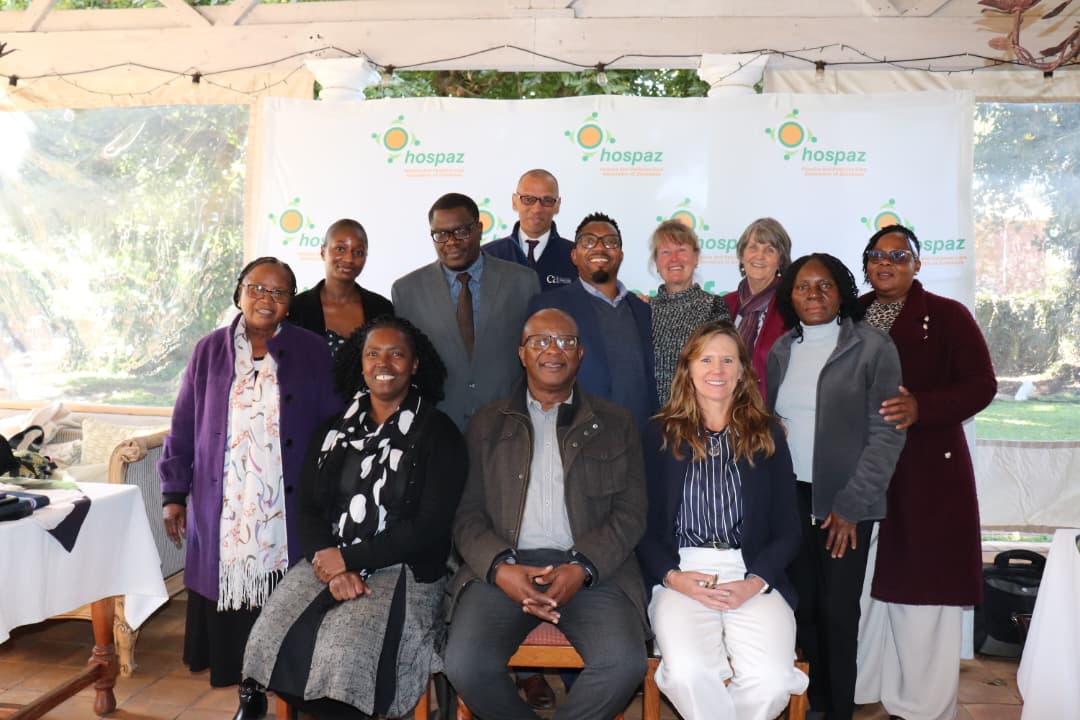
Rumbidzayi Zinyuke
Senior Health Reporter
Zimbabwe must urgently integrate palliative care into its public health system if it is to achieve Universal Health Coverage (UHC) and meet the growing needs of people living with chronic and life-limiting illnesses, health experts have said.
Speaking during a discussion on palliative care hosted by Hospice and Palliative Care Association of Zimbabwe, specialist physician Dr Dickson Chifamba said while Zimbabwe was a pioneer of palliative care in Africa through the establishment of Island Hospice, the country has lagged behind in fully integrating the service into mainstream healthcare.
Palliative care is a specialised approach to healthcare that seeks to improve the quality of life of people living with serious, chronic or life-limiting illnesses.
It focuses on preventing and relieving suffering through the early identification and treatment of pain and other physical, psychosocial and spiritual challenges.
Contrary to common misconceptions, palliative care is not only for people nearing the end of life but can be introduced alongside curative treatment from the point of diagnosis.
“From a regional and global perspective, the case for palliative care has already been made,” said Dr Chifamba.
“When you look at Universal Health Coverage, there is a declaration which clearly states that palliative care is an essential component of Universal Health Coverage. There is no excuse at all. It must be integrated into government health policies and services.”
He said a World Health Assembly resolution directs member states to integrate cost-effective and equitable palliative care services across all levels of healthcare, regardless of resource constraints.
“If you go to countries such as India and Uganda, there are innovative models that have demonstrated that even with limited resources, palliative care can be integrated into health systems,” he said.
Dr Chifamba noted that Zimbabwe faces a growing burden of both communicable and non-communicable diseases, making palliative care increasingly important.
He said despite advances in treatment, HIV remained a significant burden, with prevalence still around 10,5 percent.
“At the same time, we are seeing a sharp increase in non-communicable diseases such as diabetes, heart disease and cancer,” he said.
“These patients require palliative care services, yet access remains limited, particularly for rural and disadvantaged communities.”
He said Zimbabwe had adopted a National Palliative Care Policy in 2014, but implementation had been slow.
“The policy speaks to sustainability, human rights and holistic care, but more than a decade later we are still talking about integrating palliative care into the public health system. The challenge is implementation,” said Dr Chifamba.
“Only a very small proportion of health workers who have received palliative care training actually refer patients for specialist palliative care.
“Many still see palliative care as something for the final stages of life, rather than something that should be introduced much earlier.”
He said strengthening the workforce, securing medicine supply chains and empowering communities were critical steps towards improving access.
United Kingdom-based Zimbabwean palliative care nurse and researcher Flora Dangwa said only 14 percent of people globally who need palliative care receive it, while in Zimbabwe access remains even lower.
“Only about 10 percent of Zimbabweans who need palliative care are receiving it. That is a huge gap and it means many people are suffering unnecessarily,” she said.
She said palliative care should not be viewed as care for the dying, but rather as a service that improves quality of life from the point of diagnosis.
“We need to start integrating palliative care from diagnosis. Treatment should not be the only option discussed,” she said.
Palliative care should also be part of the conversation because it is about symptom management, coordinated care and helping people live well.”
She called for greater investment in community-based care models, noting that most care is already provided by families and communities.
“Research shows that 95 percent of care at the end of life is provided by families, friends and communities, not healthcare institutions,” said Dangwa.
“We need to build on that reality and strengthen communities to support people where they live.”
She said many Zimbabweans living in rural areas and high-density suburbs struggle to access palliative care services concentrated in urban centres.
South African palliative care practitioner Gillian Lotze said fragmented healthcare systems often leave patients and families struggling to navigate complex treatment journeys.
She said patients with serious illnesses such as cancer were expected to frequently move between surgeons, oncologists, physicians, laboratories, pharmacies and community services, often without adequate coordination.
“Each provider may deliver excellent care, but the overall journey is often poorly coordinated. Patients and families are expected to manage appointments, transport, finances and treatment decisions themselves while coping with serious illness,” said Lotze.
She said patient care navigation could help bridge these gaps by improving communication, coordination and continuity of care.
Ms Lotze added that Zimbabwe’s ageing population and rising burden of chronic illnesses would require more integrated, person-centred approaches to care.
“As multimorbidity becomes increasingly common, health systems must move beyond disease-focused models and adopt approaches that support coordination across services. Patient navigation aligns closely with World Health Organisation recommendations for integrated, patient-centred care,” she said.
Integrating palliative care into the public health system will not only improve quality of life for patients and families but also help Zimbabwe move closer to achieving equitable and inclusive healthcare for all.