Online Reporter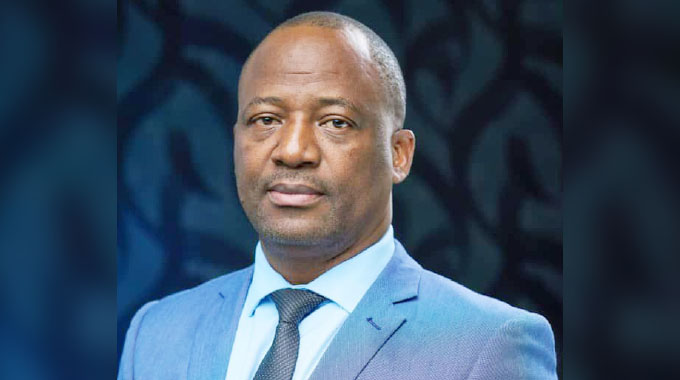
Amanda Jojo, Correspondent
SOCIAL entrepreneurs across Africa are gradually tackling some of the continent’s greatest challenges.
Equipped with business acumen and a mission for public good, they are reshaping the landscape of development. However, as they increasingly rely on grant funding to scale their work, a growing risk has materialised, the unauthorised use of their unprotected ideas.
Grant proposals, often rich in local knowledge and originality, are sometimes implemented by better-resourced actors without consent or credit. This troubling trend exposes a critical gap in the sector’s engagement with intellectual property.
The United Nations Development Programme (UNDP), in “The One African Market Guide”, highlights that “Africa is a hub for creativity and innovation with an emerging culture and practice of registering, exploiting and enforcing intellectual property rights.”
For Africa’s social economy to advance with stability, the sector must reframe intellectual property not as a constraint on impact, but as fundamental infrastructure for dignity, accountability, and sustainable development.
This challenge is illustrated by social entrepreneur and Men for Equality Trust founder, Mr Chaka Ruzvidzo.
In 2022, he submitted a grassroots proposal titled “EducateHER In HER Village.”
The project, which mobilised traditional leaders, youth mentors, faith-based actors, tracking systems, peer circles, and resource pooling to support girls’ education, was later implemented almost identically by another organisation closely linked to the funding body and without Mr Ruzvidzo’s permission.
In an interview, Mr Ruzvidzo recalled: “The language in their materials mirrored key elements of my proposal, including the use of community watch groups, local resource mapping and traditional court sensitisation concepts that were uniquely outlined in my submission.
“There was no consultation, no invitation to collaborate and no acknowledgement.
“It felt like more than a missed opportunity; it felt like a violation of trust and a disregard for the grassroots insights and experience that shaped the design. It’s painful when those closest to the challenges are excluded from solutions they helped to imagine.”
Reflecting on whether he had sought protection for his idea, Mr Ruzvidzo said: “At the time, no. Like many social innovators in Africa, I submitted the proposal in good faith, trusting that ethical practices would be upheld.
“There was no non-disclosure agreement or IP protection clause in the application process. The terms were vague, offering no real recourse for idea theft and no mechanism existed to report or address unethical conduct during proposal reviews.”
The experience made him cautious about sharing ideas with institutions lacking transparency. Still, he insists innovators must remain engaged, urging cultural and institutional shifts to treat intellectual property with dignity, calling for clear protection clauses, non-disclosure agreements, complaint mechanisms and capacity-building for grassroots innovators.
“Africa is rich with ideas,” he affirmed. “But when these ideas are exploited without credit or consent, we silence innovation. Protecting intellectual property is not just about ownership but about respect, equity and empowering African thinkers to shape their own future.”
Many African non-profit organisations are developing scalable solutions that contribute to the Sustainable Development Goals (SDGs) and drive positive social and economic impact across the continent.
Intellectual property is progressively recognised as an indispensable enabler of the SDGs, supporting advances in technology, healthcare, agriculture, job creation and broader economic development.
In accordance with this, the inter-governmental organisation, African Regional Intellectual Property Organisation (Aripo) is taking a leading role in helping social impact organisations convert their intellectual assets into protected, investable innovations across its 22 member states.
Head of the Aripo Academy, Dr Outule Rapuleng, said: “We are actively supporting African non-profits by helping them convert their intellectual assets into protected and commercially viable innovations that can attract investment and scale impact.”
Aripo’s regional framework co-ordinates member states on initiatives aligned with key SDGs. Recognising intangible assets now make up over 90 percent of corporate value, Aripo provides essential tools like the Harare, Kampala and Arusha Protocols.
Beyond protection, it supports non-profits with commercialisation strategies, including licensing, spin-offs, and intellectual property asset sales, while offering training in requisite policy, patent drafting, audits and assisting governments to modernise legislation, driving economic and social progress.
“Tailored interventions enable smaller organisations to develop effective IP strategies and use diagnostic tools to manage intangible assets. Through these efforts, Aripo is empowering African non-profits to transform intellectual property into scalable, investable innovations,” Dr Rapuleng outlined.
Innovation in Africa often arises from informal sectors, community groups, and youth-led initiatives, many of which generate significant social impact. With over 80 percent of Africa’s economies operating informally, Aripo prioritises making intellectual property systems accessible and responsive to this dynamic ecosystem.
Commenting on this, Dr Rapuleng remarked: “We protect not only traditional patents but also utility models, which are common in the informal sector.
“These innovations often have practical, scalable applications but frequently lack protection. Aripo is bridging this gap to ensure informal innovators receive recognition and support.”
Aripo manages one of Africa’s largest patent databases, covering 85 percent of global technical knowledge alongside international records.
This helps small and informal enterprises build on existing knowledge, avoid duplication, and innovate cost-effectively. To improve intellectual property literacy, Aripo works with member states to raise awareness of trademarks, designs, traditional knowledge and geographical indications.
“The Swakopmund Protocol protects indigenous knowledge from misuse. Youth empowerment is key, with academic programmes across West, East and Southern Africa providing practical IP skills.
“The Aripo-wipo IP Schools Club fosters early IP awareness among secondary students. Through policy alignment, expanded access and education, Aripo enables informal innovators and youth to advance with stability and drive Africa’s innovation economy,” Dr Rapuleng highlighted.
Research suggests that while many still perceive intellectual property as a domain exclusive to profit-driven enterprises, this misconception undermines the potential of mission-driven innovators to fully leverage and protect their intellectual assets.
Dr McLean Sibanda, a global intellectual property strategist and founder of Megetheos Legacy, said in today’s knowledge-based economy, intangible assets serve as a new form of currency.
“Intellectual property safeguards the creations of the mind, enabling innovators to realise the full value of their work,” Dr Sibanda observed.
His analysis underscores an ultimate shift in how economic value is generated, moving beyond physical infrastructure to ideas and creativity.
This insight is particularly salient in light of frequent reports of idea misappropriation during grant applications.
Dr Sibanda recommends a measured approach where innovators should protect their ideas through available intellectual property mechanisms and where formal protection is pending, share only essential information to convey the uniqueness of their solution. “Non-disclosure agreements are vital, though many funders hesitate to sign them,” he said.
“Therefore, disclosure should be strategic and securing IP protection prior to engagement is prudent.”
Despite Africa’s growing creativity, its innovation ecosystem contributes less than one percent of global patent applications under the Patent Cooperation Treaty.
Dr Sibanda points to key barriers: low intellectual property awareness, scarce research and development funding, weak manufacturing infrastructure and gaps in Stem education that continue to hold the continent back.
He argues that developing a robust intellectual property culture begins with education.
“Introducing intellectual property concepts early in schooling is essential to nurture a generation that values and protects innovation.”
This educational foundation requires policy reforms embedding intellectual property expertise in entrepreneurship hubs. Dr Sibanda urges proactive collaboration among governments, donors and institutions, highlighting organisations like World Intellectual Property Organisation (Wipo) for tailored capacity-building and mentorship programmes to bridge existing gaps.
“Accessible IP advice and structured support systems empower social entrepreneurs to integrate IP protection seamlessly into their mission-driven models, without compromising their public good objectives,” he said.
Africa’s innovation future rests on protecting the ideas that power its progress. When social entrepreneurs are equipped to secure their intellectual work, they not only accelerate impact but also build a foundation for inclusive, robust development across the continent.