Online Reporter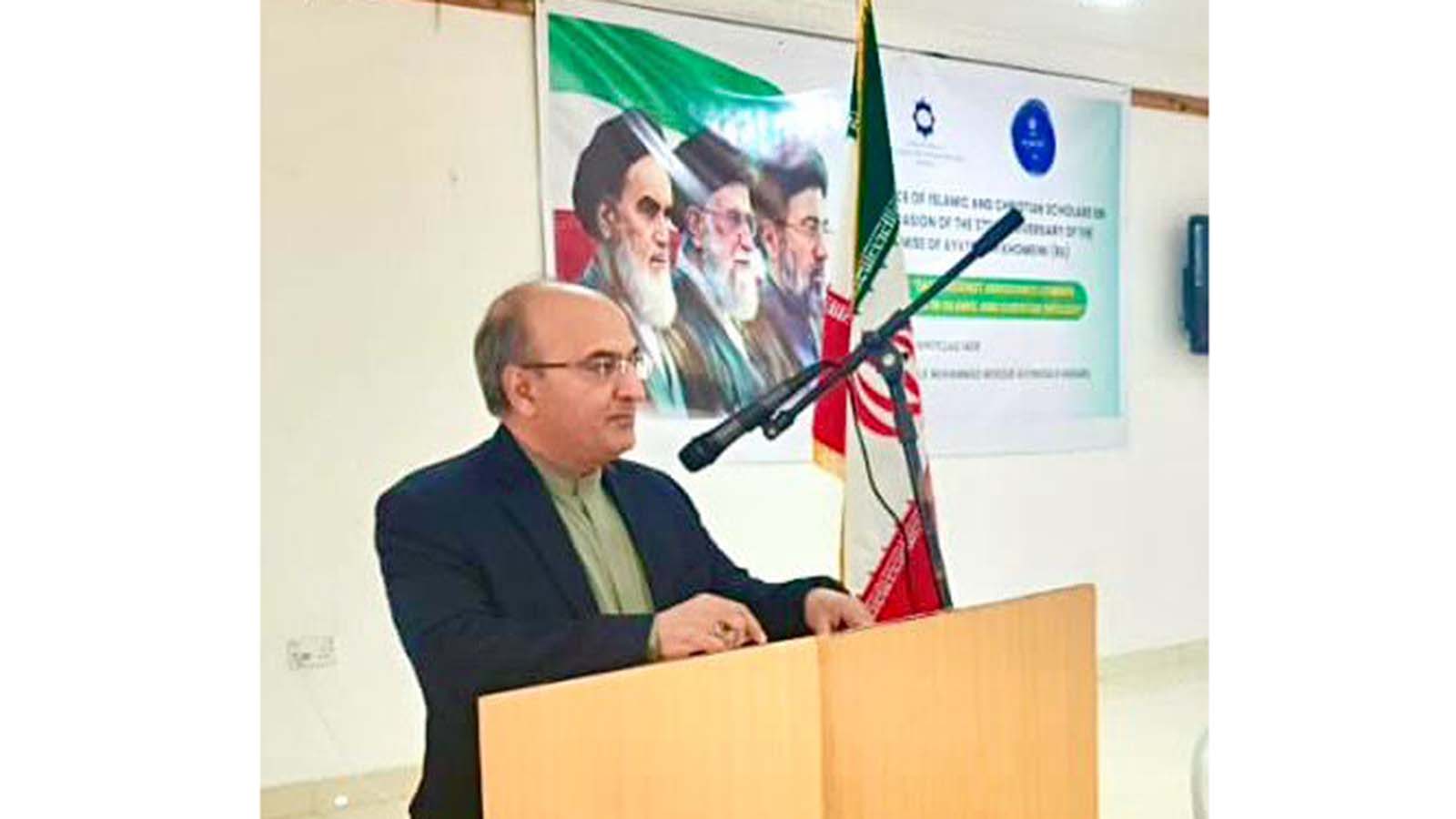
Gibson Nyikadzino
Zimpapers Politics Hub
IRAN’s Ambassador to Zimbabwe Dr Amir Hossein Hosseini has commended local scholars of Christianity and Islam for standing together against global hegemonic powers for their weaponisation of the human rights discourse as a tool for political manipulation, regime change and cultural imperialism.
Dr Hosseini made the remarks this afternoon in Harare at the Conference of Islamic and Christian Scholars on the occasion of the 37th anniversary of the death of Imam Khomeini, the founder of modern day Iran.
He said the conference drew Christianity and Islam into ever closer communion, and strengthening the unity of the two Abrahamic religions.
“Imam Khomeini’s character and thought may genuinely be regarded as a shared terrain between our two great faiths, a terrain upon which we may together build, in the service of strengthening the solidarity and dignity of developing nations,” Dr Hosseini said.
Imam Khomeini died on June 3, 1989 and was succeeded by Ayatollah Ali Khamenei, who was killed on the first day of the Middle East war on February 28, 2026 following United States-Israeli led attacks on Iran.
The religious scholars who attended the conference were drawn from both public and private institutions of higher learning. In their communiqué, the scholars said their condemnation of hegemonic powers stemmed from their united “shared commitment to justice, human dignity, and the sovereignty of all peoples”.
The conference also expressed profound concern and unequivocal condemnation on the killing of 168 schoolchildren during the United States attack on a school in Minab, Iran, on February 28, 2026.
“This tragic event stands as a stark illustration of a continuing pattern of human rights violations and war crimes perpetrated by the US government. Both the Islamic and Christian traditions, along with all authentic religious traditions, place the sanctity of the human person, the rights of the vulnerable, and the obligation to speak truth to power at the core of their moral teachings.
“We reject the weaponisation of human rights discourse by powerful states as a tool for political manipulation, regime change, and cultural imperialism. Genuine human rights advocacy must be universal, consistent, and entirely free from the selective application that serves only the interests of the powerful,” reads the communiqué.
The scholars pledged to continue active interfaith dialogue in the service of true justice, rather than mere coexistence and to continuously transmit the legacy of Imam Khomeini to future generations of scholars and believers.
They called upon religious communities worldwide to bear witness ongoing injustice and to refuse complicity through silence, while expressing they solidarity with the people of Iran, Palestine, and all components of the Axis of Resistance in their confrontation against the United States-led aggression.