Online Reporter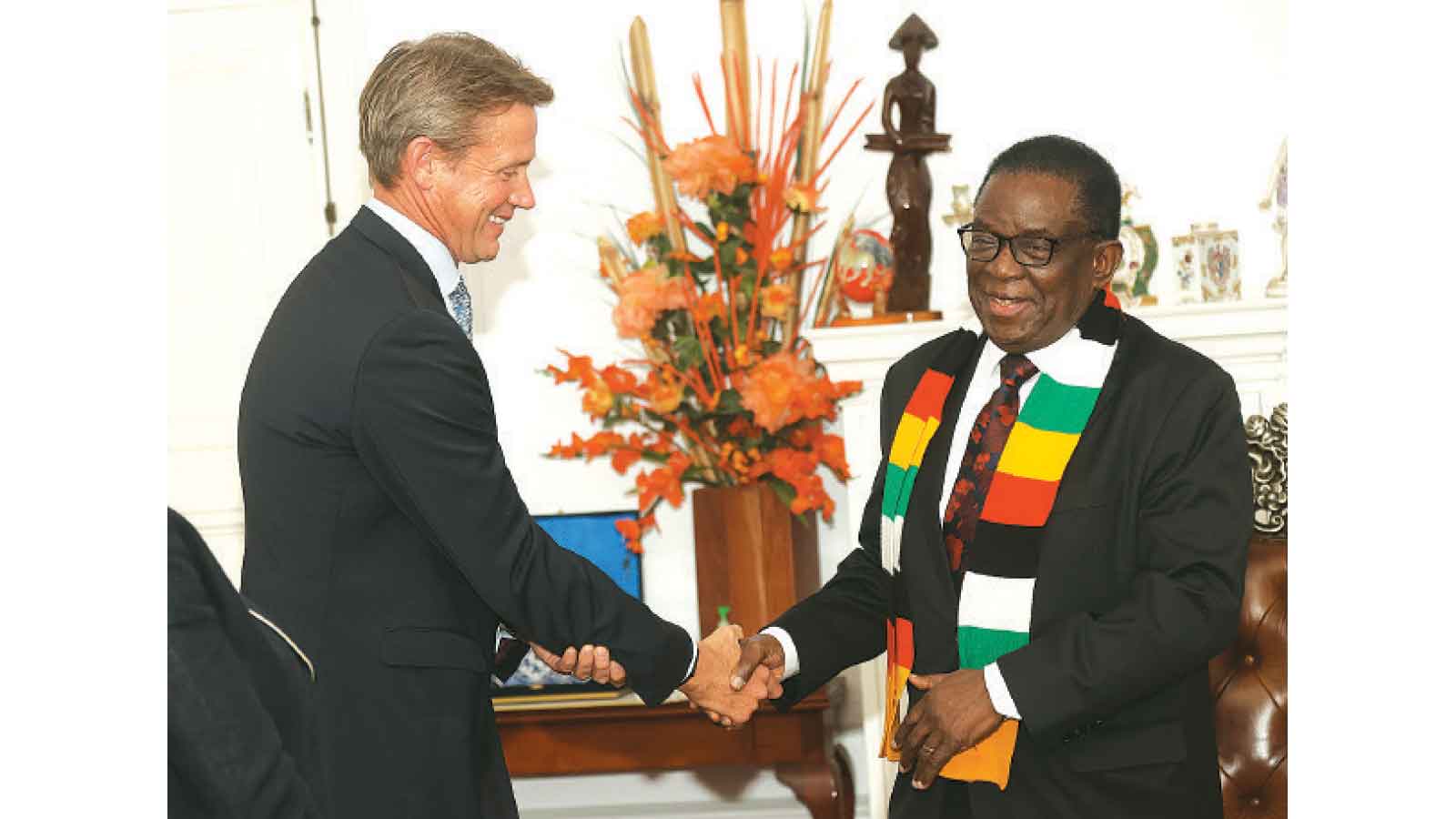
Zvamaida Murwira
Senior Reporter
THE United Kingdom has pledged to work with Zimbabwe when it takes up its United Nations Security Council non-permanent seat that it overwhelmingly won early this week.
This was said by outgoing UK Ambassador to Zimbabwe, Mr Pete Vowles, while briefing journalists soon after bidding farewell to President Mnangagwa at State House in Harare yesterday.
Zimbabwe is expected to assume the UNSC non-permanent seat for the 2027 to 2028 term on January 1, 2027 after it garnered 182 votes from a potential 190 when elections were held in New York, the UN headquarters, on Wednesday.
Amb Vowles said he was delighted that during his tenure, bilateral relations between the two countries had improved tremendously.
“We spoke about the UN Security Council and our congratulations as the British Government to Zimbabwe for securing a seat as a non-permanent member of the Security Council. We have a lot to talk about in the coming months as Zimbabwe prepares its term for the Security Council,” said Amb Vowles.
He pledged London’s strong support for Zimbabwe on the UNSC.
“The world is so complicated and there are so many important things to discuss. Peace and security in Africa, territorial sovereignty, climate change, so the UN Security Council is a great opportunity for Zimbabwe and the UK to build relations in our shared values.”
The UK is one of the five permanent members of the UN Security Council, enjoying veto power.
Others are the United States of America, France, China and Russia.
Zimbabwe and the UK had a frosty relationship at the turn of the millennium after Harare embarked on a land redistribution programme aimed at addressing land imbalances skewed against indigenous people.
Amb Vowles acknowledged the bickering that occurred in the past, but said it took a lot of diplomatic effort to improve relations.
“I think the magic is that we collectively agreed that we are better off working together as two nations and we are better off putting some of the past behind us, that is what we have tried to do as the British Government.
“However, I also recognise what the Government of Zimbabwe has tried to do, . . . to then have those conversations behind closed doors and be respectful with each other.
“The world is so complicated; there are no easy answers to the world’s problems and so actually by being able to address those problems together, working together, we can move forward and I think that is what we have collectively done in recent years,” he said.
Amb Vowles said Zimbabwe and the United Kingdom’s bilateral relations have grown phenomenally in recent years.
“What has been really interesting in the last few years has been how we have advanced the bilateral relationship, that we are now talking again, we are in the same room together.
“We have British Ministers visiting Zimbabwe, Zimbabwean Ministers visiting London, and we may not always agree on things but we can do that in a respectful way behind closed doors and I am really proud that we have got to that place”.
The British envoy said trade relations btween the two countries have also improved.
“You build a respectful partnership to achieve things together, so what we then talked about is the economic partnership between Britain and Zimbabwe, how we have been really driving trade numbers up, but not just trade, trade that adds value to rural communities, to urban communities.
“I am really pleased with the work on smallholder farmers being able to access UK markets duty-free, quota-free, but then we talked about our work on climate, on agriculture, renewables, solar, some of those works, and then of course some of the commercial partnerships and again, His Excellency the President and I
agreed that there is more we can do and want to do more together.”
Amb Vowles said he regretted leaving Zimbabwe, having stayed in the country earlier on as a teacher, development worker, tourist and diplomat.
To show his affection for Zimbabwe, the outgoing UK Ambassador greeted President Mnangagwa in the Shona language and part of the interview he had with journalists was in the vernacular language.
“It is a slightly emotional moment for me to be leaving Zimbabwe after so many years and a career that spanned four decades in and out of Zimbabwe. I wanted just to say a huge thank you to Zimbabweans,” said Amb Vowles.
Earlier on, outgoing Switzerland Ambassador to Zimbabwe, Mr Stephanie Ray, also bade farewell to President Mnangagwa after a four-year tour of duty.
Briefing journalists soon after meeting the President, Amb Ray said Switzerland is keen to do more in terms of investment and other development projects in Zimbabwe, given the bilateral relations the two countries enjoy.
He said his country was committed to deepening co-operation with Harare.
“Our relations have been strengthened over the past four years. We have made a great deal of progress in many areas together as partners, and you know the quality of the relationship also depends on how much an Ambassador can work, right? And Zimbabwe has let me work in many fields, and we have co-created a lot of things,” said Amb Ray.
“We supported Zimbabwe in its journey towards the abolition of the death penalty; we have set up a fund, a cultural fund to uplift artists, and we have supported tens of artists through an initiative called SSADZA (Swiss Support to Arts Development in Zimbabwe), and this has added to the visibility of Swiss-Zimbabwean relations. We are still a top foreign investor, the number one foreign investor, a direct investor from Europe in
Zimbabwe. We have great companies present here, and they all want to do more.”