Online Reporter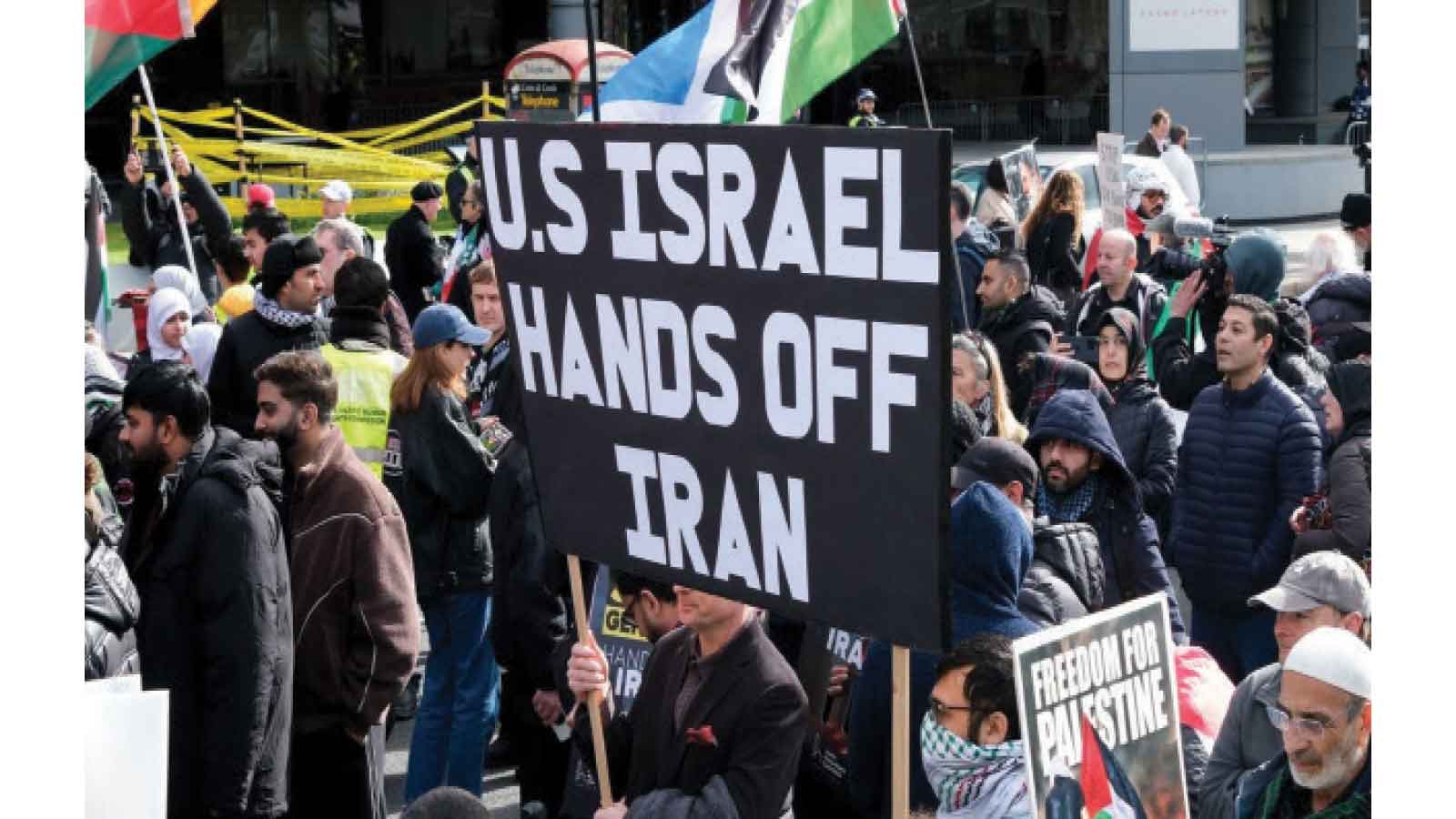
Kanwal Sibal
The war that the US and Israel have unleashed against Iran demonstrates that Washington has not learned the right lessons from the results of its past regime change policies in the Middle East, largely conducted in an attempt to ensure Israel’s long-term security.
The US military interventions to bring about regime change have left in their wake internal strife, ethnic divisions, political and economic instability, the rise of Islamic groups, terrorism, the persecution of minorities, and refugee flows in the targeted countries.
This was particularly the case with Iraq and Syria.
Afghanistan and Libya were targeted not with the objective of Israel’s security but as part of the so-called war on terror, aiming to secure control over the politics of this wider region, including its resources, and with the goal of eroding Russia’s influence in this part of the world.
Any strategy of regime change in Iran with the balkanisation of the country in mind would have disastrous consequences for the region and beyond.
The Middle East sits atop massive oil and gas resources, and therefore the region is critical for running the wheels of the global economy. War in the region is inherently de-stabilising for the economies of all countries.
Territorial ambitions, geopolitical rivalries, and insecurities of any set of countries should not disregard the interests of the global community as a whole.
If the UN Charter were respected and the UN Security Council functioned effectively, then war as a choice or driven solely by the security interests of any particular country could be prevented.
Iran is unlike the Gulf states in terms of the size of and country and its population, as well as its military capacity. It has highly educated people.
The scientific and technological base of the country is strong. It is not monarchical.
It may not fit the description of Western democracies, but it has democratic processes unique to it.
It has layered state structures that provide resilience to the polity. This includes military structures.
The country has been under draconian Western sanctions but it has weathered them, and this has given the country staying power under pressure. Its religious ideological base gives it the capacity to withstand difficulties.
On top of all this, it dominates geographically the Strait of Hormuz, which is a critical chokepoint for the movement of oil and gas from this richly endowed region.
In this broad context, the US-Israeli aggression against Iran can be seen as a dramatic misjudgement. Israel has long felt an existential threat from Iran and has lobbied with the US for military action to eliminate its nuclear program, not to mention the regime itself.
The Jewish lobby in the US, acknowledged to be very powerful, has pushed this goal but earlier US presidents have resisted this pressure. Barack Obama, in fact, negotiated the JCPOA as a solution to the nuclear question.
Donald Trump, despite all his talk about his peace initiatives entitling him to receive the Nobel Peace Prize, is the first US president that took the decision to militarily intervene directly in June 2025 by attacking Iran’s nuclear sites, and has followed in February this year by launching a major and wider military operation against the country.
Trump’s declared objectives for launching this war have changed in their enunciation. In June 2025, he announced that Iran’s nuclear program had been obliterated.
Nevertheless, he engaged Iran in negotiations over its nuclear program in the weeks leading up to the current conflict, using Oman as a mediator. Simultaneously, he positioned an “armada” of US forces close to Iran for military action, which suggested that his goal went beyond the nuclear question.
The US has always wanted to curb Iran’s missile program as well as its regional role in order to limit its capacity to hit Israel, as was demonstrated during the 12-day conflict in June 2025.
Another aim for the US was to force Iran to end its support for the Islamic groups that threaten Israel’s security such as Hamas, Hezbollah, and the Houthis.
If Washington reasoned that killing the supreme leader and top military and intelligence officials would lead to the collapse of the regime, that strategy has failed.
In fact, in June 2025, Trump had announced that the US knew the exact location of Ayatollah Ali Khamenei and could take him out if needed. –RT
Trump may have felt that his success in Venezuela in abducting President Nicolas Maduro through a limited military operation and replacing him with the country’s pliant vice-president could be replicated in Iran, but that strategy has failed.
Trump did say that regime change in Iran was not an objective, but the US president is known for making contradictory statements.
He is now bombing Iran’s military and civilian infrastructure and giving ominous warnings that Iran will be destroyed as a country. The US is claiming that 6 000 targets in Iran have been hit so far.
The Tomahawk missile attack on an Iranian school that killed 165 girls and injured many others has led to a major backlash at home and abroad.
Trump’s expectation of a quick victory has been belied.
His rhetoric remains brutal and callous. Trump has sought Iran’s “unconditional surrender,” which theoretically rules out any negotiation. Talk has surfaced about putting US boots on the ground, which would be unpopular with Trump’s base as it would contradict his campaign narrative that the US will no longer be involved in “forever wars.”
After classified Senate briefings, some US lawmakers have publicly expressed dismay that the Trump administration’s objectives in Iran are unclear and that they have no clue about the end game there. –RT
Kanwal Sibal, is a retired Indian foreign secretary and former Ambassador to Russia between 2004 and 2007. He also held ambassadorial positions in Turkey, Egypt, France and was Deputy Chief of Mission in Washington DC.