malvernmugadzikwa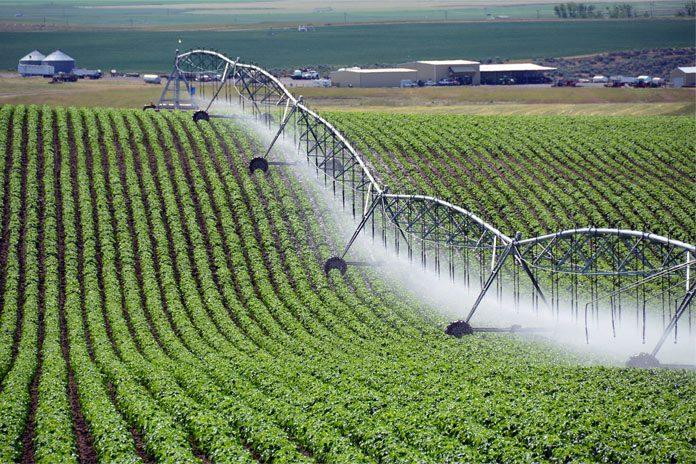
Tapiwanashe Mangwiro
Farmers and analysts have urged the country to prioritise investment in irrigation as a way to ensure sustainable food production in the face of changing climate patterns.
Zimbabwe’s agricultural sector contributed 12,5 percent to the national Gross Domestic Product (GDP) in 2022 and the first quarter of 2023 according to the Zimbabwe National Statistical Agency (ZimStat) and seeks to increase it to 21 percent of GDP by 2025.
The country produced 2,3 million tonnes of grain and 300 000 tonnes of traditional grains in the 2022/23 season, guaranteeing food self-sufficiency to the economy.
However, the coming season an El Nino is likely to result in a mixed start to the 2023/24 rainy season in the country. There is uncertainty given the relatively low predictability of rainfall from October to December in Southern Africa based on El Nino according to the southern Africa weather forecasts.
Precipitation from December to March, during the height of the rainy season, is likely to be below average, negatively impacting the 2023/24 agricultural season.
El Nino is part of the natural climate phenomenon called the El Nino Southern Oscillation (ENSO), where warmer winds are blown to the southern hemisphere pushing rains further upwards to the northern hemisphere leaving high temperatures locally.
Paul Zakariya, the executive director of the Zimbabwe Commercial Farmers Union (ZCFU), whilst talking on ZTN’s The Mint, said the agriculture sector has benefited from good rains and good planning procedures.
“When you look at those results, there are things you need to really appreciate, compared to the previous seasons, there has been consistent planning, commitment, consultation and also commitment of resources.
“Resources have been put in place and targeting of farming areas has been increased as well as extension (services) have been beefed up as they have been retrained and equipped. Our season was a good season with a normal to above normal rainfall, plus farmers had inputs way before time except those self-financing farmers,” he said.
Analyst, Namatai Maeresera, said the need to sustain self-sufficiency is important if we are to look at global events in the past 12 to 18 months.
“It has been stressed enough about the importance of being self-sufficient as we are coming on the back of serious geopolitical issues and conflicts that have caused food prices to increase. If we did not put any plan in place, we would be feeling the pinch in reduced food aid across the world so it is good to produce for ourselves,” Maeresera said.
ZCFU is participating as an organisation in the steering committee that is looking to enhance irrigation in the country.
According to Zakariya, all the irrigation schemes that had stopped working for various reasons are being refurbished but in addition new irrigation schemes are coming up.
“A lot of investment is going into own farm irrigation development, and many commercial farmers are adopting that as a way to climate proof their production and making sure they can produce even outside the rain season,” he said.
Commercial Farmers Union (CFU) chief executive officer Mr. Sam Miller said they have seen a huge increase in terms of irrigation going up to about 220 000 hectares that are now operational, and put to good use.
“This is one of the reasons why we see an increase in wheat production as it is an irrigated crop. So, there has been a shift in the right direction in terms of increasing the capacity to irrigate as climate proofing,” he said.
The CFU president also stressed the need for the country to continue investing in climate proof agriculture for sustainable food production.
“We need to be very serious about what is happening around us environmentally, and climate change is a real scourge and if you look at the projections, by 2050 if we do not do anything there is going to be a crisis particularly in the southern African region,” Mr. Miller added.
The country needs to take climate proofing seriously as projections say by 2050 the region will see much reduced rainfall leaving it being a net exporter of food.



 Online Reporter