Andrew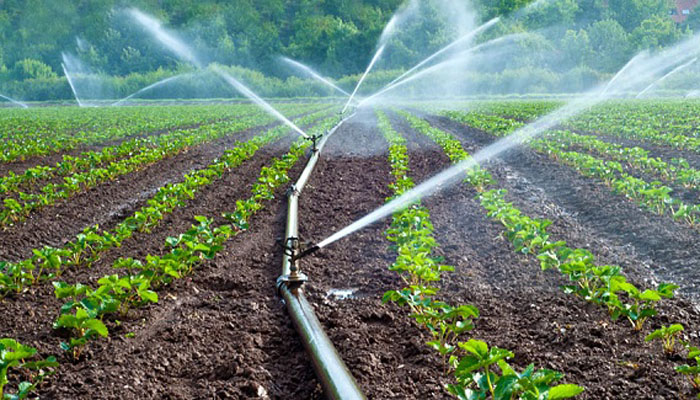
Word from the Market
Cliff Chiduku
Climate change is expected to have a significant impact on agricultural production. The effects of climate change are particularly felt in economies such as Zimbabwe, where rain-fed agriculture is mainly practised.
While some development partners have focused on food aid to the growing population, observers continue to ask about sustainable solutions to climate change. One possibility is to expand irrigation programmes and community gardens.
In response to climate change, in April last year, the Government announced the National Accelerated Irrigation Rehabilitation and Development Programme (NAIRDP) to reduce farmers’ dependence on rain. The programme is aimed at revitalising and rehabilitating irrigation schemes. It is also aimed at securing at least 200 hectares of crop under irrigation in every district.
The programme also involves dam construction. The Government is constructing 12 dams and restoring existing ones in different parts of the country. The ultimate objective is to climate-proof 350 000 hectares of cropped area across the country by 2025.
Currently, about four percent of sub-Saharan Africa’s arable land is under irrigation. The rest is rain-fed, meaning it is susceptible to droughts.
It is worth noting that irrigated land can have yields that are up to five times those of rain-fed areas.
Farmer Nomore Mushonga (55) of Guyu Village in Gwanda district, Matabeleland South province, thanked the Government for rehabilitating the Guyu Irrigation Scheme.
“I never knew that my life would change in a flash. The whole village is reaping the benefits of the operationalisation of this irrigation scheme. We are now producing more than we can consume and we are looking at selling the surplus to Gwanda town,” she said.
At the irrigation scheme , wheat, sweet potatoes, potatoes, vegetables and groundnuts, among other crops, are being grown. The farmers are seeking to devote 84 hectares to crops and reserve 20 hectares for fodder production this summer cropping season.
Guyu Irrigation Scheme chairperson, Mr Gifford Moyo, said owing to training conducted by the Agricultural Marketing Authority (AMA), they were moving towards commercialising their operations.
“AMA officials came here and taught us about record keeping, marketing, aggregation of produce, quality control and taking up farming as a business. Since then, we have embraced the concept of commercialising our operations. We have no doubt that very soon Guyu will become an industrial hub, as we also intend to beneficiate our produce to unlock value,” he said.
Commercialisation of these rural projects is the best foot forward if the country is to achieve an upper middle-class economy by 2030.
The Smallholder Irrigation Revitalisation Programme (SIRP) is an initiative of the Government and development partners. The programme is aimed at achieving food and nutrition security. It is also aimed at ensuring that rural communities are resilient to climate change effects and economic shocks by enhancing households’ production, productivity and income levels, as well as improving access to agricultural markets and financial services.
The Chiduku-Tikwiri Irrigation Scheme in Manicaland province — which draws water from Rusape Dam, has 187 hectares under irrigation and benefits 374 farmers — is one of the many success stories under SIRP. Others include the Chemakudo and Inyala (Mberengwa); Banga (Chivi); Tshovani, Fungai and Rupangwana (Chiredzi); Mushandike (Masvingo); Musikavanhu and Chibuwe (Chipinge); and Maryoca and Exchange (Kwekwe) schemes.
The programme is targeting over 6 200 hectares of land in irrigation schemes across Zimbabwe under NAIRDP.
AMA chief executive, Mr Clever Isaya, said the authority was working with communities that run irrigation schemes and community gardens to establish market infrastructure to minimise post-harvest losses.
In addition, the Government is on a drive to resuscitate irrigation schemes in the country. It will rehabilitate and modernise them.
In line with the National Development Strategy 1, the country is targeting to put 350 000 hectares under irrigation by 2025.
So far, the Government has invested $693 million under NAIRDP, which seeks to exploit irrigable potential in every district as part of the drought-proofing strategy.
Vibrant irrigation underpins agricultural productivity, hence the need to scale up and expedite irrigation infrastructure rehabilitation.
To guarantee food and nutrition security, various efforts need to be made. The resuscitation of irrigation schemes complements Government efforts to push for climate-smart agriculture, which is key to achieving food self-sufficiency. In resuscitating irrigation infrastructure, the New Dispensation is living up to President Mnangagwa’s word that the Government will not leave anyone or any place behind.
Word from the Market is a column produced by the Agricultural Marketing Authority to promote market-driven production. Feedback [email protected] or WhatsApp/Call +263781706212.


 Online Reporter