

 admin
admin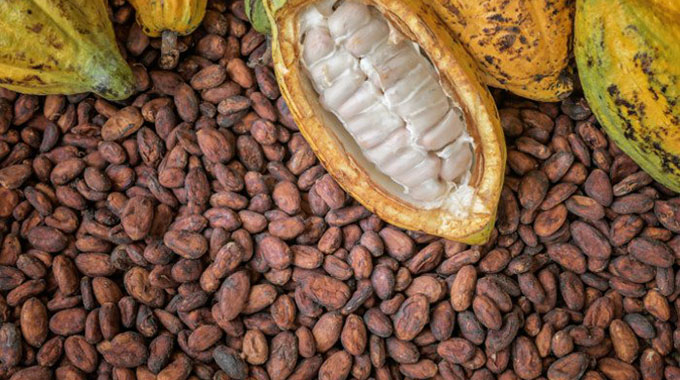
The cocoa tree was cultivated for centuries before the New World was discovered, by the Maya Indians, the Incas of Peru and the Aztecs of Mexico, and chocolate, the drink prepared from its seeds was the national drink of the Aztecs.
The Emperor Montezuma liked it flavoured with vanilla but the majority of people added spices of many kinds.
When Cortez conquered Mexico in 1519 chocolate soon became a favourite drink with the Spaniards, and as a result it was introduced into Spain and eventually, in the 17th century, to the rest of Europe.
It was, however, an extremely expensive drink, costing from ten to fifteen shillings a pound, an exceptionally high price in those days.
The reason for its costliness is not far to seek. The cocoa tree is very particular as to where it will grow and even today, with all the scientific resources that a man has to hand, it still grows only in a narrow belt within ten degrees of the equator.
Another reason is that each tree bears only a few pods; in fact the average annual yield is only two pounds of dried beans, equivalent to a pound of cocoa powder.
So it was that when the first chocolate drinking house was opened in London, in 1657, it was frequented in the main by people of wealth and fashion.
The drinking chocolate popular in the days of Queen Anne was very different from the refined and palatable beverage we know today.
It was thick and rich, and either spiced or very sweet, and made from the whole bean with its full butter content.
By the early 19th century cocoa butter was balanced by farinaceous additives such as arrowroot, and made in handy blocks from which the required portion could be scraped into the cup or saucepan.
It was not until Van Houten of Holland, introduced in 1828 a method of pressing the cocoa butter out of the cocoa bean that anything resembling present day cocoa could be prepared.
In fact, it was not until Cadbury’s brought out their Cocoa Essence in 1866 that a pure cocoa was available.
As to the introduction of eating chocolate, it is only assumed that as chocolate was sold in blocks no doubt cooks — and others — formed the habit of nibbling a bit while they were scraping it into cups!
In 1824 a young Quaker, John Cadbury, opened a shop in Bull Street, Birmingham, for the sale of tea and coffee.
He nevertheless experimented in the cellar of his shop with cocoa beans and was soon selling his own cocoa and chocolate.
This venture was so successful that in 1831 he rented a small factory to enlarge his manufacturing capacity and, in 1847, he took his brother into partnership and thus was founded the world-famous firm of Cadbury Brothers.
Formerly the chocolate centres were covered by the “bowlandfork” method. The centre was taken on a light, pronged fork, dipped into a bowl of liquid two-chocolate and withdrawn.
A few of the most expensive chocolates are still covered this way, but practically all-popular assortments are covered by machines called enrobers.
The enrobing machine consists of a conveyor mesh on which the chocolate centres travel through a cascade of liquid chocolate after which any identification marking or decorations are added, when they are then ready for packing.
Have you ever gone a long time without eating and felt your stomach groan with hunger? In those situations, what was your body telling you?
Obviously, it was crying out for some nutritious food. Yet, how often have you consumed chocolate candy out of desperation or convenience, just to get rid of those hunger pangs? What happens?
Initially, feeding your empty stomach with chocolate feels great. The ache goes away, your hunger disappears, and all of the sugar and caffeine hitting your system gives you the sensation of feeling “high”.
Buzzing with bliss, you wonder why you don’t eat chocolate for breakfast, lunch, and dinner.
About 30 minutes later, however, everything changes. A sharper pain than the one before grips your stomach, and your head becomes dizzy. All of your pleasant feelings degenerate into discomfort worse than your original hunger.
What caused this pain to result? Was there something wrong with the chocolate? No. Chocolate candy is safe to eat, but it doesn’t contain the nutrients necessary for your body to survive.
Therefore, when you are hungry, chocolate alone cannot help you. Instead, it makes you feel worse. For your body to thrive, it must receive a steady diet of nutritious food. Then you can enjoy chocolate as a fun dessert.
Unfortunately, many singles enter dating relationships by trying to “eat chocolate on an empty stomach”. They approach one another with hungry hearts, hoping that the other person will feed them.
This condition can be especially acute when a man or woman feels lonely, rejected, or starved for acceptance. Without love, people become desperate for something to fill the void inside their hearts. A romance, with its potentially sweet taste and emotional highs, seems the likely solution to their hunger.
Regardless of how wonderful a new dating relationship feels, the romantic bliss will eventually wear off. Human affection may taste good, but, like chocolate, it cannot give our hearts what they need for survival.
The true hunger of our hearts is to be accepted unconditionally. We need more than just attention, friendship, or sex. We long for someone to love us despite our faults, mistakes, and imperfections. Our hearts remain hollow when no one completely accepts us.
Humans, have to work hard to give each other unconditional love. We get upset or impatient when someone fails to make us happy. Furthermore, we base our love for someone on how well they perform.
With all of us in constant mistakes, conflicts and disappointments no one is accepting, patient, and forgiving all of the time. Therefore, human love is like chocolate because the pleasure doesn’t last.
None of us have the ability to accept people unconditionally. The affection we give to each other may taste good initially, but the thrill disappears as our selfish motives demand performance. And this problem lasts from the cradle to the grave.
Not to sound fatalistic, but we must acknowledge the reality that human love is performance-based. It always has been and always will be. You can date anyone in this world, but that person cannot give your heart the unconditional acceptance that it craves.
This truth also applies in marriage. Someone once asked a pastor, “What is your wife’s opinion of you?”
He replied: “It depends on what day you ask her. Some days she loves me. Other days, I drive her crazy, and she wonders why she married me. My wife and I wish we could love each other perfectly, but it is impossible since we both sin and make choices that hurt each other.”
Is marriage the answer? Consider those around you. How many of your married friends warn you that marriage is tougher than you think? Yet, how many of your single friends complain of feeling incomplete without a spouse?
All too often, we neglect what our hearts really need and attempt to satisfy ourselves with a cheap substitute called romance. In essence, we try to live on an unhealthy diet of chocolate. But our hearts cannot survive under the demands of performance-based love. We inevitably burn out, wear out, or drop out, from trying to please others.
Take a look at your life. How would you describe it? Contented? Rushed? Exciting? Stressful? Moving forward? Holding back? For many of us it’s all of the above at times. There are things we dream of doing one day just as there are things we wish we could forget.
Deal with those issues and you will become contented. You have to learn to find happiness within yourself and only then can you find it with your partner.
boulderinternetguide.com/powertochange.com



 Online Reporter