

 admin
admin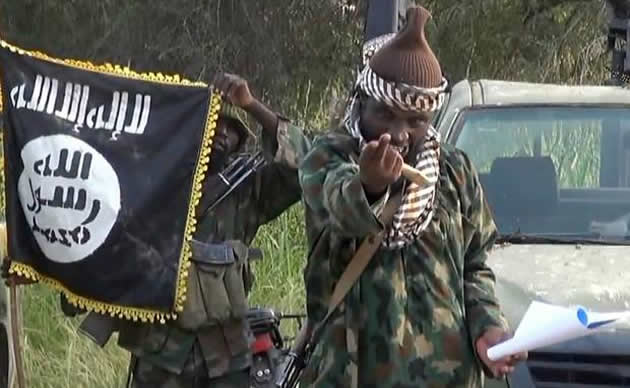
Beirut – Islamic State militants have accepted a pledge of allegiance by the Nigerian-grown Boko Haram extremist group, a spokesperson for the Islamic State movement said on Thursday.
The development comes as both movements, which are among the most ruthless in the world, are under increasing military pressure.
Islamic State seized much of northern and western Iraq last summer giving it control of about a third of both Iraq and Syria. But it is now struggling against Iraqi forces seeking to recapture Saddam Hussein’s hometown of Tikrit, while coming under fire from US-led coalition air strikes in other parts of the country and in Syria.
Boko Haram, meanwhile, has been weakened by a multinational force that has dislodged it from a score of north-eastern Nigerian towns. But its new Twitter account, increasingly slick and more frequent video messages and a new media arm all were considered signs that the group is now being helped by IS propagandists.
Then on Saturday, Boko Haram leader Abubakar Shekau posted an audio recording online that pledged allegiance to IS. On Thursday, the Islamic State group’s media arm Al-Furqan, in an audio recording by spokesperson Abu Mohammed al-Adnani, said that Boko Haram’s pledge of allegiance has been accepted, claiming the caliphate has now expanded to West Africa.
Al-Adnani had urged foreign fighters from around the world to migrate and join Boko Haram.
“We announce our allegiance to the Caliph of the Muslims . . . and will hear and obey in times of difficulty and prosperity, in hardship and ease, and to endure being discriminated against, and not to dispute about rule with those in power, except in case of evident infidelity regarding that which there is a proof from Allah,” said the message.
The Boko Haram pledge of allegiance to IS comes as the militants reportedly were massing in the northeastern Nigerian town of Gwoza, considered their headquarters, for a showdown with the Chadian-led multinational force.
Boko Haram killed an estimated 10,000 people last year, and it is blamed for last April’s abduction of more than 275 schoolgirls. Thousands of Nigerians have fled to neighboring Chad.
The group is waging a nearly six-year insurgency to impose Muslim Shariah law in Nigeria. It began launching attacks across the border into Cameroon last year, and this year its fighters struck in Niger and Chad in retaliation to their agreement to form a multinational force to fight the militants.
Boko Haram followed the lead of IS in August by declaring an Islamic caliphate in northeast Nigeria that grew to cover an area the size of Belgium. The Islamic State had declared a caliphate in vast swaths of territory that it controls in Iraq and Syria.
The Nigerian group has also followed IS in publishing videos of beheadings. The latest one, published March 2, borrowed certain elements from IS productions, such as the sound of a beating heart and heavy breathing immediately before the execution, according to SITE Intelligence Group.
In video messages last year, Boko Haram’s leader sent greetings and praise to both IS leader Abu Bakr al-Baghdadi and leaders of al-Qaeda. But Boko Haram has never been an affiliate of al-Qaeda, some analysts surmise because al-Qaeda considers the Nigerians’ indiscriminate slaughter of Muslim civilians as un-Islamic.
Meanwhile, African states want the United Nations to set up a trust fund to finance a force to fight Boko Haram and called on the international community to supply intelligence and equipment, according to a draft UN resolution.
The draft UN Security Council text endorses the creation of a force by Nigeria and its neighbours Cameroon, Chad, Niger and Benin to take on Boko Haram. The 54-nation African Union has already approved a force of up to 10,000 troops.
The text drafted by Chad, Nigeria and Cameroon, has not yet been circulated to the 15 Security Council members. Chad’s UN Ambassador Mahamat Cherif has said he hoped the council could vote on a resolution by end-March.
The draft is under Chapter 7 of the UN Charter, allowing decisions to be enforced with economic sanctions or force.
A UN diplomat, speaking on condition of anonymity, said once negotiations begin among the 15 council members some of the key issues would likely be how to finance the operation and whether or not it needs to be a Chapter 7 resolution.
The draft resolution “requests the Secretary-General to establish a trust fund … which shall be managed by the LCBC (Lake Chad Basin Commission) Member States and Benin under the supervision of the AU (African Union), and encourages Member States to contribute to such a fund”.
It “calls upon donors to support [the force] through the provision of funding for troop stipends, equipment, technical assistance, and uncaveated funding for [the force] to the United Nations trust fund”.
The text calls for international support for the operational capability of the force by providing equipment and sharing intelligence and urges states “to provide personnel, equipment and services if required, for the successful deployment [of the force]”.
The draft resolution also threatens sanctions on anyone supporting Boko Haram.
Chad’s military is already spearheading an operation against the Islamist militant group that in recent months has mounted an increasing number of cross-border raids. – AP



 Online Reporter