The rate of bombardment on that day exceeded one strike per minute.
“The way Israel wages war is markedly different from that of its allies in terms of frequency and intensity of strikes,” said Tripp. “There is no comparison. The United States dropped 500 munitions in one day during the peak of its 2017 campaign against the Islamic State in Raqqa. Israel far exceeded this firepower, reporting strikes on 1,600 targets on Sept. 23 alone.”
Villages along Lebanon’s southern border have been hardest hit.
Satellite images, captured between Sept. 12-24, show more than 500 buildings damaged across Lebanon, according to a preliminary analysis of Copernicus Sentinel-1 satellite data by Corey Scher of CUNY Graduate Center and Jamon Van Den Hoek of Oregon State University.
Israel’s intensive bombardment began days after an Israeli attack detonated thousands of pagers and two-way radios targeting Hezbollah’s members across Lebanon on Sept. 17 and 18, killing dozens and wounding thousands.
IDF Chief Lt. Gen. Herzi Halevi said that Israel’s military operations would continue until Hezbollah members had been expelled from Lebanon’s southern border region, allowing around 60,000 Israelis to safely return home after months of cross-border attacks.
As a barrage of Iranian missiles crossed into Israeli airspace on Tuesday evening, a large number of tanks and troops had amassed along the country’s northern border, likely preparing for an operation that Israel has described as “limited, localized and targeted ground raids” to rout out Hezbollah targets in southern Lebanon. Meanwhile, Israeli planes continued to bomb other parts of Lebanon, including the densely populated Cola neighborhood in southwest Beirut.
“We are not stopping. We keep striking and hitting them everywhere,” said Halevi, speaking to an IDF battalion stationed along Israel’s northern border. SOURCE: The Washington Post


 Chronicle Editor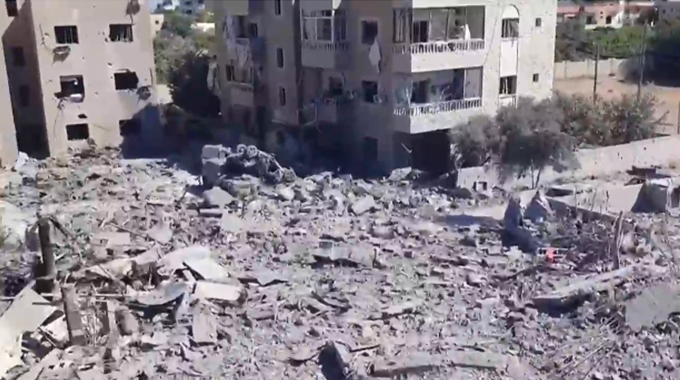



 Online Reporter