admin
admin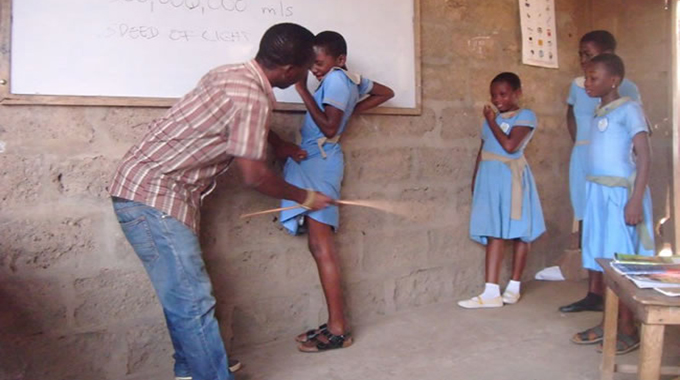
Stephen Mpofu
“Corporal punishment must live forever in schools. Indisciplined students must be caned.” And: “Corporal punishment in schools must go yesterday. It is dehumanising.”
The above sentiments are the views of Zimbabweans who oppose the continuation of corporal punishment in schools as a way of instilling discipline among errant pupils against the desires of fellow Zimbabweans baying for the abolition of corporal punishment in the educational institutions.
A retired veteran Zimbabwean journalist weighing into the current debate on this rather controversial issue, pointed out that the Zimbabwean constitution forbids corporal punishment and which government authorities are seeking ways to replace it with other forms of instilling discipline in schools.
But the scribe, who did not wish to be named, further noted that the constitution was made by people, “who are not infallible” and that some of them “have vested interest in the matter,” but he did not say what vested interest.
Educated in colonial Rhodesia, the writer said he knew corporal punishment to have instilled a great deal of discipline among students during that colonial period.
A Bulawayo author-cum-medical doctor, who asked not to be named for ethical reasons, stressed that since time immemorial discipline among children was instilled in the home and not left to the teacher as has been happening hither to.
A pastor strongly concurred with the doctor’s view saying home was the place where discipline in children was instilled.
Summed up, the views immediately above suggest that today many, many parents “spare the rod” and in that way “spoil the child”, as the wise saying goes.
Stated otherwise, the parents who favour the continuation of corporal punishment in schools are guilty of failing to “tame the beast” in their offspring and expect the teacher to do the job for them. “Shame on them,” is likely to be the quick response of those Zimbabweans in favour of taming the beast in their children in its infancy.
Sociologists appear to have the final word in this matter, giving comfort to those who say teachers should not be expected to serve the precious, invisible liquid — education — in vessels with bases, or characters, riddled with perforations or holes and so cannot retain the educational values for their benefit and that of their country.
Sociologists teach that the task of instilling the right or correct values is in the home where that task or socialisation begins in earnest, in the home in urban areas and in the village out there in the rural setup where children are taught the dos and dont’s that will make them responsible citizens in their adult lives.
What this home-socialisation suggests is that parents, both father and mother, must lead exemplary lives in every aspect of their actions for their children to copy as good examples of human behaviour.
Socialisation therefore attempts to make children carbon copies, good or bad, of their biological parents.
In the final analysis, this communicologist- cum-sociologist can say with equanimity that home, anchored by the Church, is the primary source of discipline and good behaviour for children with the school and teachers there to put the icing on the cake as it were so that the country can boast a responsible citizenry.


 Online Reporter