Chronicle Editor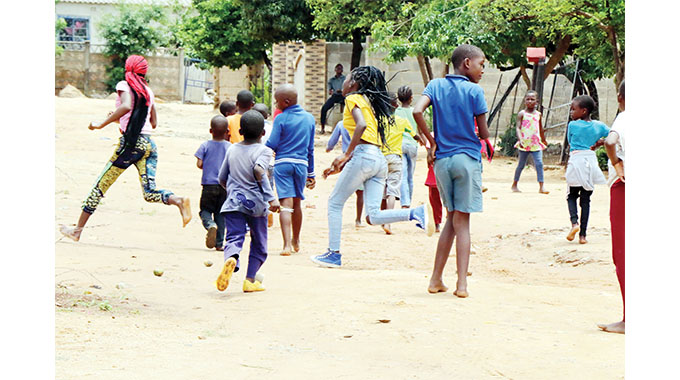
Nolwazi Mnikwa
Relationships
This week I bring to you an interesting yet seemingly controversial topic of discussion. The old adage goes “it takes a village to raise a child”.
I grew up hearing this statement and even in this day this statement is being used a lot especially with regards to the generation popularly known as, “ama2k”. “Ama2k” is a term used to refer to those born in the 2000s. Why do I say this topic is controversial and how does it relate to relationships? Well, you will have to read on to find out.
Dating back to times past, society was considered as one big family in which there are nuclear families, extended families and friends. In a village setup, you find that when a male child has come of age, “uyatshayelwa ihlahla” which is to say he is allocated a stand where he can build his home.
This stand is usually within close proximity to the father’s homestead. So if a father has three sons for instance, all the sons will have a stand allocated to them. As the village grows, the village is made up of relatives.
This explains the relationship context associated to the statement “it takes a village to raise a child”. It is in the case of resettlement areas where the setup is slightly different. However, as it is in urban areas where neighbours become friends who become like family, so it is in resettlements thus bringing about the relational dynamic to the “village” setup.
In as much as urban areas are not practically villages but the term can be used literally. I mean we even describe the world as one global village so the term village in this instance refers to both the urban and rural setup.
Now that we have established the relational component let us take a look at the reason why I say this topic is controversial.
Due to the fact that a village in the rural areas is largely made up of relatives, there is normally a shared set of “family” values. These values contribute to the governing of the village.
That is why if Parent A comes across Parent Cs child misbehaving, Parent A has the liberty to take disciplinary action. In the urban areas the same concept applied though in a slightly different manner.
In the urban areas, a friend, relative or colleague of Parent C could take disciplinary action if they came across the child misbehaving.
However, in this day, this has changed, Parent A no longer has the privilege of taking disciplinary action to Parent C’s child when he or she comes across the child misbehaving and this is due to a number of factors which we will explore.
Owing to the dynamic cultural, societal and relational changes that have been brought on by modernisation, the manner in which families, neighbours, friends, relatives and colleagues relate has changed.
In an extended family set up, you can have some of the family who carry Christian values and live their lives in a manner that upholds Christian values.
In the same extended family, you can also find a family that is rooted in traditional beliefs such as ancestral worship or consulting traditional healers. In such a scenario, Christian parents would not want their children to be disciplined in a manner that upholds ancestral worship values by the family that is rooted in traditional worship, and the same applies for the traditional family.
This is because of the differences in belief systems and values thus the concept “it takes a village to raise a child” falls away in this instance.
As a move towards promoting mental health, individuals are encouraged to maintain healthy boundaries that protect their space and mental health. This is a concept that many who find themselves as recipients of individuals or families that have set boundaries are failing to comprehend.
A family for instance may make a decision to set a healthy boundary with a toxic relative, the kind of relative known to be a rumour monger, a gossip, that relative basically who is known to cause trouble.
This relative may for instance bump into a child from this family and try to ask personal questions or questions private to the child’s family, to which the child will not respond to as a result of the healthy boundary the family has set for this relative.
The relative may not understand this and instead label the child as rude and arrogant as well as disrespectful.
In the same vein, there are some individuals who have made it a hobby to compare siblings or cousins. It is something that some consider as normal and do every moment they get whether at family gatherings or when interacting with the child.
You hear comments like, “you got 4As, your cousin got 7As” or “this child is louder than this one” or “this child is prettier than this one” and in worst case scenarios these people tend to pass comments like, “you seem to favour this child more than this one” and this they do in the presence of the children.
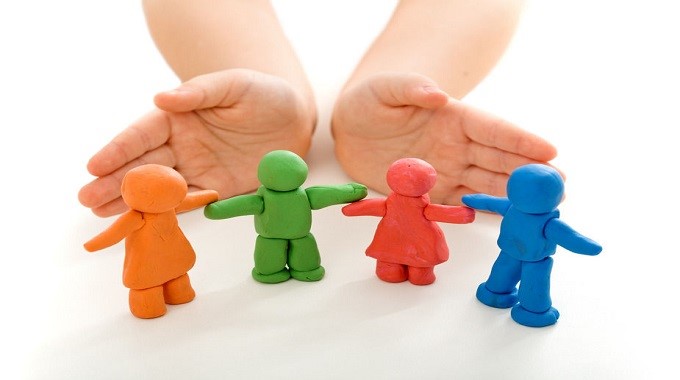
In order to protect their children from such vicious statements there are families who have taught their children to set healthy boundaries with people who have this comparison mentality. So a child who has been taught to set healthy boundaries may excuse themselves the moment comparisons start being made and this may come across as rude or disrespectful to the adult doing the comparison as he or she may not understand how damaging comparisons are and that the child is simply protecting their mental health.
Then there are those adults who play an active role in wanting to discipline other people’s children when their own are running rogue. If they cannot actively discipline their own children, how do they expect other parents to be recipient to them disciplining their own children? This statement sounds very controversial I know yet it is a hard truth.
In all that has been said, do not get me wrong, I am not saying that children are supposed to be allowed to run rampant in society.
What I am saying is that in approaching different situations where a child has misbehaved, we should not be ignorant of the above-mentioned factors. In essence, it does take a village to raise a child but it’s important to know which part you play and how you play that part.
Family, friends, relatives, teachers, pastors and colleagues all have a role that they contribute to your child’s growth and development and those roles ought to be highly respected and adhered to.
I would love to hear your thoughts, comments and feedback as well as relationship topics you would like to have covered. You may send these to [email protected] or to +263775978857. Keep safe and be blessed.


 Online Reporter