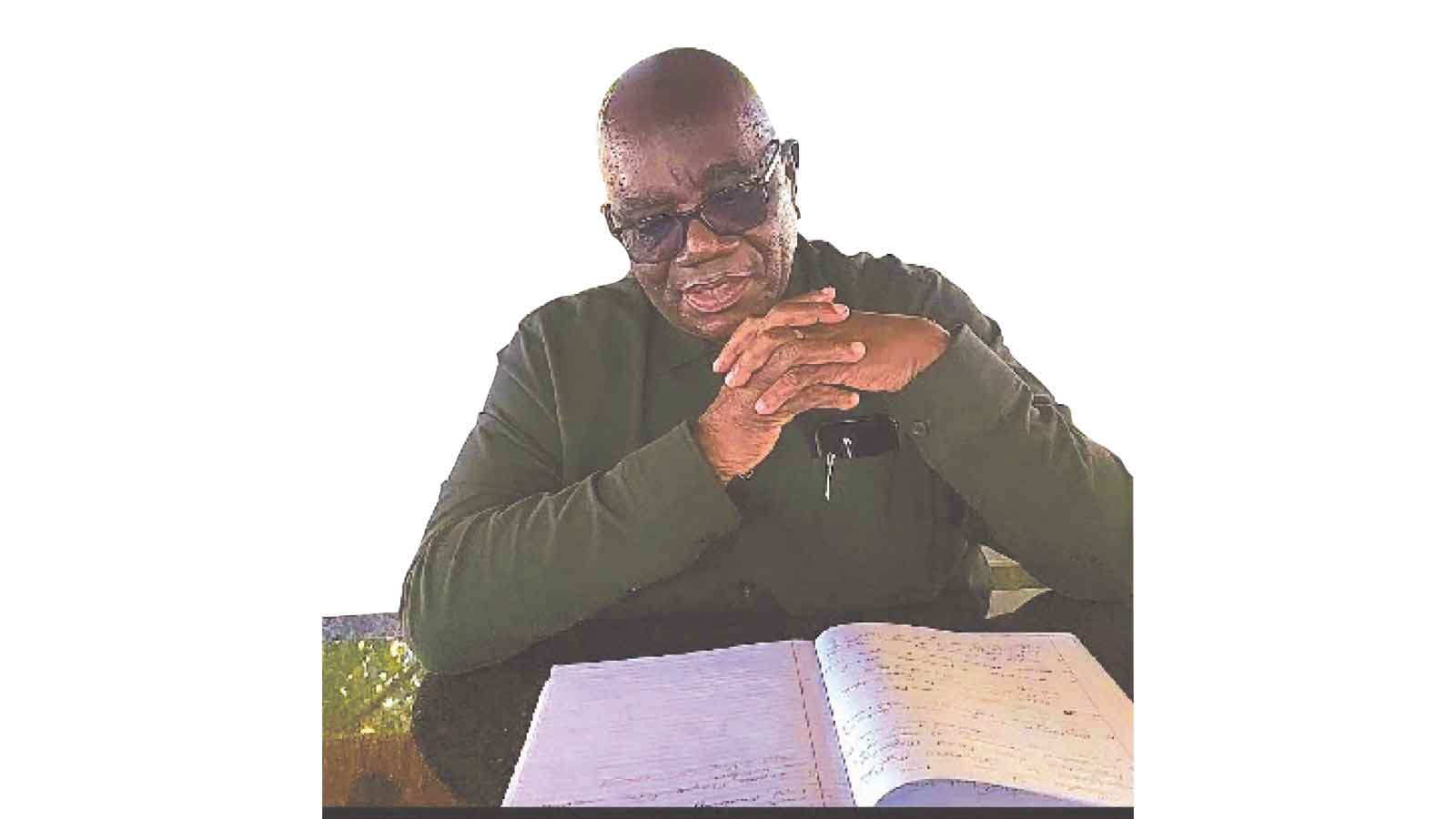
Lieutenant-General (Retired) MICHAEL NYAMBUYA, whose nom de guerre was Mike Mutare, concludes his chronicles this week by recounting to our Society Editor PRINCE MUSHAWEVATO the final days of the liberation struggle and transition to independent Zimbabwe.
***************
Q: You highlighted the deep mistrust that existed during the ceasefire period, especially regarding the Rhodesians. How did you finally overcome this?
A: Yes, we had serious trust issues because of the situation at the time.
We did not trust each other and were constantly worried that the Rhodesians wanted to massacre us while -we were gathered in one place.
It took a tremendous amount of effort to build trust between us and the Rhodesians.
We remained vigilant throughout our time at the assembly points.
Immediately after the 1980 independence celebrations — following the lowering of the Rhodesian flag, rather the union Jack, and the raising of our flag — we started working together.
Actually, even before that, the teams involved in raising the flags were made up of combined ZANLA, ZIPRA and Rhodesian forces.
Q: What happened after raising the Zimbabwean flag?
A: It was then that we started the integration process, which was again a very difficult phase.
It was hard to trust someone you had just been fighting against and believe they were genuinely sincere this time.
We started taking comrades from the assembly points to sit entrance exams to build the officer corps.
We would select those who were fit to be junior officers, middle managers and senior officers.
The officer corps were trained at the Zimbabwe Military Academy (ZMA), while others were trained at the Llewellyn Barracks.
It went so well that the first battalion to be integrated was the 2:1 Infantry Battalion, combining ZANLA and ZPRA forces.
Other battalions began to be formed at the Llewellyn Barracks after that and later at the Inkomo Barracks as well.
In 1980, I led a group of about 100 young men to Nigeria to be trained as officer cadets
Q: Can you tell us about the Nigerian experience?
A: We trained in Nigeria and were commissioned into the Nigerian army as second lieutenants.
The president of Nigeria at the time was President Shehu Shagari.
After completing the initial cadet course, we proceeded to take the young officers course, followed by the jungle warfare and combat survival course.
We eventually returned in 1981 to fully participate in the integration process.
That was a huge advantage because we had been conventionally trained in a regular army and were commissioned officers.
Even though we still had to complete the courses prescribed by the Zimbabwean army at the time, having that conventional training gave us an edge over our colleagues.
This ultimately helped build a strong Zimbabwe National Army (ZNA).
Q: We understand you have been part of several peacekeeping missions. Can you tell us about them?
A: Yes, certainly. As the ZNA matured, it gained more experience and exposure.
In June 1991, the Zimbabwe National Army was invited by the United Nations (UN) to participate in a peacekeeping force for the first time.
I led an officer-only team that went to Angola to participate in UNAVEM II (United Nations Angola Verification Mission II).
We took part in that mission, trying to keep the peace between the Popular Movement for the Liberation of Angola (MPLA) and Jonas Savimbi’s National union for the Total Independence of Angola (UNITA), leading up to the 1992 elections.
Unfortunately, things did not work out.
When the election results were announced, UNITA rejected them. A civil war broke out once again and UNITA returned to the bush.
However, we stayed on until 1993, when renegotiations began between UNITA and the government, and Angola eventually managed to establish peace.
That was the first mission the Zimbabwe National Army took part in.
The second mission was in Somalia.
I came back from Angola in 1993, stayed in the country for only six months and was deployed once again to Somalia in January 1994.
Q: What was happening in Somalia?
A: Somalia was a failed state that had disintegrated and lapsed back into lawlessness under Siad Barre, who had fled the country and subsequently died.
We went as part of a UN mission alongside Americans and other troops from Asia, Africa and Europe, participating from 1994 to 1996.
Zimbabwe acquitted itself very well.
We were known for our capacity and our ability to work with the locals, who liked us a lot because of the doctrine we used: being “fish in the water”, treating people well and ensuring we supported them not only militarily but also through civil-military relations.
That was our second mission, and after that, it was mission after mission.
We participated in many other deployments, including in the DRC (Democratic Republic of Congo).
Q: We understand there was some unrest in parts of Zimbabwe soon after independence. What happened?
A: Yes, there were some skirmishes that occurred during the integration process in Chitungwiza and Ntabazinduna in Bulawayo.
One can be forgiven for overlooking that, but it was inevitable.
As I said, after being at each other’s throats for more than 10 years, it is always difficult to build trust between former warring parties.
You need strong confidence-building measures every time you try to bring former adversaries together.
Skirmishes occurred here in Harare, in Chitungwiza and in Bulawayo, but the important thing is how you deal with them — how you extinguish those fires.
It happened, but we were quick to bring the situation under control, investigate and carry out lessons learnt. How did that happen? Why did it happen? How can we prevent it from happening again?
Implementing those lessons learnt is one of our major accomplishments.
Those skirmishes occurred, but they never happened again because we applied those lessons.
Q: What would you wish to add as we conclude this interview?
A: The only point I will make is that our young people — our youth — must be aware that the peace and freedom we enjoy today are the result of the blood of Zimbabweans who died for this country.
They must know that they need to leave a positive legacy that they will be remembered for.
We are now in a phase where we are fighting for economic independence and we are fortunate that our leadership has gone a long way to empower our youth.
However, our youth must understand that it is their responsibility to make sacrifices for their country.
They must know that it is them, and them alone, who can fight to ensure our freedom is preserved and that we achieve economic independence, in line with ZANU PF policies.
In this case, our Vision 2030 — attaining an upper middle-income society by 2030 — takes a lot of sweat and hard work.
It does not come easy.
You do not succeed through making deals, telephone deals or just hoping things will come to you while you sit idly.
You must go out there, be innovative and build things instead of just sitting and being idle.
That is my message to them: Leave a legacy for future generations, just as I am proud we have left one.