Chronicle Editor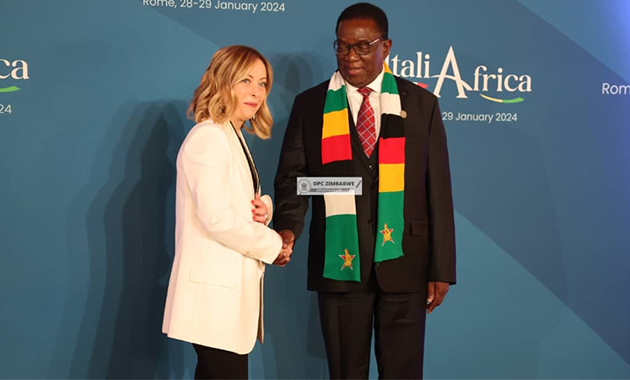
Marilyn Mutize, Correspondent
IN the wake of the Second Republic, Zimbabwe is fervently pursuing initiatives to attain food security and energy self-sufficiency, marking a pivotal juncture in the country’s developmental trajectory.
The recent Italy-Africa summit, attended by President Mnangagwa, underscored this commitment, as Rome presented a strategic partnership aimed at enhancing trade in the realms of energy, diplomacy, and migration.
The summit kicked off with a speech from the Italian Prime Minister, Giorgia Meloni, highlighting the immense potential for mutually beneficial trade and co-operation. She emphasised that Italy was committed to assisting Africa in its development journey, particularly in the crucial sector of energy.
With its expertise in renewable energy, Italy pledged to support African nations in their transition towards sustainable power sources. This promise ignited hope in the hearts of countless Africans, who yearned for a brighter and greener future.
The advantages of this commitment to energy development quickly became apparent. As part of co-operation, Italy offered technical assistance, grants, and even investments in renewable energy projects for willing African nations. This opened more avenues to augment energy within the African countries in a way reducing their reliance on fossil fuels, with a promise to create countless job opportunities as well as boost the local economies.
For Zimbabwe, a number of keen investors showed interest to invest in energy, bringing hope for uninterrupted power supply for homes, schools, hospitals, and industries, with reliable, affordable, and clean energy.
In an effort to bolster Zimbabwe’s energy landscape, Italian investors have shown a keen interest to inject a substantial boost to the country’s energy sector, by proposing to establish a 100 MW solar power station near Gweru. President Mnangagwa discussed this prospect during his engagements in Rome, and plans are now underway to secure suitable land for the construction of this solar power facility.
In the same month, the country witnessed Dinson Manhize Iron and Steel plant marking a significant milestone by sealing a 400k line deal with Xian Engineering Enterprise, a subsidiary of China XD, for the construction of a 400Kv transmission line between Sherwood and Manhize.
More so, this initiative promises uninterrupted power supply to the local populace, eradicating power cuts in the designated area. This strategic roadmap aligns seamlessly with the Second Republic’s vision of achieving energy sufficiency as a catalyst for sustained economic growth.
Furthermore, President Mnangagwa has not only prioritised energy self-sufficiency but has also placed a significant emphasis on food security. During his recent trip to Italy, he underscored the importance of Africa being food-secure.
In a significant move towards addressing food security concerns, President Mnangagwa held a meeting with Dr. Qu Dongyu, the Director-General of the Food and Agriculture Organisation (FAO). The meeting aimed at discussing strategies for sustainable water and land use in the country.
During the meeting, both leaders expressed their commitment to promoting food security and improving agricultural practices in the nation. President Mnangagwa highlighted the challenges Zimbabwe has faced in recent years due to changing climatic patterns, affecting the availability of water and adversely impacting crop yields.
Dr Qu Dongyu acknowledged the criticality of such challenges and pledged the FAO’s support to Zimbabwe in achieving sustainable and efficient water and land management. He commended the government’s efforts in recognising the importance of agriculture and its potential to uplift rural communities. Dr. Qu emphasised the necessity of adopting innovative technologies and strengthening the agricultural sector’s resilience to combat the effects of climate change.
During the meeting, President Mnangagwa outlined his administration’s agriculture-focused initiatives, including the Command Agriculture program that has significantly increased food production in recent years. He also emphasised the need for sustainable agricultural practices to mitigate the effects of climate change.
In line with this vision, the Second Republic launched climate-proof programs such as the Pfumvudza/Intwasa programme across the country last year. The programme represents a crucial step towards achieving food self-sufficiency and security.
Envisioned under the umbrella of Vision 2030, these accelerator models are integral to Zimbabwe’s holistic approach in addressing agricultural challenges and ensuring a resilient and sustainable food supply.
As Zimbabwe navigates the path toward food security and energy independence, the concerted efforts of the Second Republic, coupled with international collaborations, promise a brighter and more self-sufficient future for the nation and its people.



 Online Reporter