admin
adminpercent compared to 0,492 percent last month.
Borrowing costs had been on the decline in recent months after Prime Minister Mario Monti came to power in November, replacing Silvio Berlusconi, who was ousted by a parliamentary revolt and a wave of financial market panic.
Investor jitters have returned to the markets this week due to mounting fears over global growth prospects following weak Chinese trade and US jobs data, as well as doubts over debt-laden Spain’s ability to control its finances.
Stocks were performing relatively well, however, with the FTSE Mib index up 1,54 percent — but this was a technical rebound to Tuesday’s plunge of 4,98 percent led by a drop in bank shares, making it the worst performer in Europe.
“Even though demand was stable as expected, the operation was impacted by the reigniting of tensions on eurozone sovereign debt and saw a sharp rise in rates,” the Bank of Italy said in a statement.
Jean-Francois Robin, a bond strategist at French bank Natixis, said: “The market is going back to risk mode after exaggerated optimism.
“It’s the end of the euphoria after massive cheap loans from the European Central Bank helped bring down bond markets,” he said.
“The market is scared again after thinking the crisis was over,” he added.
Monti has implemented a series of harsh austerity measures since coming to power at the head of a technocratic government and has launched a series of structural reforms aimed at liberalising the economy and boosting growth.
The economy entered recession in the second half of last year, shrinking by 0,2 percent in the third quarter and 0,7 percent in the fourth. It is expected to contract further this year despite government reform measures.
The government is so far forecasting a shrinkage of 0,4 percent over the year but business daily Il Sole 24 Ore on Tuesday reported that the figure is about to be revised to a 1,3-1,5 percent contraction.
But officials also say Italy is on track to reduce the public deficit to 1,3 percent of GDP this year and restore budget balance by 2013 — far more quickly than other eurozone economies seen as vulnerable.
The European Central Bank provided the commercial banks with some one trillion euros cheap funds in December and February, a massive boost to liquidity, with the aim of getting them to lend more money to business and so bolster growth.
In the event, many analysts believe that some of the flood of cheap cash went into the bond markets, thereby pushing down eurozone borrowing costs but the impact appears to have been temporary.
In marked contrast, Germany, paid sharply lower rates at a bond sale yesterday as investors sought out the safety of the eurozone’s biggest economy and paymaster. — AFP.


Online Reporter
- Herald
- September 24, 2026
- 13 views
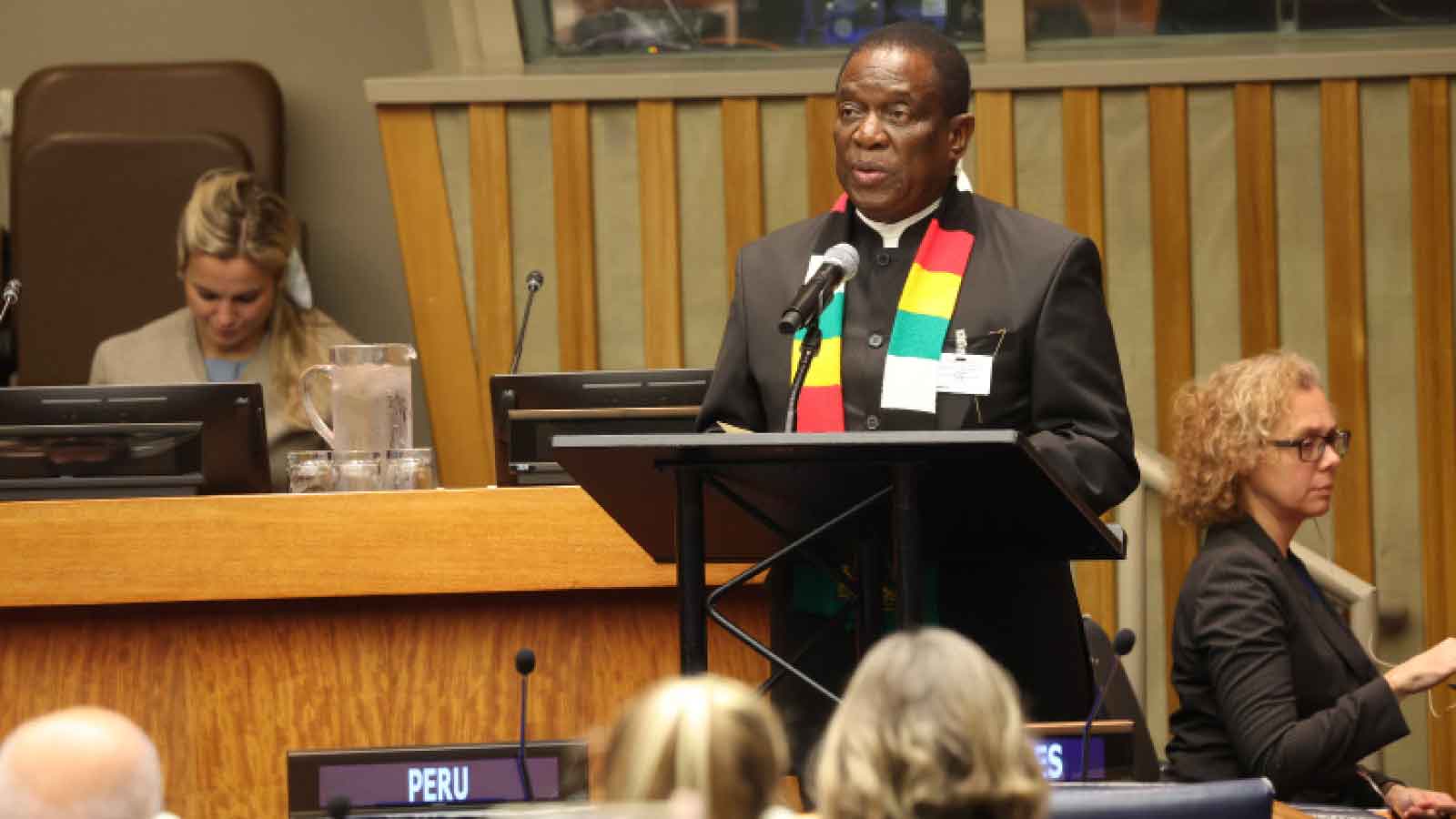
‘No to global inequalities’ . . . Development a basic human right for all, says President
Wallace Ruzvidzo in NEW YORK, USA DEVELOPMENT acquires its fullest meaning when every person and nation has a genuine opportunity to shape their course and share the benefits, President Mnangagwa…