peter
peter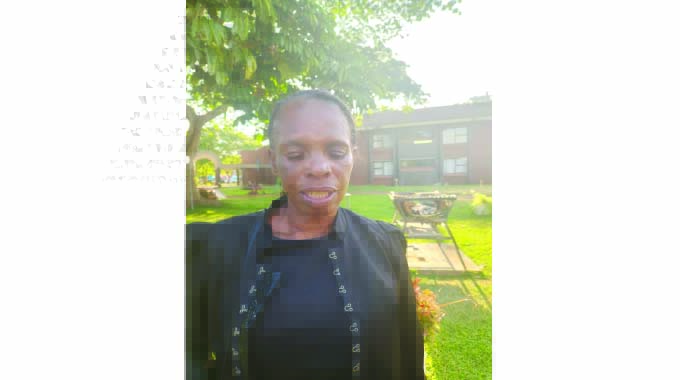
Robin Muchetu, Senior Reporter
HIV and Tuberculosis (TB) co-infection have often been described as the “perfect storm” and a confluence of two epidemics. This is an apt description of what Mrs Barbra Farashishko experienced when she was diagnosed with TB three times before getting an HIV test which turned out to be positive 13 years later.
It was before the fourth TB infection after she nursed her sick husband who had the disease and eventually died in 2014 that she eventually took the HIV test.
HIV was still somewhat of a mystery back in 1995 and health institutions were still battling with the disease that was seeing many wasting away with HIV testing still uncommon. This saw Mrs Farashishko being treated for TB and not getting an HIV test. Today, TB has been the leading cause of death among HIV-positive people.
Now a TB champion, Mrs Farashishko said she suffered stigma and discrimination from within her family, in-laws and the community at large.
“I was married in Rusape and initially they never understood how I contracted TB. The area is a tobacco farming one and I could spend hours in a tobacco barn sorting out the tobacco and that is when I started feeling ill. I would cough and feel congestion in my chest, but no one assumed it could be TB because I was pregnant by then so it was assumed it was the pregnancy,” she said.
Ms Farashishko’s troubles started in 1995. She was admitted at Parirenyatwa Group of Hospitals in Harare and eventually discharged following some disturbances at the institution. Barely able to walk, she made it home in Mabvuku where she had to be pushed in a wheelbarrow by her father as she could not make it from the drop-off point to their home.
“Everyone was looking at me as I was being wheeled and that is when the stigma started. The community assumed the hospital had run out of treatment options and had to send me back home and I was destined for death. My siblings at home also discriminated against me. I was placed in a back room alone and food was placed at the door. No one wanted to come in. They were all scared of contracting TB but my parents stood by me,” she said.

Ms Farashishkos’s in-laws visited her once and also assumed she would be dead in no time.
“They saw me as a moving grave that was never going to be able to fetch water or firewood back in their village. They suggested my husband leave me. However, I started treatment and followed it religiously. Back then, we would take 14 tablets daily together with HIV drugs so in a day I would take 20 to 24 tablets. I never gave up for those six months and I went to the hospital and was told the infection was still present. I added two more months of treatment and I recovered,” she said.
Mrs Farashishko had a baby she was nursing. She continued breastfeeding and was given medication to that effect. The baby was also receiving a syrup to prevent TB infection from her. However, tragedy struck when the child died in 2000.
“I was stressed and I got a second bout. I received 60 injections as treatment on top of the 14 oral drugs. I was then pregnant again. I actually gave birth a day after burying my other child. However, this newborn was not growing as much and I too was still sickly. I went on TB treatment for the third time. In 2008 my second child died,” she said.
Troubled by the deaths of her children and her continued illness, she approached a health centre in Mabvuku where she begged the doctors to investigate why she still had poor health and was losing her children.

“I wanted to know why the TB was recurring, I was now tired of the injections, I could not even sit down because of the pain. The nurses would feel my backside to check for a spot that had not been injected before. It was horrible but I endured. The doctor then suggested I get an HIV test. It was during those days that HIV was now being spoken about and I tested positive. This was 13 years after battling the first TB infection,” she said.
Mrs Farashishko said it is now an open secret that HIV and TB co-infection is rife among people with HIV but TB can be cured. She eventually completed her TB treatment and began taking antiretrovirals. Her experience pushed her to volunteer in her community and assist with information and education to people dealing with the double burden of HIV and TB.
Sadly, her husband got a TB infection and died in 2014 while she got another bout of TB, the fourth infection, after caring for her husband.
“Because I now knew my status, I took the TB treatment again and never defaulted for both HIV and TB. I am grateful to God for my life and I am a living testimony to others. I am now a TB champion,” she said.
Infectious Disease Detection and Surveillance (IDDS) Drug Resistant TB Regional Advisor Dr Kelvin Charambira said there has been a massive change in the management of TB and HIV since 1995 when Mrs Farashishko was diagnosed.
“There was an evolution as far as HIV and TB prevention, testing and treatment are concerned. In 1995 when Mrs Farashishko was severely ill with TB, she may have been HIV-positive already. It took her 13 years to get an HIV test so that is how backward we were in the response to TB and HIV. It is true that she is a TB survivor because she survived that long without getting an HIV test,” said Dr Charambira.
He said back then, health systems were not yet advanced in terms of thinking of testing for HIV in a TB patient but today, you cannot have TB and get away without having an HIV test, signalling the evolution of systems within the health sector regarding these diseases. Dr Charambira said the World Health Organisation (WHO) stages diseases and from each stage, there are opportunistic infections that come with it.
“TB that affects the lungs is stage three, for the one she had which was basically fluid around the lungs was stage four which formed Aids-defining illnesses. It was TB that was now occurring outside the lungs. The same applies to people who then get meningitis; these are opportunistic infections that come in stage four,” he said.
Dr Charambira added that many people would die from the co-infection if they did not get treatment because both TB and HIV affect the body’s immune system which is the defence mechanism for the body. This is why HIV and TB co-infection has been described as the perfect storm.
Dr Charambira acknowledged that back in 1995, there was limited ability of the system to detect HIV in Zimbabwe hence the death of many people. Their late presentation to health institutions was also a contributory factor. However, he said most people were now knowledgeable about HIV and TB and were seeking appropriate help in time. Zimbabwe was removed from the World Health Organisation list of top 30 countries that have a high TB burden, a situation that has been attributed to robust media campaigns, availing of specialised machinery for testing and training of health workers.
The lists provide a focus for global action on TB, HIV-associated TB and drug-resistant TB in the countries where progress is most needed to achieve the targets set in WHO’s End TB Strategy.
TB is regarded as the world’s deadliest infectious disease with 4 000 people losing their lives to it daily, yet it is curable. — @NyembeziMu


 Online Reporter